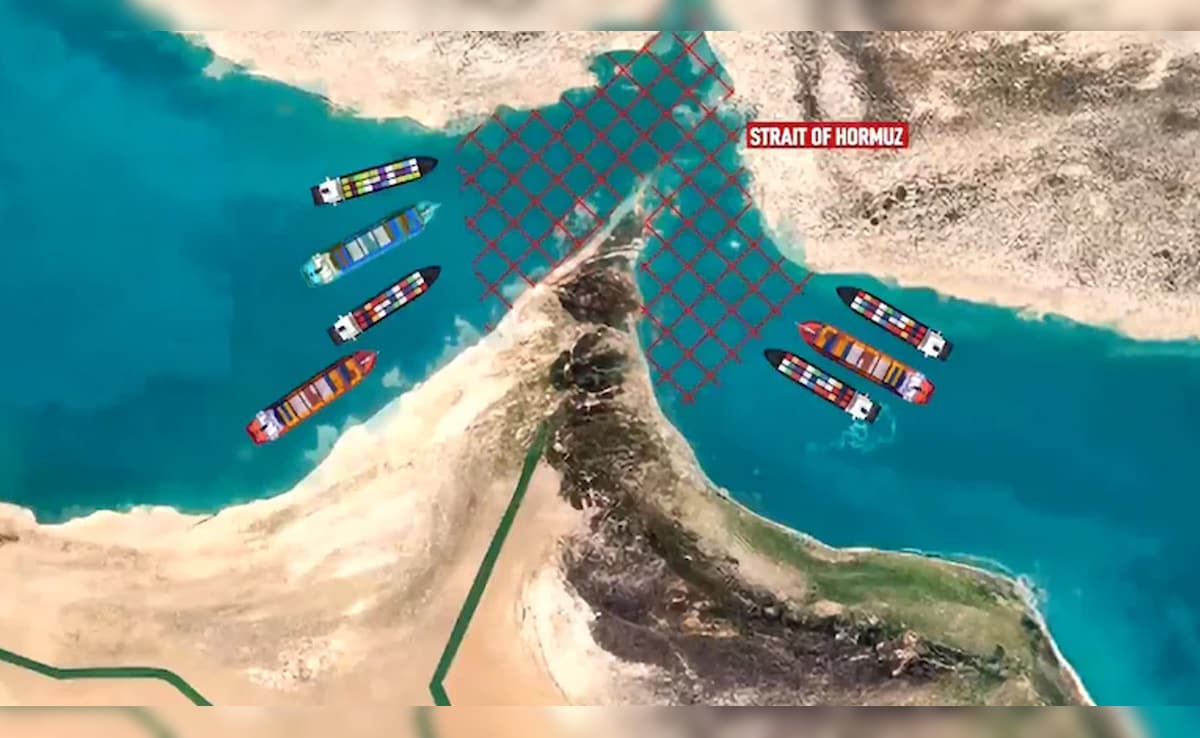
Don't be fooled by the headlines about a temporary ceasefire or a cooling of regional tempers. If you think the tension in the Strait of Hormuz is just a side effect of the latest conflict, you're missing the bigger picture. Iran sees that narrow strip of water as its most valuable piece of real estate, and it has no intention of letting anyone pass through for free. I'm not talking about a literal cash booth on the water. I’m talking about a geopolitical tax that every shipping company, oil exporter, and Western navy pays in the form of risk, insurance premiums, and political concessions.
The Strait of Hormuz is the world's most important chokepoint. Around 20% of the world’s liquid petroleum flows through this narrow gap between Oman and Iran. For Tehran, this isn't just a geographical coincidence. It's a weapon. Even when the guns go quiet in other parts of the Middle East, the "Hormuz Toll" remains a permanent fixture of Iranian foreign policy. They’ve spent decades perfecting the art of controlled instability.
Why the Strait of Hormuz is Irans Permanent Leverage
Tehran knows it can't win a conventional blue-water naval war against the U.S. Fifth Fleet. It doesn't try to. Instead, it uses a "mosquito fleet" strategy. Thousands of fast-attack boats, sea mines, and shore-based anti-ship missiles create a permanent threat. This isn't about starting a war. It’s about making sure everyone knows they could start one.
Think of it as a protection racket. When Iran feels squeezed by sanctions or diplomatic pressure, the "toll" goes up. We see a tanker seized, a drone flight that gets a bit too close for comfort, or "unidentified" limpet mines attached to hulls. These aren't random acts of aggression. They're calculated signals. By keeping the threat level high, Iran forces the international community to keep a seat at the table for them.
The reality is that a ceasefire in Gaza or a dip in proxy violence doesn't change Iran's long-term math. They’ve watched how the world reacts to supply chain disruptions. They saw how a single stuck ship in the Suez Canal threw global trade into a tailspin. Iran knows that Hormuz is even more sensitive. It’s the jugular of the global energy market. If you control the jugular, you don't need to punch the face.
The Economic Reality of the Ghost Toll
Let’s look at the numbers because they tell the real story. When tensions rise in the Strait, the cost of shipping doesn't just go up—it explodes. We’re talking about War Risk Insurance premiums.
In past periods of high friction, these premiums for tankers moving through the Persian Gulf have jumped by 10 or 20 times within a single week. For a standard VLCC (Very Large Crude Carrier), that can mean an extra $200,000 to $300,000 per voyage. Who pays that? You do. It gets baked into the price of gas and the cost of every plastic product made from petroleum.
Iran benefits from this even without firing a shot. High risk keeps oil prices buoyant, which helps their own "shadow fleet" sell oil to buyers willing to look the other way. It also makes Western involvement in the region feel like a never-ending, expensive chore.
Security Costs for the Rest of Us
It isn't just about insurance. The U.S. and its allies spend billions maintaining a constant presence to keep those lanes open. Operation Sentinel and other maritime security constructs aren't cheap. Iran effectively forces its rivals to spend massive amounts of money just to maintain the status quo. That’s a "toll" paid in defense budgets and sailor fatigue.
The Iranian Revolutionary Guard Corps (IRGC) Navy doesn't need to be high-tech to be effective. They use low-cost tech to counter high-cost assets. A $20,000 suicide drone or a $5,000 sea mine can threaten a billion-dollar destroyer. This asymmetry is the core of their strategy. It’s a low-cost, high-reward way to remind the world that they hold the keys to the gas station.
A Strategy That Outlasts Every Ceasefire
I’ve seen people argue that a comprehensive deal with Iran would end this maritime bullying. History says otherwise. Iran’s maritime strategy is baked into its constitution and its identity as a regional power. They view the Persian Gulf as their lake.
Even during the years of the JCPOA (the Iran nuclear deal), the IRGC didn't stop its maneuvers in the Strait. They might lower the volume, but they never turn off the music. The "toll" is their insurance policy against regime change. As long as they can threaten the global economy, they feel safe.
We have to stop viewing Hormuz incidents as isolated events. They are part of a continuous, decades-long campaign. Whether it’s the "Tanker War" of the 1980s or the harassment of British and American vessels today, the goal is the same: dominance through dread.
The Myth of Alternative Routes
You’ll hear analysts talk about pipelines that bypass the Strait. Saudi Arabia has the East-West Pipeline. The UAE has the Habshan-Fujairah pipeline. Sure, these exist. But they can’t handle the total volume. Even at full capacity, they only move a fraction of the oil that goes through the water. Plus, pipelines are static targets. They can be sabotaged.
The sea remains the only way to move the sheer volume of energy the world needs. Iran knows this better than anyone. They aren't worried about pipelines making them irrelevant. They know that as long as the world runs on oil, Hormuz is the center of the universe.
How Shippers and Nations are Adapting
The industry isn't just sitting ducks. We're seeing a shift in how maritime security is handled. It's no longer just about big grey hulls from the Navy.
- Private Security: More tankers are carrying armed guards, though this is tricky in the Strait compared to the coast of Somalia.
- Darker Shipping: More "ghost" tankers are operating with transponders off to avoid detection, which ironically creates a new set of safety risks.
- Diversification: Countries like India and China are trying to buy more oil from Russia or the Americas to reduce their Hormuz exposure.
But these are band-aids. They don't solve the fundamental problem. The IRGC has a "home-field advantage." They operate from a jagged coastline full of hidden coves and fast-attack bases. They can pop out, cause chaos, and vanish before a carrier strike group can even launch a plane.
No Exit Strategy for the West
There’s no easy way out of this. If the West pulls back, Iran takes total control and the "toll" becomes a "stranglehold." If the West stays, they continue to pay the price in money and risk. Iran is perfectly happy with this stalemate. It’s a win for them.
The most dangerous mistake we can make is thinking a piece of paper signed in a posh European hotel will stop the IRGC from messing with ships. Their power comes from that water. They aren't going to give it up for a pat on the back and a lift on sanctions. They want both.
The "toll" is here to stay. It’s time we stopped acting surprised every time a tanker gets stopped. It’s not an anomaly. It’s the business model.
Navigating the New Normal
For anyone involved in global trade or energy, the Strait of Hormuz is a permanent risk factor that needs to be priced in, not a temporary hurdle to be waited out. You can’t wait out a geography that hasn’t changed in millions of years and a political strategy that hasn’t changed in forty.
- Stop expecting a return to "normal." The current level of friction is the new baseline.
- Watch the IRGC, not the diplomats. The foreign ministry in Tehran might talk about peace, but the IRGC Navy operates on a different set of orders. Their actions on the water are the only signal that matters.
- Audit your supply chain's Hormuz dependency. If your business relies on products that transit that 21-mile-wide gap, you need a backup plan that doesn't involve the U.S. Navy solving the problem for you.
The Strait of Hormuz is the world's most expensive toll road. Iran is the collector. And they don't take credit cards—they take concessions, fear, and influence. Don't expect them to close the booth anytime soon.