The Controlled Detonation Delusion
Every time a construction crew in Kai Tak or Wan Chai unearths a rusty cylinder, the city goes into a scripted fever dream. Roads close. Thousands evacuate. The Explosive Ordnance Disposal (EOD) bureau arrives with the gravity of a moon landing. The media prints the same breathless headline about a "wartime relic" being "safely neutralized."
It is a masterpiece of bureaucratic theater.
The prevailing narrative suggests we are walking on a ticking time bomb, narrowly escaping catastrophe thanks to the heroic intervention of sandbags and remote-controlled robots. This is a fundamental misunderstanding of chemistry, ballistics, and the reality of 80-year-old scrap metal.
We are not managing a crisis. We are managing a PR exercise designed to justify construction delays and massive municipal budgets.
The Chemistry of Stability
The "lazy consensus" dictates that an old bomb is more dangerous because it is "unstable." This is a layman’s fallacy that ignores the actual science of high explosives used in World War II.
Most Allied and Japanese ordnance from that era utilized TNT (Trinitrotoluene) or Picric Acid (Shimose). TNT is notoriously stubborn. It doesn't just "go off" because you nudged it with a backhoe. It requires a specific, high-velocity shockwave from a primary explosive (a detonator) to trigger the molecular collapse.
- The Detonator Reality: The fuzes are the only real point of failure. After eight decades in Hong Kong's acidic, humid soil, most of these mechanical fuzes are seized solid by corrosion or have already had their primary charges neutralized by moisture ingress.
- The Crystalline Myth: You will often hear "experts" talk about "leaking crystals." While picric acid can form sensitive salts when in contact with certain metals, the likelihood of a buried, encrusted shell reaching the specific thermal or kinetic threshold for spontaneous detonation is statistically negligible.
I have spent years watching projects grind to a halt because of a 500-pounder that has been sat on, driven over, and vibrated by pile-drivers for decades without a peep. The moment it’s visible, we pretend it’s a hair-trigger threat. If it was going to blow, the first hit from the excavator would have done it. The fact that you’re looking at it means the danger has already passed.
The Economic Cost of Abundant Caution
We are burning millions of dollars in productivity for the sake of "Zero Risk." In a city where every square foot of land is a gold mine, the EOD protocol is a tax on progress.
When a site shuts down, the ripple effect is massive. You aren't just paying for the bomb squad. You are paying for the idle machinery, the diverted traffic, the shuttered businesses, and the shattered logistics chains.
We treat every 60mm mortar round like it's a nuclear device. In reality, a mortar round of that size has a lethal radius that barely extends past the construction pit. A simple Hesco barrier or a few dozen sandbags would contain a localized pop, yet we evacuate three city blocks. Why? Because the government cannot afford the optics of a single broken window.
This isn't safety. It's cowardice masquerading as procedure.
The Proper Way to Handle UXO
If we were honest about the risk, we would stop the charade of "on-site detonation" for small-caliber finds.
- Categorization over Reaction: We need a triage system that acknowledges the difference between a 1,000lb aerial bomb and a 3-inch mortar shell. The latter should be tossed in a containment box and driven away within twenty minutes, not subjected to a six-hour standoff.
- Private Sector Integration: The EOD bureau is a bottleneck. We should allow certified private contractors to handle low-level UXO (Unexploded Ordnance) clearance, much like they do in the UK or Germany. By keeping it a state monopoly, we ensure it remains a slow, bloated process.
- Calculated Risk Acceptance: We accept a certain level of risk in every other facet of urban life—traffic, high-rise construction, infectious disease. Yet, the moment a piece of 1945 scrap metal appears, our risk tolerance drops to absolute zero.
The False Comfort of the Sandbag Wall
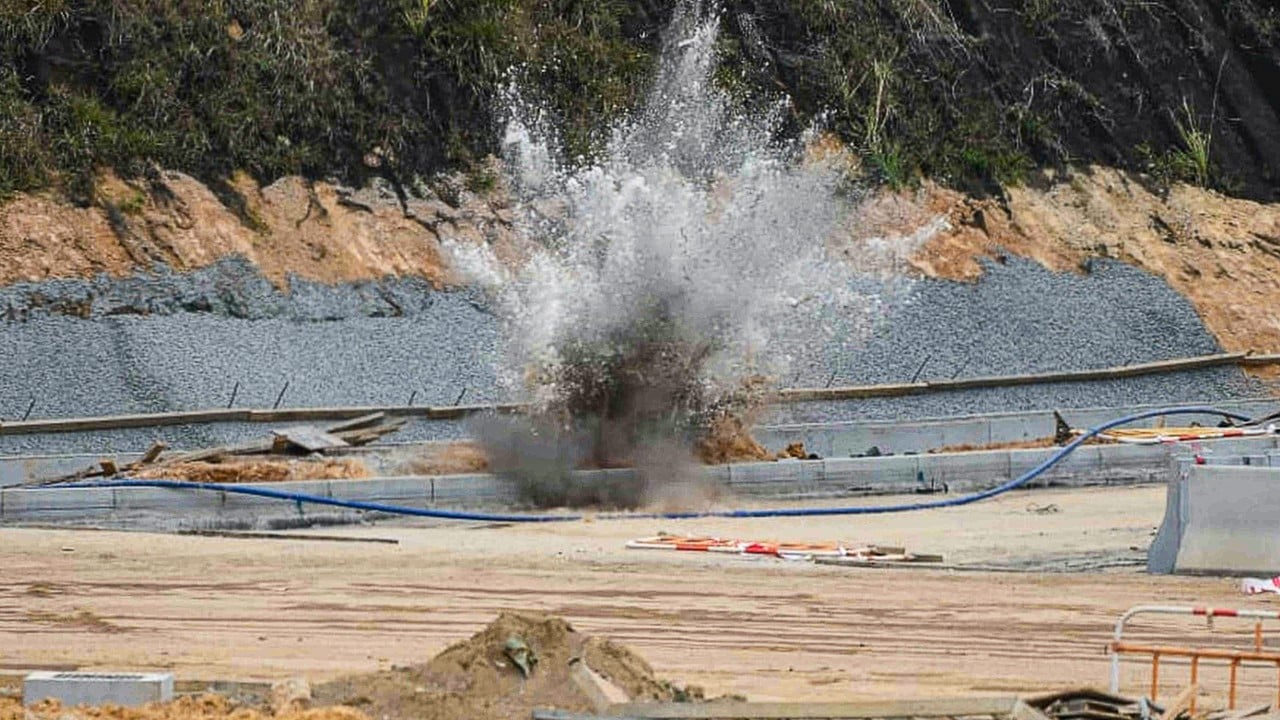
Watch the footage of the next "detonation." They pile hundreds of sandbags over the device. This is largely a psychological sedative for the public. While sandbags dampen the fragmentation, the overpressure wave in a dense urban canyon still does what it wants.
If these devices were truly as volatile as the authorities claim, the "safe" distances they set would be tripled. They know the risk is low. They know the explosives are degraded. They just need the spectacle to match the inconvenience they've caused.
We are terrified of a ghost. The war ended in 1945, but we let its garbage dictate our 2026 construction schedules. We don't need more bomb squads; we need a reality check on the actual volatility of aged TNT.
Stop evacuating neighborhoods for rusted pipes. Stop treating every construction site like a battlefield. The only thing truly exploding is the cost of doing business in a city that prizes the appearance of safety over the logic of science.
Go back to work. The bomb isn't going to kill you, but the bureaucracy might.