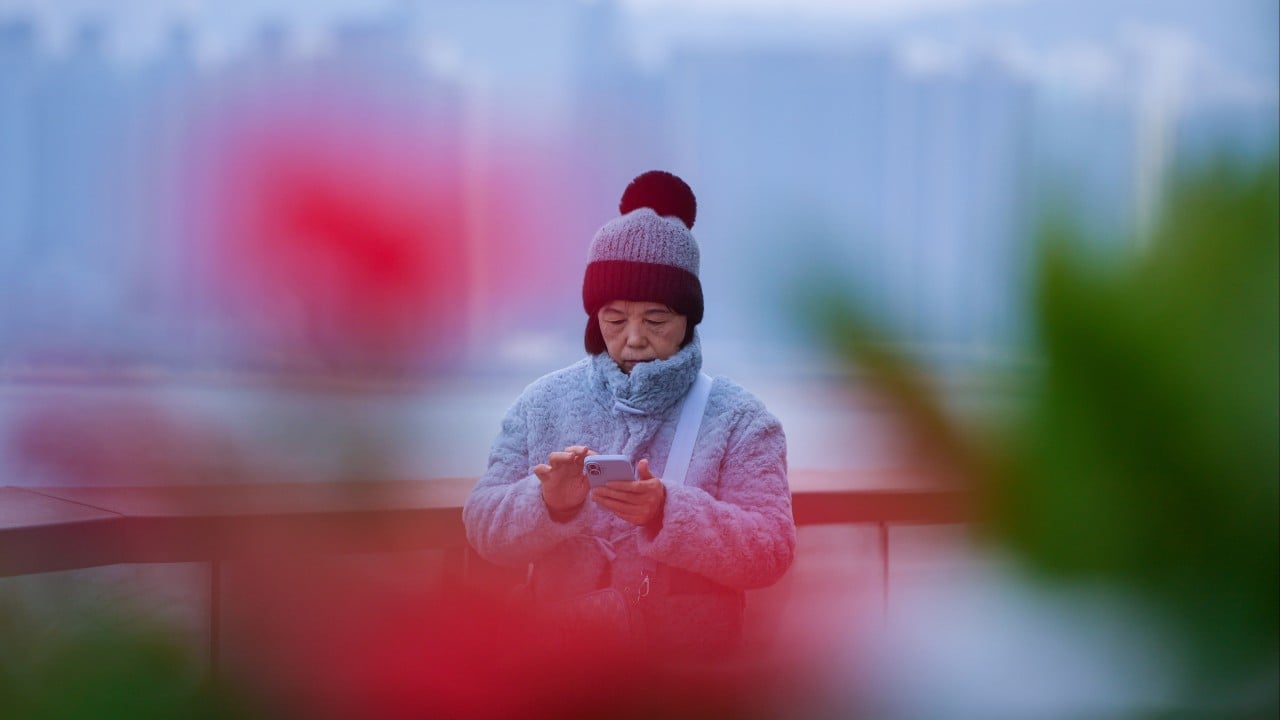
Every November, local newsrooms copy-paste the exact same press release from the Hong Kong Observatory and call it journalism. A northeast monsoon arrives, the mercury dips to 18 degrees Celsius, and suddenly the media acts like a polar vortex is descending on Victoria Harbour.
Stop buying the panic. 18 degrees is not cold. It is room temperature with a breeze.
Yet, across Central, Causeway Bay, and Tsim Sha Tsui, thousands of residents are pulling Canada Goose parkas out of vacuum-sealed bags. Retailers are rubbing their hands together, pushing down jackets and thermal base layers to people walking into climate-controlled shopping malls. The lazy consensus says you need to bundle up when a cold front hits Hong Kong. That consensus is physiologically backwards, financially wasteful, and completely divorced from the reality of subtropical meteorology.
The 18-Degree Illusion
To understand why the annual Hong Kong "cold snap" hysteria is absurd, you have to look at the mechanics of thermal comfort. Human skin perceives temperature changes relative to recent baselines, not absolute thermodynamic reality. When you spend seven months marinating in 32-degree heat and 85 percent humidity, a sudden drop to 18 degrees shocks your nervous system. Your cutaneous thermoreceptors scream that you are freezing.
You are not freezing. Your body is simply recalibrating.
Meteorologists define a cold front by the temperature gradient and wind shift, not by whether you need Arctic survival gear. When dry continental air from southern China pushes south, displacing warm, humid maritime air, the dew point plummets. In Hong Kong, an 18-degree day in November usually comes with relative humidity dropping from 80 percent down to 50 or 60 percent.
Lower humidity means sweat evaporates faster from your skin, creating an evaporative cooling effect. Add a 20-knot northeasterly wind funneling through the concrete canyons of Kowloon, and you get wind chill. That wind chill makes 18 degrees feel like 15. Still, 15 degrees Celsius is standard spring weather in London, New York, or Tokyo. Nobody in Chicago wears a 700-fill down jacket in 15-degree weather unless they are actively trying to induce heatstroke.
Why Your Winter Wardrobe Fails in the Subtropics
I have watched colleagues and clients waste tens of thousands of Hong Kong dollars on heavy winter apparel that gets worn four days a year and ruins their comfort on the other three hundred and sixty-one. The fundamental mistake people make in Hong Kong is dressing for the peak gust of wind at the Star Ferry pier rather than the microclimates they actually inhabit.
Hong Kong is not an outdoor city during the winter transition. It is an interconnected network of hyper-conditioned boxes.
Consider the daily commute of a typical office worker in Quarry Bay or Admiralty:
- You walk three minutes from your apartment lobby to the MTR station.
- You stand on a platform where train braking systems and body heat keep the ambient temperature around 22 degrees.
- You board an MTR carriage packed with two hundred commuters, pushing the internal temperature toward 24 degrees.
- You exit directly into the underground pedestrian network of Landmark, Pacific Place, or IFC, where central HVAC systems maintain a steady 21 degrees.
- You ride an elevator to an office floor where server rooms and sunlight through glass curtain walls push the thermostat to 23 degrees.
If you wear a heavy wool coat or a down puffer jacket through this gauntlet, you sweat. Once you step back outside into the 18-degree dry wind, that trapped moisture on your skin rapidly cools. You end up colder, clammy, and miserable—not because the weather is harsh, but because your clothing trapped perspiration inside a non-breathable shell.
Deconstructing the Northeast Monsoon
The Hong Kong Observatory issues Cold Weather Warnings only when temperatures are forecast to drop to 12 degrees Celsius or below. At 18 degrees, the Observatory is simply reporting seasonal normality. Yet search engines light up every time a cold front is announced, with residents frantically asking the wrong questions.
What should I wear in 18-degree weather in Hong Kong?
Forget heavy coats. The only variable that matters during a November or December cold front in Hong Kong is wind penetration, not thermal insulation. Insulation traps dead air around your body to prevent conductive heat loss. At 18 degrees, your body generates more than enough metabolic heat just by walking up a Mid-Levels escalator. What steals that heat is convection—the dry northeasterly wind stripping away your boundary layer of warm air.
A lightweight, unlined windbreaker or a crisp cotton trench coat over a standard long-sleeve shirt outperforms a cashmere sweater every single time. It blocks the convective wind chill outside and takes three seconds to remove and carry over your arm when you step into a 22-degree restaurant.
Does Hong Kong actually have a winter?
Astronomically, yes. Meteorologically, barely. According to the Hong Kong Observatory's long-term climatological normals, the coolest months are January and February, with mean daily minimum temperatures hovering around 14.5 degrees Celsius. True cold spells—where urban temperatures drop into single digits—happen for a handful of days every few years when an intense winter monsoon surges directly south without warming over the Taiwan Strait.
Treating an 18-degree autumn cold front like the onset of winter distorts how you prepare for the actual cold snaps in January. If you break out your heaviest gear in November, you have nowhere left to go when a genuine 9-degree surge hits in late January.
Is the sudden drop to 18 degrees making people sick?
Cold air does not contain viruses. Rhinoviruses and influenza circulate more efficiently in cooler, drier air because the lipid envelopes of certain viruses stabilize in low humidity, and the dry air slightly dehydrates the mucosal linings of your nasal passages. However, the primary reason Hong Kong offices turn into petri dishes the week after a cold front is behavioral. People close their windows, turn off ventilation fans, and pack tightly into indoor spaces to escape a completely harmless 18-degree breeze.
The Architecture Problem Nobody Talks About
There is one legitimate reason 18 degrees feels disproportionately cold in Hong Kong, and it has nothing to do with the weather outside. It is the terrible thermal envelope of Hong Kong residential buildings.
Unlike apartments in Seoul, Beijing, or Toronto, residential towers in Hong Kong are engineered exclusively to shed heat, not retain it. Single-pane glass windows, zero wall insulation, concrete floors, and cross-ventilation shafts designed for August typhoons turn apartments into thermal sieves. When the outdoor temperature drops to 18 degrees, your indoor apartment temperature drops to 18 degrees within six hours.
In Europe or North America, 18 degrees outside means 21 degrees inside because buildings have central heating and double glazing. In Hong Kong, 18 degrees outside means sitting motionless at your desk at home in 18-degree stagnant air. A sedentary human body generates roughly 100 watts of heat. In a 22-degree room, you are comfortable in a t-shirt. In an 18-degree concrete box with zero air movement, your extremities lose heat faster than your core replaces it.
The solution is not buying a $1,200 parka for your outdoor commute. The solution is fixing your indoor microclimate. A basic ceramic space heater, a dehumidifier running in dry mode, or wearing merino wool socks indoors solves 90 percent of the discomfort people blame on the cold front.
The Urban Heat Island Paradox
Local weather reports also fail to tell you that the headline temperature—usually measured at the Hong Kong Observatory headquarters in Tsim Sha Tsui—does not apply uniformly across the territory.
If the forecast says 18 degrees, the dense urban canyons of Mong Kok, Wan Chai, and Causeway Bay will likely sit at 19.5 or 20 degrees due to the Urban Heat Island effect. Concrete, asphalt, vehicle exhaust, and building AC condensers absorb and radiate massive amounts of thermal energy. Conversely, if you live in Ta Kwu Ling, Sheung Shui, or Tai Mo Shan, radiative cooling under clear night skies will push temperatures down to 13 or 14 degrees.
Reading a single headline number and dressing accordingly is amateurish. A commuter traveling from Yuen Long to Central experiences a five-degree temperature swing before they even finish their morning coffee. Static heavy clothing fails across a five-degree gradient. Modular layering is the only system that works.
The Flaw in the Minimalist Approach
I will admit the blind spot in arguing against heavy winter gear: this logic assumes you are moving, healthy, and staying at sea level.
If you are hiking the MacLehose Trail at 6:00 AM after a cold front passes, 18 degrees in Tsim Sha Tsui translates to 11 degrees with 40-kilometer-per-hour winds on the exposed ridges of Sai Kung. If you are elderly, have poor peripheral circulation, or sit motionless at an outdoor dai pai dong for three hours drinking cold beer at midnight, convective heat loss will catch up to you fast. In those specific scenarios, high-loft insulation is a necessity, not a fashion vanity.
For the other 95 percent of the population navigating the urban core, bundling up for 18 degrees is pure theater.
How to Actually Play Next Week's Cold Front
Stop letting weather headlines dictate your wardrobe and start treating Hong Kong's climate like the subtropical rollercoaster it actually is.
- Audit your fabrics, not your thickness. Ditch heavy cotton hoodies and acrylic knits. Cotton absorbs moisture and holds it against your skin; acrylic traps heat without breathing. Switch to lightweight merino wool or technical synthetics that regulate temperature across a 10-degree indoor-outdoor swing.
- Block the wind, drop the bulk. Use a breathable wind-resistant outer shell—nylon, tightly woven cotton gabardine, or Gore-Tex—over normal indoor clothes. The moment you step inside a building, strip the shell.
- Heat your feet at home. Because Hong Kong apartments lack radiant floor heating, tile and hardwood floors act as massive heat sinks. Put on thick slippers or wool socks the second you walk through your front door instead of cranking up an inefficient reverse-cycle AC unit.
- Enjoy the best weather of the year. Dry, 18-degree air with clear blue skies and low pollution is the exact reason people tolerate Hong Kong's brutal, suffocating summers.
Next week, when the temperature drops to 18 degrees, leave the down jacket in the closet, open your windows, and stop pretending you live in Siberia.