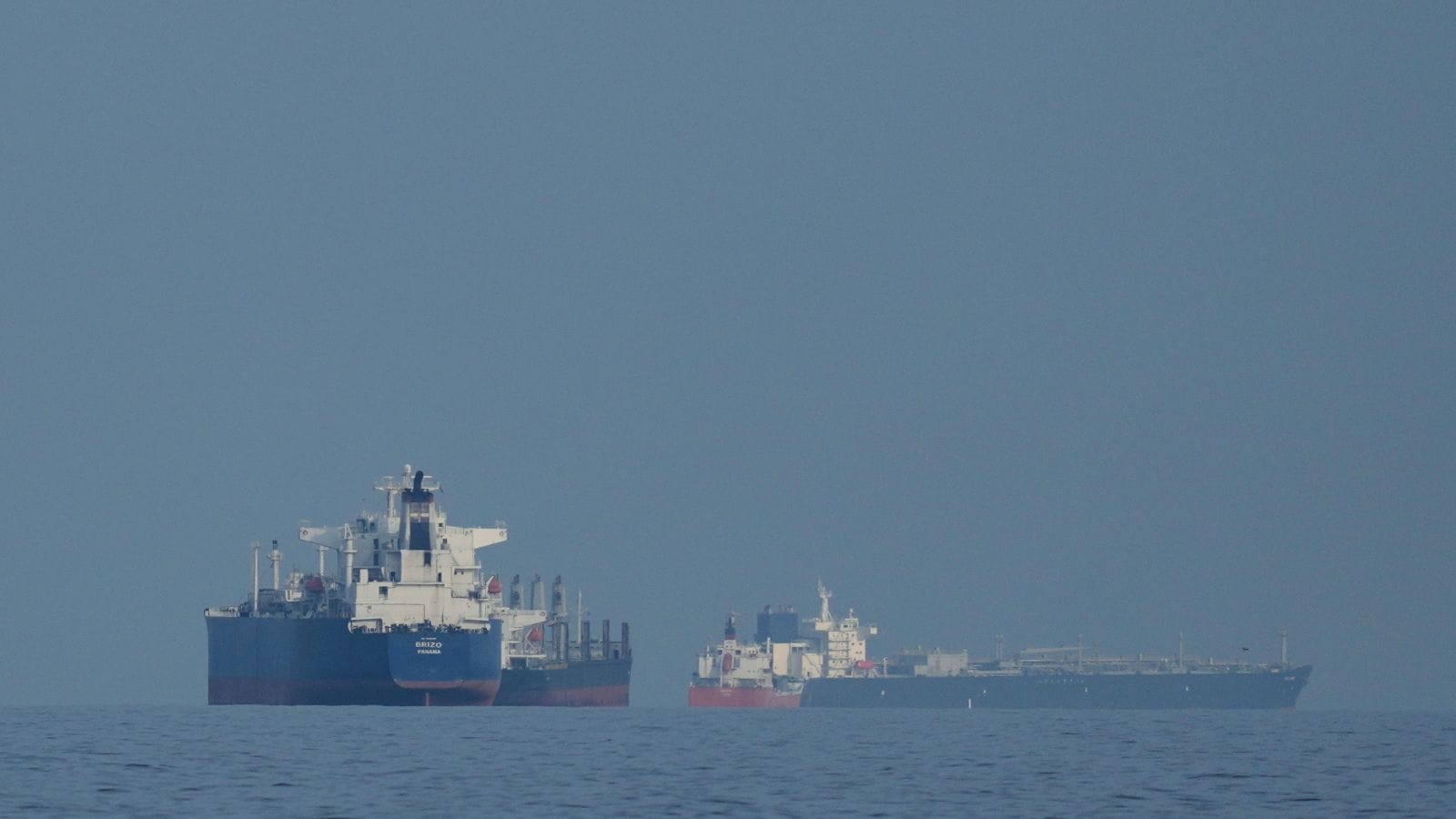
The recent flurry of activity surrounding the latest round of talks between United States and Iranian representatives is less about a breakthrough and more about managing a slow-motion collapse of regional stability. While television reporters stand outside gilded European venues and describe the atmosphere as "crucial," the reality inside the rooms is far more transactional and far less hopeful. These meetings are not designed to forge a new grand bargain or restore the defunct 2015 nuclear deal. Instead, they are high-stakes damage control operations intended to prevent a localized shadow war from expanding into a global energy crisis.
The primary objective for the White House is not a signed treaty, which would never survive a hostile Congress, but a series of unwritten "understandings." Washington wants Tehran to cap its uranium enrichment levels and restrain its regional proxies. In exchange, Tehran seeks a loosening of the financial noose—specifically, access to frozen oil revenues held in foreign banks. This is a stalemate masquerading as a negotiation.
The Architecture of the Stalemate
Modern diplomacy between Washington and Tehran has moved away from the formal, televised signings of the past. It now exists in a grey zone of "non-paper" agreements and third-party messages delivered by intermediaries in Muscat or Doha. This shift is a direct response to the political toxicity of the relationship in both capitals. For the Biden administration, a formal deal is a liability during an election cycle; for the Iranian leadership, public concessions to the "Great Satan" risk alienating the hardline factions that underpin the clerical establishment.
The current talks are focused on a "freeze-for-freeze" framework. Under this logic, Iran stops advancing its nuclear program toward weapons-grade levels, and the U.S. stops tightening the screws on oil exports. It is a precarious balance. If Iran pushes too far, the U.S. is forced to react with sanctions that could spike global oil prices. If the U.S. squeezes too hard, Iran accelerates its centrifuges.
The infrastructure of these talks is built on distrust. Negotiators are often not even in the same room. They sit in adjacent suites while European or Middle Eastern diplomats shuttle between them, translating not just languages, but the specific brands of political desperation unique to each side. This process is slow, prone to misinterpretation, and easily derailed by a single drone strike or a misinterpreted naval maneuver in the Persian Gulf.
The Nuclear Clock and the Enrichment Threshold
The central technical anxiety remains Iran’s stockpile of 60% enriched uranium. This level of purity has no credible civilian use. It is a stone’s throw from the 90% required for a nuclear warhead. Experts in non-proliferation note that the "breakout time"—the period needed to produce enough material for a single bomb—has shrunk from months to mere days.
However, having the material is not the same as having a weapon. Weaponization involves complex engineering, including the development of a trigger mechanism and a delivery system capable of surviving re-entry into the atmosphere. Intelligence assessments suggest that while Iran has mastered the fuel cycle, it has not yet made the political decision to cross the final threshold of weaponization. These talks are a desperate attempt to ensure that decision remains "no."
The leverage used by the U.S. is increasingly narrow. Sanctions have reached a point of diminishing returns. Iran has spent decades building a "resistance economy," a sophisticated network of front companies and illicit shipping routes that allow it to move hundreds of thousands of barrels of oil per day to buyers in Asia, primarily China. When the U.S. threatens more sanctions, Tehran looks at its bottom line and sees a system that, while bruised, is still functioning.
The Role of Regional Proxies
You cannot discuss US-Iran relations without looking at the map. From the Red Sea to the Levant, the "Axis of Resistance" provides Tehran with a layer of strategic depth that Washington struggles to counter. Every time a diplomat sits down at a mahogany table in a neutral capital, the shadow of the Houthi rebels or Hezbollah looms over the conversation.
Tehran views these groups as its primary deterrent against a direct strike on its soil. For Washington, these groups are the primary obstacle to any lasting regional peace. The disconnect is total. The U.S. demands that Iran "rein in" its partners, while Iran maintains that these groups act independently. It is a convenient fiction that allows both sides to keep talking while the periphery burns.
Economic Desperation versus Ideological Survival
Inside Iran, the economy is the single greatest threat to the regime’s longevity. Inflation is rampant, and the rial has plummeted against the dollar. The leadership knows that a complete economic implosion could trigger the kind of widespread civil unrest that security forces might not be able to contain forever.
This economic pressure is what brings Iran to the table. They need the "de-escalation" to translate into actual dollars. They are looking for "sanctions relief lite"—permission to sell more oil and access the billions of dollars currently stuck in South Korean, Iraqi, or Qatari banks.
Conversely, the U.S. is wary of providing any relief that could be characterized as a "ransom." Every dollar that flows back to Tehran is scrutinized by domestic critics who argue it will be diverted to fund ballistic missiles or regional militias. This creates a feedback loop where the relief offered is too small to change Iran’s strategic calculus, but large enough to cause a political firestorm in Washington.
The China Factor
A major shift in the "why" of these talks is the growing influence of Beijing. China’s brokering of the Saudi-Iran rapprochement signaled a new era where the U.S. is no longer the only power capable of moving the needle in the Middle East. For Iran, China represents a permanent safety valve. As long as Beijing is willing to buy Iranian crude, the U.S. "maximum pressure" campaign will remain a "moderate pressure" reality.
Washington is forced to acknowledge that its ability to isolate Iran is fading. If the U.S. walks away from talks entirely, it risks ceding even more influence to China and Russia. The diplomacy is therefore as much about maintaining American relevance in the region as it is about nuclear enrichment levels.
The Mirage of a Comprehensive Deal
The term "crucial talks" implies a path toward a resolution. That is a fundamental misunderstanding of the current geopolitical climate. There is no appetite for a comprehensive deal that addresses human rights, ballistic missiles, and regional interference alongside the nuclear issue. Such a deal is an impossibility.
Instead, we are seeing the professionalization of the "no-war, no-peace" status quo. Both sides have decided that a low-level conflict is preferable to the risks of a major war or the political costs of a genuine peace. They are managing the tension, not resolving it.
The danger in this approach is the "black swan" event. A technical error, a hot-headed commander on a patrol boat, or a cyberattack on critical infrastructure could collapse this fragile arrangement in an afternoon. The diplomats are essentially trying to build a firebreak while the forest is already smoldering.
The Strategy of Incrementalism
Since a grand bargain is off the table, the focus has shifted to small, reciprocal steps. This is the "less for less" strategy.
- Step One: Iran slows enrichment and grants limited access to international inspectors.
- Step Two: The U.S. issues waivers allowing specific countries to pay for Iranian electricity or gas.
- Step Three: A prisoner exchange is arranged to build a modicum of "humanitarian" goodwill.
This incrementalism is frustratingly slow for those hoping for a shift in regional dynamics. It does nothing to solve the underlying ideological enmity between the two nations. It simply lowers the temperature by a few degrees.
The cynical view—and often the correct one in this theater—is that these talks are a form of performance art. They allow the U.S. to tell its allies it is pursuing a diplomatic path, and they allow the Iranian government to tell its people that it is working to end the sanctions. As long as both sides find the performance useful, the "crucial talks" will continue, regardless of whether anything is actually decided.
The Intelligence Gap
One of the biggest hurdles in these negotiations is the differing internal intelligence assessments. Washington often overestimates the impact of sanctions on the Iranian leadership's decision-making process. They assume that if the people are suffering, the government will bend. History suggests the Iranian regime is willing to tolerate enormous domestic pain to maintain its strategic autonomy.
On the other side, Tehran often underestimates the constraints on an American president. They see the U.S. as a monolithic entity and struggle to understand how domestic judicial rulings or congressional oversight can handicap a president's ability to deliver on a promise. This mutual misunderstanding leads to "red lines" that are frequently crossed because neither side believes the other’s warnings are real.
The Failure of Traditional Diplomacy
The reason these talks feel so repetitive is that the tools being used are relics of a different era. The sanctions-and-negotiation model assumes a rational actor theory that doesn't always apply to a revolutionary state. It also assumes that the U.S. holds all the high cards, which is less true today than it was a decade ago.
The shift toward "understandings" rather than "agreements" is an admission of this failure. It is a retreat into the shadows because the light of public scrutiny makes compromise impossible. When you hear a reporter talk about "cautious optimism," understand that they are describing a situation where the best-case scenario is that things don't get worse.
The real story isn't the meeting itself, but the widening gap between the diplomatic process and the reality on the ground. While the suits discuss enrichment percentages in a quiet room, the region is arming itself at a record pace. Israel has made it clear it will not be bound by any "understanding" reached between Washington and Tehran. This unilateral wild card means that even if the U.S. and Iran reach a temporary truce, the threat of a wider conflict remains high.
There is no "fix" for the US-Iran relationship in its current form. The goals of the two governments are diametrically opposed. Washington wants a stable, status-quo Middle East where it can pivot its resources toward the Pacific. Tehran wants to upend that status quo and establish itself as the undisputed regional hegemon. These are not interests that can be "split down the middle" over coffee in a neutral city.
The diplomacy we see is the management of a permanent crisis. It is an exercise in ensuring the inevitable friction between two opposing forces doesn't result in a spark that ignites the entire global economy. Every "crucial talk" is just a way to buy another six months of breathing room.
The next time a headline suggests a major breakthrough is imminent, look at the price of oil and the movement of carrier strike groups. Those are the only metrics that matter. The rest is just noise designed to fill the silence of a diplomatic vacuum. Stop looking for a conclusion to this story. There isn't one. There is only the ongoing, exhausting effort to keep the lid on the pressure cooker for one more day.