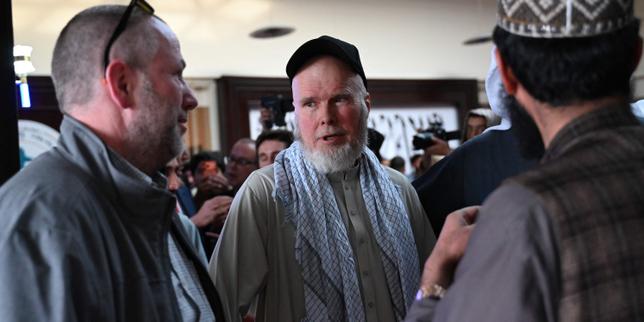
Ryan Corbett is finally coming home. After 584 days in a windowless cell, the American humanitarian worker was released by the Taliban this week. It’s a moment of immense relief for his family in western New York, but it opens a messy, uncomfortable conversation about how the U.S. handles hostage diplomacy in a world where the rules have completely changed.
If you’ve been following the headlines, you know the basics. Corbett was detained in August 2022. He wasn't a spy. He wasn't a soldier. He was a guy running a microfinance business to help Afghans build small enterprises. The Taliban didn't care. They picked him up, held him without charges, and let him rot in conditions that his family described as deteriorating by the day. His release wasn't some grand gesture of goodwill. It was a calculated political move. Read more on a related issue: this related article.
We need to talk about why this keeps happening and what it actually takes to get an American out of a basement in Kabul.
Behind the closed doors of Doha
The State Department won't tell you every detail of the deal. They never do. But we can piece together the mechanics based on how these things usually go down in Qatar. Since the chaotic U.S. withdrawal in 2021, Doha has become the unofficial neutral ground for everyone who needs to talk to the Taliban without technically "recognizing" them as a legitimate government. Further reporting by NPR highlights comparable views on the subject.
Getting Corbett out required a delicate dance between U.S. Special Presidential Envoy for Hostage Affairs Roger Carstens and Taliban intelligence officials. The Taliban wants legitimacy. They want their frozen assets back. They want their own people released from Guantanamo or other overseas prisons. While the White House maintains that no "ransom" was paid, "concessions" are a different story.
When a country detains a civilian to use as a bargaining chip, it's called state-sponsored hostage-taking. It's a brutal strategy. It works because the U.S. government is under immense pressure from the public and families to bring their people home at almost any cost. The Taliban knows this. They watched the swap for Brittney Griner. They watched the $6 billion deal with Iran. They’ve learned that an American passport is a valuable commodity.
The grim reality of the 584 days
Corbett’s health was failing. Reports suggest he was kept in a basement with almost no sunlight. His physical state was a ticking clock for American negotiators. If a hostage dies in custody, the bargaining chip becomes a liability that could trigger a military response or permanent sanctions. The Taliban isn't stupid. They pushed the limit of his endurance to maximize their leverage, then cashed out before he became more trouble than he was worth.
Think about the psychological toll. You’re in a country you were trying to help. Suddenly, the people you served are the ones keeping you in a cage. You have no legal representation. No Red Cross visits for months on end. You're a ghost in a system that doesn't acknowledge you exist.
Why some Americans are still left behind
Corbett isn't the only one. There are still others held in Afghanistan and elsewhere. Why did he get out now while others wait? It often comes down to the "Wrongful Detainee" designation.
The U.S. government uses specific criteria under the Levinson Act to determine if someone is officially "wrongfully detained." Once that tag is applied, the full weight of the hostage envoy’s office kicks in. It moves the case from a standard consular issue—like getting a drunk tourist out of a Thai jail—to a national security priority. Corbett’s case hit all the markers. He was held to influence U.S. policy. He wasn't given due process. The conditions were life-threatening.
But here’s the uncomfortable truth. Every time we successfully negotiate a release, we inadvertently set a market price for the next American traveler. It’s a vicious cycle.
What this means for the future of U.S. Afghanistan relations
Don't expect a sudden thaw in relations because of this. The Taliban is still a pariah regime in the eyes of much of the world, especially given their track record on women’s rights and education. However, this release shows they are willing to play the game of international diplomacy when it suits them.
They want a seat at the table. They want the sanctions lifted. By releasing Corbett, they’re signaling to Washington that they can be "reasonable" partners in a transaction. It’s a move designed to chip away at the wall of isolation surrounding Kabul.
What you can actually do
If you're a traveler or a contractor, the lesson is blunt. The "Level 4: Do Not Travel" advisory for Afghanistan isn't a suggestion. It’s a warning that if things go sideways, the U.S. government has very few tools to help you. The embassy in Kabul is closed. There are no Marines coming to get you. Your life becomes a line item in a budget negotiation in Doha.
- Check the State Department travel advisories. Seriously. If a country is listed as a high risk for kidnapping or wrongful detention, stay out.
- Support the James W. Foley Legacy Foundation. They do the heavy lifting in advocating for hostages and their families when the news cameras move on to the next story.
- Write to your representatives. If you know of an American still held abroad, keep their name in the mix. Public pressure is often the only thing that keeps these cases on the front burner at the State Department.
The return of Ryan Corbett is a win for his family. It's a win for the diplomats who spent thousands of hours in sterile rooms in Qatar making it happen. But it’s also a sobering reminder that in 2026, the world is a place where humans are still traded like currency.
If you're planning to work in high-risk zones, ensure you have specialized kidnap and ransom insurance and a rock-solid extraction plan that doesn't rely on a government that might take two years to get you home.