The narrative is as predictable as it is wrong. Every time a drone flies over a Persian Gulf tanker or a diplomat sneezes in Tehran, the punditry class starts screaming about "torched price stability" and the "death of the American commuter." They paint a picture of a helpless United States, shackled to the whims of Middle Eastern geopolitical friction.
It is a lie. Worse, it is a boring lie.
The "stupid war" with Iran—whether kinetic, economic, or rhetorical—isn't the thief stealing your lunch money at the pump. In reality, the volatility everyone complains about is the exact mechanism that forced the United States to become the global swing producer. If prices stayed at a "stable" $2.00 a gallon forever, the American shale revolution would have died in its crib. We didn't get energy independence through peace and quiet; we got it through the chaos that made domestic drilling profitable.
The Myth of Price Stability
Stability is for stagnant economies. When critics moan about "torched stability," what they are actually mourning is the era of OPEC hegemony. Back then, "stable" just meant we knew exactly who was holding the leash.
The idea that conflict with Iran "broke" the market ignores the fundamental physics of the oil trade. The global Brent and WTI benchmarks are sensitive to perception, not just production. By keeping the threat of disruption alive, the market maintains a "risk premium." For the average driver, that’s an extra twenty cents a gallon. For the American energy sector, that premium is the margin that allows for massive capital expenditure in the Permian Basin.
Without the price spikes driven by Middle Eastern tension, West Texas would still be a desert of tumbleweeds instead of the most productive oil field on the planet. We have traded artificial price "safety" for raw, domestic power. To complain about the cost of that trade is to admit you don't understand how empires are fueled.
Why You Want Expensive Oil
Cheap oil is a drug that makes nations weak. It creates a feedback loop of inefficiency. When fuel is cheap, we build sprawling, illogical cities and ignore the infrastructure of the future.
Look at the math of the "shale gale." The break-even price for a horizontal well in the Bakken or Eagle Ford isn't $20 a barrel. It’s significantly higher. If we lived in the "stable" world the critics want, where Iran is fully integrated and dumping millions of barrels of low-cost crude into the market without friction, the American driller would be bankrupt.
I’ve sat in boardrooms in Houston where the mood shifts entirely based on the Strait of Hormuz. When tensions rise, the rigs start moving. When "peace" breaks out, the layoffs begin.
- Conflict drives innovation. The need to bypass traditional supply chains led to the perfection of hydraulic fracturing.
- Volatility attracts capital. Investors don't bet on flat lines; they bet on the recovery from a spike.
- High prices are the only real incentive for efficiency. No one buys a more efficient fleet or invests in modular nuclear reactors when gas is essentially free.
The "stupid war" is actually a massive, involuntary subsidy for American technological dominance.
Dismantling the Iran Boogeyman
The competitor piece suggests that Iran is the "spoil" in the engine. It’s the opposite. Iran’s isolation has been a gift to the US Treasury.
By keeping Iranian crude largely off the formal market through sanctions, the US created a massive vacuum. Who filled it? Not the "stable" producers. American producers did. We are currently pumping more oil than any country in history—including Saudi Arabia at its peak.
$P = \frac{S}{D} + R$
Where $P$ is the price, $S$ is supply, $D$ is demand, and $R$ is the Geopolitical Risk Premium.
If you remove $R$ by making nice with Tehran, the price drops, $S$ from US domestic sources collapses because it's no longer profitable, and we go back to being a net importer. The "war" didn't torch our stability; it insured our relevance.
The Logistics of the Lie
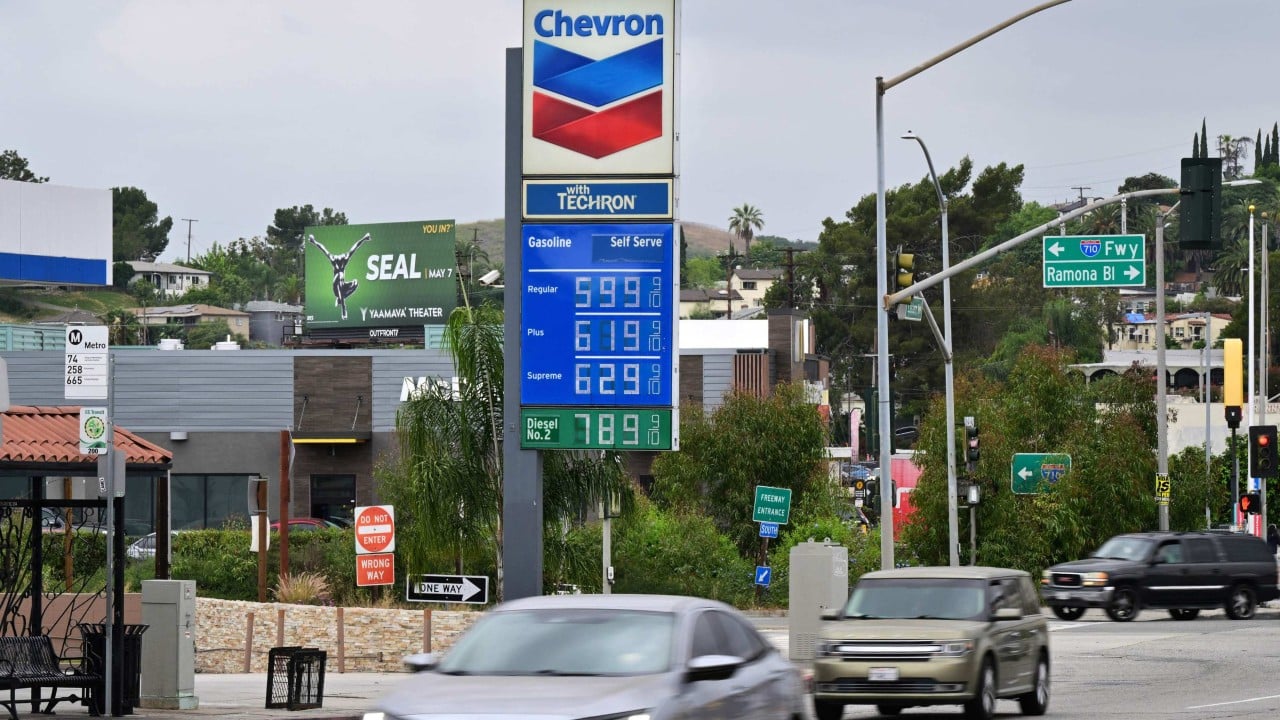
People ask: "If we produce so much oil, why is my gas still $4.00?"
They ask this because they believe the fairy tale that "American oil" stays in America. It doesn't. It’s a global fungible commodity. But here is the nuance the "stability" crowd misses: Refinery complexity.
American refineries, particularly on the Gulf Coast, were built decades ago to process "heavy, sour" crude—the kind of sludge that comes out of Venezuela or the Middle East. The oil we pump in Texas is "light, sweet." We actually have to export our high-quality oil and import the "bad" stuff to keep our refineries running at peak efficiency.
When we have friction with Iran, it forces a massive, overdue retooling of our domestic infrastructure. We are finally building the capacity to process our own gold. This transition is messy. It’s expensive. It’s volatile. But it is the only path to a future where we don't care what happens in the Persian Gulf.
The Actionable Truth
Stop looking for "stable" prices. They aren't coming back, and you shouldn't want them to.
If you are a business leader or an investor, you need to hedge for a world where the Geopolitical Risk Premium is a permanent fixture of the balance sheet.
- Stop betting on "de-escalation." The friction between the US and Iran is structural, not incidental. It is baked into the energy market's DNA.
- Capitalize on the spread. The volatility creates massive opportunities in midstream infrastructure (pipelines and storage) that "stable" markets never provide.
- Ignore the pump price as a metric of national health. Low gas prices are often a sign of global recession. High gas prices are the sound of an economy with enough heat to demand more than it can easily get.
The "stupid war" didn't torch our future. It burned away the illusion that we could lead the world while remaining dependent on its most volatile corner. We aren't victims of the oil market’s swings. We are the ones holding the pendulum.
If you want cheap, stable gas, move to a country with no industry and no ambition. In a superpower, energy is a weapon, and weapons are never cheap to maintain.
Every time the price of a gallon ticks up because of a headline about a Revolutionary Guard speedboat, take a breath. That price hike is the heartbeat of American energy independence. It is the only reason the rigs are still turning in the Permian.
The war isn't stupid. Your desire for "stability" is.