The Friction Behind the Market Pause
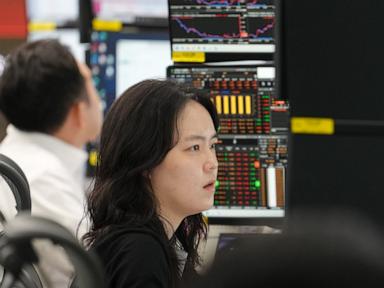
Global markets hit a wall this week because the math behind the endless stock rally finally stopped making sense to institutional desks. For months, equity indices pushed to record highs on a mixture of artificial intelligence enthusiasm and the firm belief that central banks would orchestrate a flawless economic landing. That narrative just cracked. When Wall Street paused its record-breaking run, the ripple effect cut through Asian trading floors and dragged crude prices down with it.
This is not a standard bout of profit-taking. It is an acknowledgment that the gap between corporate valuations and macroeconomic reality has grown too wide to ignore.
Investors are looking at a trifecta of pressures: sticky inflation data, a sudden cooling in consumer discretionary spending, and bond yields that refuse to cooperate with the Federal Reserve's preferred timeline. When New York indices turned red, major Asian benchmarks followed, proving once again that when the American consumer engine sputters, global supply chains feel the shudder instantly.
The Illusion of the Flawless Landing
The prevailing market theory held that central banks could raise interest rates at the fastest pace in forty years, crush inflation, and somehow avoid denting corporate earnings. For a year, tech giants masked the underlying fragility of the broader market. A handful of mega-cap stocks carried entire indices on their backs while the average listed company struggled with rising debt servicing costs.
The pause on Wall Street exposes this concentration risk.
Market Capitalization Concentration (Hypothetical Example)
+-------------------------------------------------------+
| Mega-Cap Tech (Top 7 Stocks): 30% of Index Weight     |
| Remaining 493 Stocks:         70% of Index Weight     |
+-------------------------------------------------------+
Result: A minor pullback in tech creates a massive index drop,
masking stable performance in traditional industrial sectors.
When capital pools concentrate heavily in one sector, true price discovery dies. Investors who bought into the index funds under the assumption of diversification actually bought massive exposure to a highly volatile tech narrative. The moment institutional allocators decided to lock in profits, the lack of depth in the rest of the market became glaringly obvious.
The Transpacific Transmission Mechanism
Asia did not just mimic the American sell-off; it amplified it. Export-driven economies like Japan, South Korea, and Taiwan are hyper-sensitive to US consumption data.
- Tokyo's Tightrope: The Nikkei retreated because a cooling US economy usually means a weaker dollar, which strengthens the yen and hurts Japanese exporters.
- Seoul's Semiconductor Scare: South Korean tech plays found themselves caught in the crosshairs of a broader valuation reality check.
- Taiwan's Supply Chain Vulnerability: Advanced chip fabrication facilities cannot outrun a macro slowdown, no matter how advanced their lithography.
The regional pullback highlights a structural dependency that decades of globalization talk promised to diversify away. It never happened. The world still trades on American demand.
Oil Prices and the Real Economy Demand Crisis
While equities dominated the headlines, the real story played out in the energy pits. Crude oil prices slid, defying the geopolitical tensions that usually keep a premium baked into every barrel.
Crude Oil Price Pressures
┌──────────────────────────┐     ┌──────────────────────────┐
│   Rising US Inventory    │  +  │ Weakening Chinese Import │
└─────────────┬────────────┘     └─────────────┬────────────┘
              │                                │
              ▼                                ▼
┌───────────────────────────────────────────────────────────┐
│              Downward Pressure on Global Crude            │
└───────────────────────────────────────────────────────────┘
This drop in oil prices is a direct vote of no confidence in global industrial demand. Traders look past the boardroom optimism and focus entirely on physical realities. Refineries are cutting run rates. Trucking activity across major economic corridors has slowed.
The weakness in crude refutes the idea that the global economy is roaring ahead. If factories were humming and logistics networks were strained by high volume, oil would not be struggling to maintain its baseline. Instead, storage tanks are filling up, indicating that supply is outstripping the actual physical consumption of the market.
The Chinese Growth Dilemma
Beijing's efforts to stimulate its domestic economy have yielded mixed results. Factory activity indicators continue to hover near the contraction line, and the real estate hangover shows no signs of clearing. Because China is the world's largest importer of crude, its sluggish industrial recovery acts as a hard ceiling on global energy prices.
Every time Wall Street stumbles, it forces a re-evaluation of Chinese export demand. If the American consumer pulls back, Chinese factories cut production hours, which reduces their crude intake, driving oil prices down further. It is a closed loop of economic deceleration.
Bond Yields Give the True Verdict
The equity market often behaves like a manic-depressive storyteller, but the fixed-income market operates on cold mathematics. Debt markets are signaling that the era of cheap money is dead and buried, regardless of how many quarter-point cuts central banks dangle in front of the public.
$$\text{Real Yield} = \text{Nominal Yield} - \text{Expected Inflation}$$
When this equation yields a persistently high number, capital abandons speculative growth ventures and retreats into safer corporate debt or short-term government paper.
Institutional portfolios cannot justify holding equities trading at thirty times forward earnings when risk-free government debt pays a reliable yield. The recent uptick in bond yields forced asset managers to reallocate capital away from overextended stock portfolios. That rebalancing caused the record-breaking rally to halt.
The Corporate Debt Wall
A critical factor that retail investors overlook is the refinancing timeline for corporate debt. Thousands of mid-sized companies took out low-interest loans during the pandemic era. Those loans are maturing now.
Corporate Reality Check: A company that easily serviced its debt at a 2% interest rate faces an existential crisis when forced to refinance at 6% or 7%. This interest expense directly eats into net profit margins, rendering historical valuation models obsolete.
The market pause reflects the dawning realization that the earnings numbers for the next four quarters will likely be dragged down by these refinancing realities. The high-growth assumptions built into stock prices over the last six months are colliding with the reality of corporate income statements.
Retail Enthusiasm versus Institutional Liquidity
A distinct divide has opened between the behavior of retail accounts and institutional money managers. Individual traders, fueled by social media trends and options trading platforms, continue to buy the dips with aggressive optimism. They see every red day as a temporary discount.
In contrast, institutional liquidity is quietly moving toward the exits. Volume analysis shows that recent upward movements occurred on thin trading volume, while the downward turns saw heavy institutional distribution. This pattern typically precedes a more prolonged period of market consolidation or structural decline.
Volume Divergence Pattern
       Price                Volume
▲ High Speculative Bets   ░░ Thin Volume (Retail Driven)
▼ Sharp Index Pullbacks   █████ Heavy Volume (Institutional Distribution)
Smart money is moving into defensive positions, favoring companies with strong balance sheets, high free cash flow, and low capital expenditure requirements. The speculative fringe of the market—non-profitable tech companies, meme stocks, and highly leveraged vehicles—is losing its institutional support system.
The Strategic Path for Capital Preservation
Navigating this phase requires abandoning the buy-and-hold complacency born out of a decade of central bank interventions. The monetary authorities no longer have the mandate to rescue the markets at the first sign of trouble; inflation risks make the old "Fed put" impossible to deploy safely.
Investors must prioritize capital preservation over aggressive capital appreciation. This means shifting allocations toward sectors that possess intrinsic pricing power—companies that can pass rising costs directly to consumers without destroying demand.
Look at agricultural processing, specialized infrastructure, and specific defense sectors. These industries operate independently of the speculative tech cycle and provide a cushion when broader market indices face a valuation correction. The record-breaking rally provided a spectacular run, but the structural foundations have shifted, and the market is now demanding a return to fundamental economic reality.