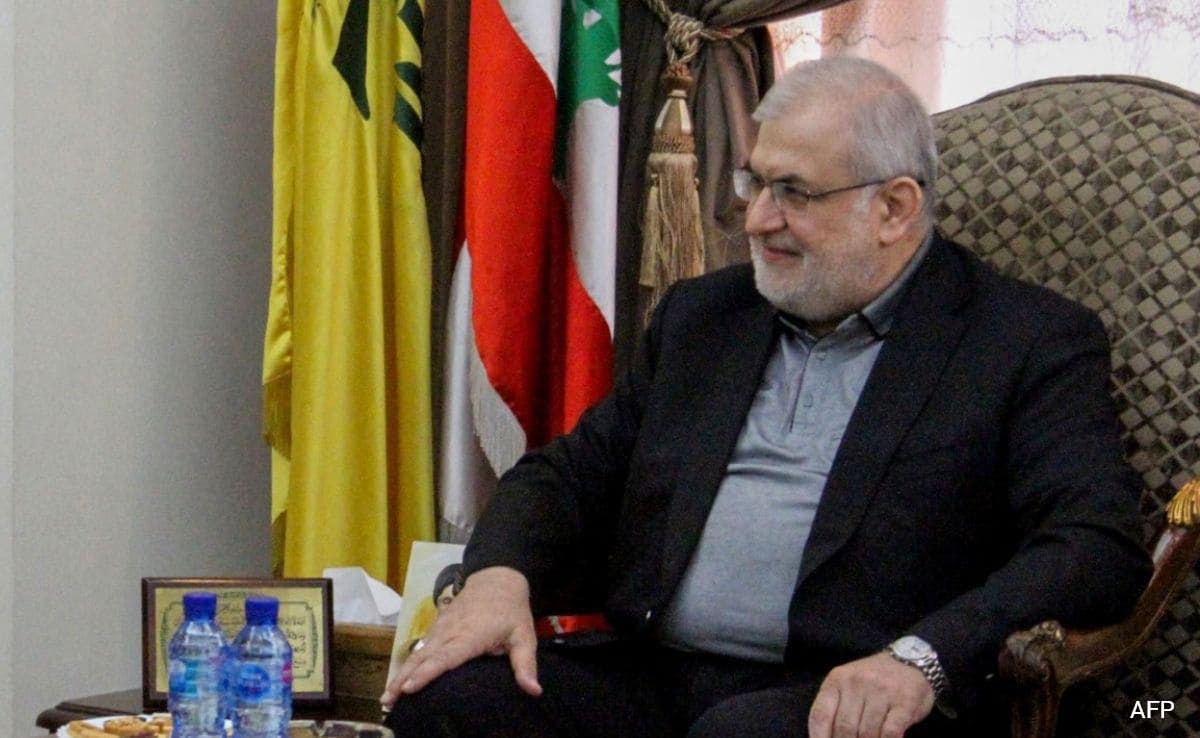
Israel just took out the face of Hezbollah's presence in the Lebanese Parliament. Mohammad Raad, the long-standing leader of the "Loyalty to the Resistance" bloc, was killed during an Israeli airstrike in southern Lebanon. This isn't just another name on a target list. Raad was the bridge between the militant operations of the group and the formal halls of Lebanese government. When a figure like that is removed from the board, the ripple effects hit Beirut and Tehran just as hard as they hit the front lines.
He was a veteran. Since 1992, Raad sat in parliament, acting as the primary political voice for Hezbollah. He wasn't just a placeholder. He was a strategist who knew how to navigate the complex, often frustrating world of Lebanese sectarian politics while maintaining a hard line for the "Resistance." His death marks one of the most significant blows to Hezbollah’s political infrastructure since the current conflict began.
Why Raad Mattered More Than Most Realize
Most people look at Hezbollah and see missiles and bunkers. That's a mistake. The organization functions because it has a dual nature—it’s a social services provider and a political powerhouse. Mohammad Raad was the architect of that political legitimacy. He spent decades ensuring that even when the group was under international pressure, it had a veto-wielding seat at the table in Beirut.
Raad survived the 2006 war. He saw the rise and fall of various Lebanese governments. He was the guy who could walk into a room with Christians, Sunnis, and Druze and remind them that Hezbollah wasn’t going anywhere. Losing him means Hezbollah has lost its most experienced diplomat at a time when Lebanon is staring down total economic and social collapse.
His death follows a pattern of precise Israeli targeting aimed at the "brains" of the operation. Israel isn't just going after the guys holding the rifles anymore. They’re dismantling the leadership layer that manages the bureaucracy of war. Raad’s death, alongside other high-ranking officials in the same strike, suggests a massive intelligence breach within the group's inner circle.
The Vacuum in Lebanese Politics
Lebanon is already a mess. It hasn't had a president for years. The economy is a disaster. Now, the main interlocutor for the country's most powerful armed faction is gone. This creates a vacuum that nobody is ready to fill. Who steps into Raad's shoes? It’s not just about winning an election; it’s about having the gravitas to keep the "Loyalty to the Resistance" bloc unified.
Raad’s personal tragedy adds a layer of grim irony to this. Just months ago, his son, Abbas Raad, was also killed in an Israeli strike. The elder Raad was praised by Hezbollah supporters for his stoicism after his son's death, often seen as a "martyr's father" which boosted his street cred among the rank and file. Now, the family’s political legacy is essentially being written in blood.
The political wing usually acts as a buffer. It’s the part of the group that deals with the UN, the Lebanese Army, and international mediators. With Raad gone, that buffer is thinner. There's a real risk that Hezbollah becomes more insular, more paranoid, and less willing to engage in the diplomatic "give and take" that has prevented Lebanon from sliding into another full-scale civil war.
The Intelligence Failure No One Wants to Admit
How does Israel keep finding these guys? You don't just "stumble" upon the Head of the Political Wing. This strike required real-time, high-level intelligence. It means someone knew exactly where Raad was, who he was meeting with, and when he would be vulnerable.
For Hezbollah, this is a nightmare scenario. It suggests that their communications are compromised or, worse, they have high-level informants leaking locations. If Raad isn't safe, no one is. This isn't just about the loss of one man; it’s about the total erosion of the "security umbrella" the group once bragged about.
Impact on the Southern Front
While Raad was a "political" figure, don't think for a second he wasn't involved in the military strategy. In Hezbollah, the two wings are intertwined. He was part of the decision-making process that decided how far to push Israel along the Blue Line.
The Israeli strategy here is clear: decapitation. By removing the political leadership, they force the military commanders to take on more administrative roles, distracting them from the actual fighting. It’s a classic move to sow chaos. If you can’t win the war on the ground overnight, you make the organization's head spin until it can't give clear orders.
What This Means for the Region
Tehran is watching. Raad was a trusted ally of the Iranian leadership. His death is a signal to Iran that their primary proxy is under an existential threat. This could go one of two ways. Either Hezbollah scales back to protect its remaining leaders, or they feel they have nothing left to lose and escalate the rocket fire into northern Israel.
Historically, when Hezbollah loses a major leader, they respond with a significant show of force. But the current situation is different. They’ve already lost a huge chunk of their mid-to-high-level commanders. Their ability to retaliate without triggering a total invasion of Lebanon is shrinking every day.
The Reality on the Ground in Beirut
In the streets of Dahieh and southern Lebanon, the mood is heavy. Raad was a familiar face on television, a symbol of stability for the Shia community. His death feels personal to many who saw him as the guy who fought for their rights in a government that often ignored them.
But for his political opponents in Lebanon, there’s a quiet, uneasy tension. While they might have disagreed with everything Raad stood for, he was a known quantity. You could talk to him. With him gone, the "unknown" is much more dangerous. The fear is that the "political wing" will now be replaced by younger, more radicalized figures who haven't spent thirty years learning how to compromise.
Where Things Stand Now
The strike that killed Raad wasn't a random event. It was a calculated move to break the spine of Hezbollah’s governance. Israel is betting that by removing the politicians, the militants will crumble. It's a high-stakes gamble. If it works, Hezbollah loses its grip on the Lebanese state. If it fails, you’ve just created a new generation of leaders with a massive grudge and nothing to lose.
The immediate next step for observers is to watch the funeral and the subsequent appointments within the Loyalty to the Resistance bloc. Whoever replaces Raad will tell us everything we need to know about Hezbollah's future. If they pick a hardliner, expect more fire. If they pick a bureaucrat, they might be trying to salvage what’s left of their political standing.
Keep an eye on the Lebanese Parliament’s next session. The empty seat where Raad sat for over three decades is going to be the loudest thing in the room. The transition won't be smooth. It never is in Beirut. Expect heightened security, more "surgical" strikes from Israel, and a Hezbollah that is increasingly backed into a corner.
If you're following this, stop looking at the border for a second and look at the cabinet meetings in Beirut. That's where the real fallout from Mohammad Raad's death will be felt. The war isn't just on the hills of the south; it's in the offices where the future of Lebanon is being dismantled, one leader at a time.