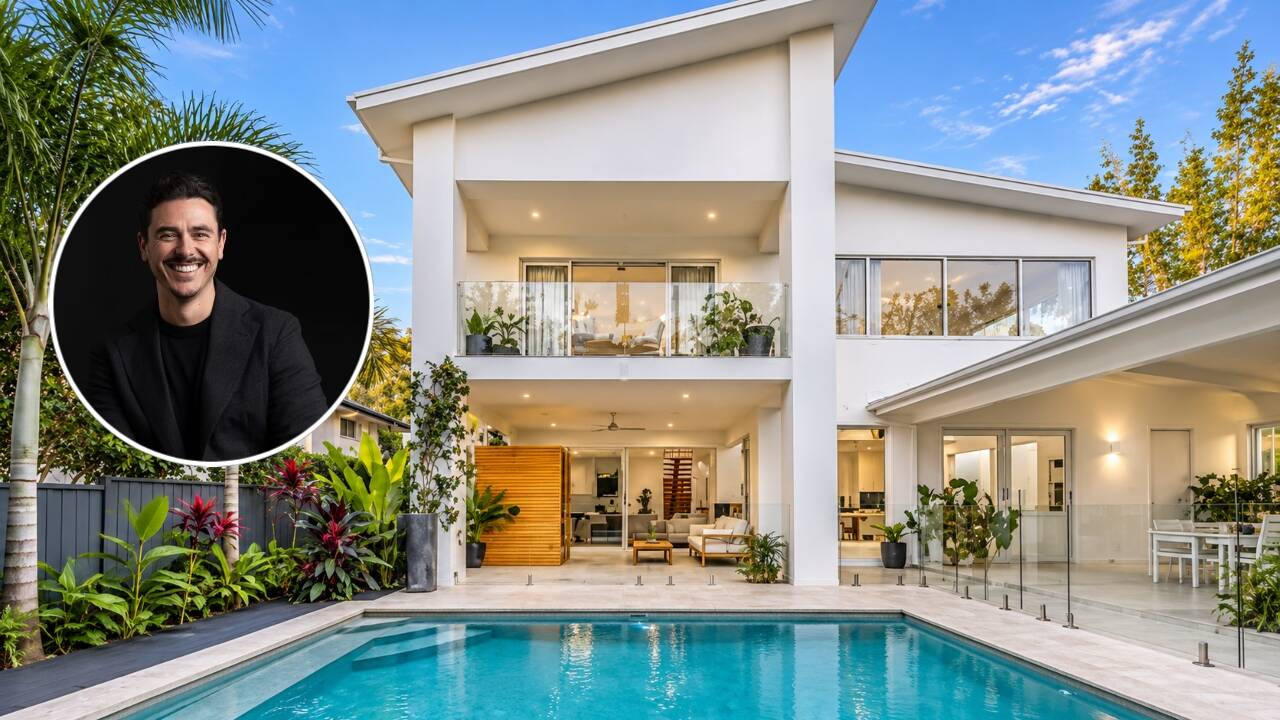
Silence.
In Melbourne real estate, silence used to be an endangered species, hunted to near extinction by the sharp crack of wooden gavels and the frantic waving of paddle numbers in front of red-brick Victorians. For years, the Saturday morning ritual in suburbs like Toorak, Brighton, and Malvern was less a transaction and more a blood sport, complete with espresso carts parked on nature strips and neighbors leaning over white picket fences to watch strangers bankrupt themselves over heritage cornices. For an alternative view, check out: this related article.
Then the music stopped. Not with a crash, and not with the cinematic panic that cable news anchors love to narrate over red stock tickers, but with a slow, heavy exhale that settled across the Yarra River like winter fog.
Enter Marty Fox. Similar coverage on the subject has been published by Forbes.
If you have watched Australian television over the past few years, you know the silhouette before you even hear the pitch. The tailored suits, the sharp cadence of a founder who built Whitefox Real Estate from a boutique upstart into a powerhouse across Victoria, New South Wales, and Queensland, and the easy authority of a judge on The Block who has spent his career telling contestants where they wasted their budgets. Fox is a man whose entire professional existence is calibrated to read the temperature of a room—and the temperature of a market—before the rest of the street has even checked the forecast.
So when news broke that Marty Fox had quietly signed the papers on a $4.2 million home, the headline looked, on its surface, like just another line item in the luxury property pages. Rich agent buys expensive house. Stop the presses.
Except that is not the story at all. Not even close.
The real story is what Fox said immediately after the ink dried: softer conditions favour buyers. Coming from a man who makes his living representing sellers, that admission is the equivalent of a five-star chef leaning across the pass to tell you that the Tuesday lunch special is actually the best deal on the menu, and you would be a fool to pay Saturday night prices.
The Architecture of Hesitation
To understand why a $4.2 million purchase by an industry insider matters to anyone trying to buy a three-bedroom weatherboard or a two-bedroom apartment, you have to understand the psychology of fear.
Real estate is rarely driven by spreadsheets. Spreadsheets are what we print out afterward to justify what our nervous systems already decided to do in the hallway during a fifteen-minute open inspection. When the market is roaring, the dominant emotion is terror—specifically, the terror of being left behind on the platform while the train pulls away toward unattainable wealth. You waive the building inspection. You stretch your borrowing capacity until the bank manager winces. You pay $200,000 over reserve because the guy standing next to the hydrangeas looks like he wants it more than you do.
When conditions soften, the terror flips polarity. Suddenly, the crowd evaporates. The people who were desperate to buy six months ago are now standing on the sidewalk with their hands in their pockets, waiting for the floor to drop out. They tell themselves they are being prudent. They tell themselves they are waiting for certainty.
Consider a hypothetical couple—let’s call them David and Sarah—who have spent the last eighteen months losing auctions in Melbourne’s inner south. Every Saturday, they have put on their best coats, rehearsed their bidding limits in the car, and watched a buyer’s advocate with a Bluetooth earpiece crush their dreams in forty-five seconds flat. By autumn, David and Sarah are exhausted. They have stopped going to inspections. Their pre-approval is gathering dust in an email folder.
Now, picture the exact house they wanted coming onto the market in a softer climate. The vendor is motivated. The borrowing costs have thinned out the speculative investors. There are only two other parties at the auction, and neither of them looks particularly eager to raise a hand.
What do David and Sarah do? Often, they freeze. Because the crowd is gone, they assume something must be wrong with the house, or the street, or the economy. They mistake the absence of mania for the presence of danger.
This is the precise psychological trap that separates seasoned operators from panicked onlookers. When Marty Fox steps into a softer market and drops $4.2 million on a home, he is not guessing where the absolute bottom of the interest rate cycle might land eighteen months from Tuesday. He is reading the leverage in the room.
Buying When the Crowd Looks Away
I remember standing in the drizzle outside a renovation project in Prahran a few winters ago, watching an auctioneer try to coax an opening bid out of forty people who were all staring intently at their shoes. The air smelled like wet wool and cold asphalt. Inside, the house had warped floorboards, a kitchen from 1984, and a backyard the size of a postage stamp, yet the vendor was clinging to a price expectation minted during the height of the post-lockdown boom.
No one bid. The property passed in.
Three days later, a quiet buyer walked into the agent's office with a clean, unconditional offer that was nearly fifteen percent below the vendor’s original dream number. Without the adrenaline of a Saturday crowd to validate their stubbornness, the seller took it. That buyer didn't just get a discount; they got time to think, time to inspect the subfloor, and time to negotiate terms that would have been laughed out of the room six months earlier.
That is what "softer conditions" actually look like on the ground. It is not a fire sale where mansions are handed out for pennies. Rather, it is a subtle, profound shift in who holds the pen during negotiations.
During a boom, the seller holds all the cards. Auctions are short, sharp, and merciless. Subject-to-finance clauses are treated like toxic waste. Settlement dates are dictated entirely by the vendor’s next move.
When the market cools—and Victoria, burdened by higher land taxes, shifting investor sentiment, and the lingering gravity of elevated interest rates, has felt that cooling more acutely than almost anywhere else in the country—the power dynamic inverts. Days on market stretch from three weeks to six, then eight. Vendors who need to move because of a new job, a growing family, or a bridging loan suddenly realize that waiting for a unicorn buyer is costing them thousands of dollars a month in holding costs.
For a buyer with their finances lined up, this environment is gold. You can actually walk through a home twice without feeling like you are blocking traffic. You can bring a builder through to tap the walls for moisture. You can negotiate a ninety-day settlement so you aren't paying double rent while you pack boxes.
The Myth of Timing the Bottom
Whenever a prominent figure like Fox makes a high-profile purchase during a sluggish market, the armchair economists come out in force. Why buy now? they ask in the comment sections. Wait another six months and prices will drop another five percent.
It sounds logical. On paper, waiting for the absolute trough is a masterstroke. In reality, trying to catch the exact bottom of a property cycle is like trying to catch a falling chef's knife while blindfolded—and even if you miss the blade, you usually miss the handle too.
Here is why the "wait for the bottom" strategy fails almost everyone who tries it: the bottom is only visible in the rearview mirror.
You never wake up on a Tuesday morning to a push notification announcing that housing prices have officially hit their lowest point and will begin rising at noon. Instead, the turn happens invisibly. First, the good properties—the ones on quiet, tree-lined streets with north-facing backyards and solid bones—stop lingering on the portals. Then, clearance rates creep up from fifty-eight percent to sixty-four percent. By the time the headlines declare that the recovery is underway, the exact same crowd that was hiding on the sidewalk rushes back into the street all at once.
Suddenly, the ten properties you were casually browsing are gone. Prices jump five percent in a single quarter just to absorb the pent-up demand, wiping out whatever imaginary discount you thought you were waiting for, and you are right back to bidding against six other families in the rain.
Fox’s $4.2 million acquisition is a textbook demonstration of choosing quality over timing. In the upper echelons of the Melbourne market, A-grade homes—properties with genuine architectural merit, prime postcodes, and scarce land—rarely plummet. They simply pause. Their owners are rarely forced sellers; if they don't get a fair number, they take the house off the market and wait three years.
Consequently, when a blue-chip home actually comes up for grabs during a softer window, the victory isn't about stealing it for half price. The victory is simply being able to buy it at all without having to fight a bidding war against three expatriates and a tech founder who don't care what it costs.
What $4.2 Million Actually Buys in a Shifting Market
Let’s strip away the glamour of the price tag for a moment and look at the mechanics. Four-point-two million dollars sounds like a universe away from the average first-home buyer trying to scrape together a deposit in Brunswick or Footscray, yet the underlying physics of the transaction are identical at every price bracket.
At $850,000, a softer market means the renovated terrace with the slightly awkward second bedroom doesn't spark a frenzy. It means you can offer $815,000 on a Monday afternoon, attach a seven-day building and pest condition, and have a serious conversation with the agent instead of being told to "bring your checkbook on Saturday."
At $4.2 million, the numbers have an extra comma, but the friction is the same. High-end buyers are just as sensitive to momentum as anyone else. When luxury clearance rates wobble, executives hold onto their bonuses and wait to see what the Reserve Bank will do next quarter. That hesitation creates an air pocket—a brief, quiet window where someone who knows what they are looking at can step in, make a decisive move, and secure an asset that will anchor their family for the next decade.
Of course, buying in a softer market requires a stomach made of iron. There is zero social validation in it. When you buy at the peak of a boom, everyone at the dinner party congratulates you, tells you what a brilliant neighborhood you chose, and excitedly shares stories about how much the house down the street just sold for.
When you buy during a lull, people look at you with a mixture of pity and confusion. Did you see the news about auction clearance rates? they ask over dessert. Aren't you worried prices might dip a bit more?
It takes genuine conviction—or decades of watching property cycles turn like clockwork—to smile, pour another glass of wine, and ignore the noise.
The Invisible Cost of Waiting
There is a metric that never shows up in CoreLogic data or quarterly bank reports, and that is the cost of a life put on pause.
Think back to our hypothetical couple, David and Sarah. Every month they spend sitting on the sidelines waiting for the "perfect" economic signal is another month spent in a rental apartment where they aren't allowed to hang pictures on the walls. It is another winter dealing with a landlord who refuses to fix the drafty window frames, another year of watching their children share a bedroom that they outgrew two birthdays ago.
Real estate is an asset class, yes, and treating it carelessly is a fast way to ruin your balance sheet. Overpaying for a compromised property—one on a noisy main road, or an apartment in a building riddled with structural defects—is a mistake that a rising market takes years to forgive. Softer conditions are no excuse to buy junk. In fact, in a sluggish market, bad properties sit on the shelf for months for a very good reason: nobody wants them, and nobody will want them when you try to sell them in seven years either.
The trick, as Fox’s own buying behavior underscores, is to hunt relentlessly for quality while everyone else is distracted by the weather.
When the crowd retreats, the noise dies down enough for you to actually hear yourself think. You can walk into a living room at three in the afternoon and notice how the winter sun hits the floorboards. You can stand on the back deck and listen to whether the traffic from the arterial road two blocks away hums through the trees. You can look the selling agent in the eye and ask what the vendor actually needs to make their next chapter work, rather than shouting numbers across a lawn like you are trading pork bellies in Chicago.
The Silence Before the Next Rush
Eventually, the cycle will turn. It always does. Interest rates will ease a quarter-point at a time, consumer confidence will thaw, and the very same commentators warning buyers away from the market today will write breathless columns about the "unexpected surge" in spring property prices.
The espresso carts will roll back onto the nature strips in Toorak and Brighton. The paddles will go back up in the air. The fear of missing out will roar back to life, loud and deafening, drowning out every shred of patience and rational negotiation.
And somewhere behind a quiet front door, behind freshly painted walls and a settled mortgage, the people who bought while the street was empty will simply make their morning coffee and watch the chaos unfold from the window.