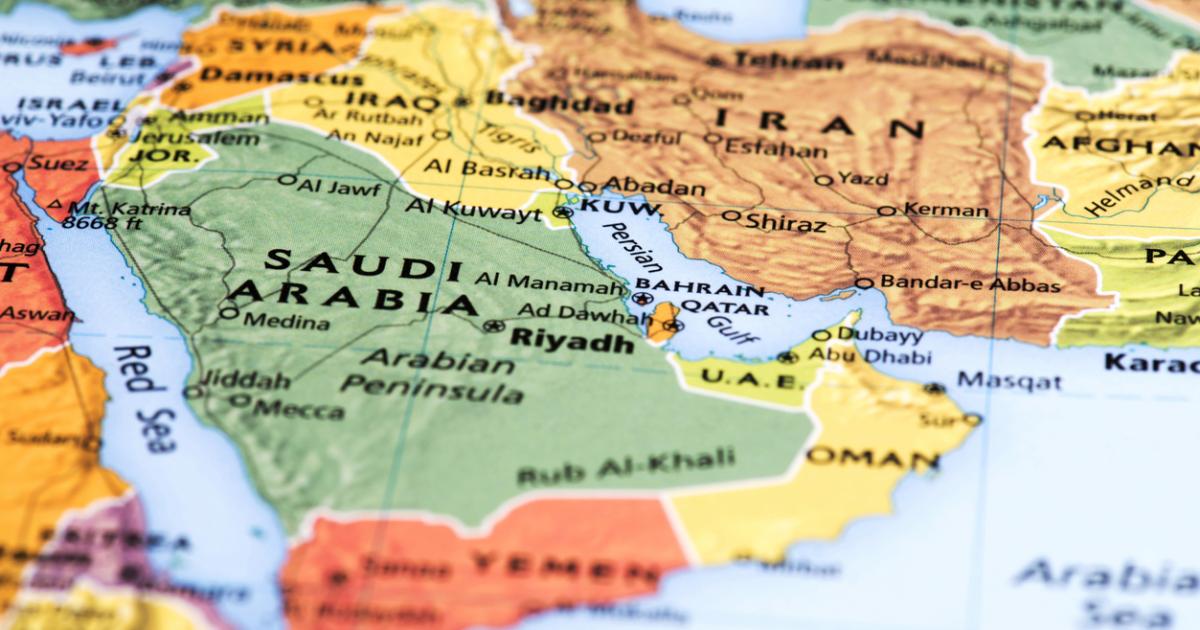
The recent surge in private debt issuance by Gulf Cooperation Council (GCC) states—surpassing $10 billion in a concentrated window—marks a structural shift in how hydrocarbon-dependent economies manage geopolitical risk and liquidity constraints. While traditional public bond markets offer depth and visibility, the current regional security environment has induced a volatility premium that makes standard Eurobond issuances economically inefficient. Gulf sovereigns are now prioritizing the Discretionary Liquidity Model, a strategic move away from public scrutiny toward tailored, bilateral, and private placements that shield borrowing costs from the noise of regional conflict.
The Mechanics of the Private Placement Pivot
The migration to private deals is not a sign of desperation but a calculated optimization of the sovereign balance sheet. Public markets operate on the Price-Discovery Principle, where every geopolitical flare-up is immediately priced into the yield. By utilizing private placements, GCC entities bypass the public "war discount." For a deeper dive into similar topics, we recommend: this related article.
This shift is driven by three distinct structural pressures:
- Yield Insulation: Public benchmarks are highly sensitive to headlines. Private credit allows a sovereign to negotiate terms based on long-term creditworthiness and hydrocarbon reserves rather than the previous week’s news cycle.
- Speed of Execution: A traditional public bond offering requires extensive roadshows, regulatory filings, and a specific "window" of market calm. Private deals can be closed in a fraction of the time, providing immediate liquidity for fiscal buffers.
- Counterparty Alignment: These deals are often struck with institutional investors—such as pension funds or sovereign wealth funds from allied nations—who hold a "strategic" rather than "speculative" view of the region.
The Cost Function of Geopolitical Volatility
Geopolitical risk acts as a tax on capital. When regional tensions rise, the Risk-Adjusted Cost of Capital (RACC) for Gulf issuers spikes. In a public setting, this forces the issuer to offer a higher coupon to attract a broad base of investors. However, the internal rate of return for a private lender may be lower if the deal includes "soft" components, such as future trade agreements or energy security guarantees. For further details on this development, in-depth coverage can be read on MarketWatch.
The math behind the $10 billion spree suggests a preference for Fixed-Rate Private Notes. By locking in rates privately, GCC treasuries avoid the "extension risk" associated with public markets where a failed auction could damage the sovereign’s long-term reputation.
Structural Divergence Between Qatar, Saudi Arabia, and the UAE
The $10 billion figure is not a monolith. Each GCC state utilizes private credit to solve a specific fiscal equation.
Saudi Arabia: The Capital Expenditure Gap
The Kingdom faces a massive funding requirement for Vision 2030 projects. As the Public Investment Fund (PIF) scales up domestic deployment, the central treasury must manage the gap between current oil revenues and projected outlays. Private deals allow Saudi Arabia to diversify its creditor base away from traditional Western banks toward Asian and domestic liquidity pools without the transparency requirements that might slow down project timelines.
Qatar: The LNG Expansion Hedge
Qatar’s borrowing is tethered to the North Field expansion. Their use of private credit serves as a bridge loan mechanism. By securing $2 billion to $3 billion in private placements, Qatar maintains its public debt-to-GDP ratio at optics-friendly levels while funding the infrastructure necessary to dominate the 2027-2030 LNG market.
The UAE: Sophisticated Liquidity Management
The UAE, specifically Abu Dhabi, operates from a position of extreme surplus. For them, private deals are a tool for Monetary Sterilization. They borrow not because they lack cash, but to maintain a presence in international credit markets and to provide a benchmark for their state-linked enterprises (GREs).
The Hidden Risks of Opaque Debt
The move toward private credit is a double-edged sword. While it protects against short-term volatility, it creates a Transparency Deficit that can lead to long-term mispricing.
The primary risk is the Shadow Debt Multiplier. When a sovereign takes on $5 billion in private debt, that liability is not always immediately visible on the standard public balance sheet. If multiple GCC states follow this path simultaneously, the total regional leverage becomes difficult for credit rating agencies to calculate accurately. This uncertainty can eventually lead to a "sudden stop" in credit if lenders realize the cumulative debt burden is higher than reported.
Furthermore, private credit often comes with Covenant Complexity. Unlike standardized public bonds, private deals may include clauses that trigger early repayment based on oil price floors or specific credit rating downgrades. This creates a "trapdoor" effect: if oil prices collapse while regional tensions are high, the sovereign could face a simultaneous liquidity drain from multiple private lenders.
The Mechanism of Direct Lending vs. Club Deals
The $10 billion spree has been characterized by two distinct formats:
- Direct Lending: A single large institutional investor (often a Swiss or American insurance giant) provides the entire sum. This is the ultimate form of yield insulation.
- Club Deals: A small group of 3-5 banks provides the capital. This offers slightly more liquidity but increases the risk of information leakage.
Liquidity Arbitrage in a High-Interest Rate Environment
The timing of this borrowing spree coincides with a global "higher-for-longer" interest rate environment. GCC states are engaging in Liquidity Arbitrage. They are betting that the current cost of private debt—while high by historical standards—is lower than what they would face in 12 months if regional conflicts escalate.
By securing $10 billion now, these states are pre-funding their 2026 and 2027 obligations. This is a defensive crouch. They are building a "Fortress Balance Sheet" that can withstand a prolonged period of restricted market access.
The relationship between the Brent Crude Spot Price and Sovereign Spreads has decoupled. Historically, high oil prices meant lower borrowing costs. Today, high oil prices are being offset by the "Conflict Premium," creating a unique situation where GCC states are wealthy in terms of cash flow but face expensive capital markets. Private deals are the only way to resolve this contradiction.
The Creditor’s Perspective: Seeking the "Safe Haven" Yield
For the investors on the other side of these $10 billion deals, the Gulf represents one of the few regions globally offering high yields backed by hard assets (oil and gas). In a world of shaky G7 balance sheets and stagnant growth, a private loan to a GCC sovereign is seen as a Collateralized-Style Bet.
Investors are prioritizing three metrics:
- Foreign Exchange Reserves: The ability of the central bank to defend the currency peg.
- Fiscal Break-even Oil Price: The price at which the sovereign can balance its budget.
- Hydrocarbon Reserve Life: The multi-decadal guarantee of revenue.
The appetite for these deals remains high because the Gulf is perceived as "too big to fail" for the global energy transition. Even as the world moves toward renewables, the cash flow generated by GCC states remains the primary engine for global infrastructure investment.
Implementation of the Dual-Track Funding Strategy
Moving forward, the $10 billion spree will not be a one-off event but the template for a Dual-Track Funding Strategy. GCC treasuries will maintain a "thin" public presence to keep their credit ratings active, while the bulk of their tactical financing will shift to the private "dark pools" of capital.
The strategic play for GCC sovereigns is to weaponize their liquidity. By securing private debt during times of crisis, they demonstrate to the world that their access to capital is independent of Western public market sentiment. This strengthens their hand in geopolitical negotiations and ensures that their domestic development agendas—whether Vision 2030 or North Field expansion—remain decoupled from the volatility of the Levant or the Red Sea.
The immediate action for regional treasury offices is the establishment of Dedicated Private Placement Desks. These units must function like specialized investment banks, mapping global liquidity and building direct relationships with non-traditional lenders in Singapore, Tokyo, and Beijing. The era of the "General Roadshow" is ending; the era of the "Bilateral Credit Treaty" has begun.