Dust gets into everything in West Texas. It settles on the kitchen table, coats the leaves of stubborn mesquite trees, and gets trapped in the deep creases of worn leather boots. For decades, the soil across two hundred and twenty-five acres of this parched country told a story of exhaustion. It was a story written in hardpan caliche, in runoff scars carved by sudden thunderstorms, and in the eerie silence of a land that had forgotten what it sounded like to host life.
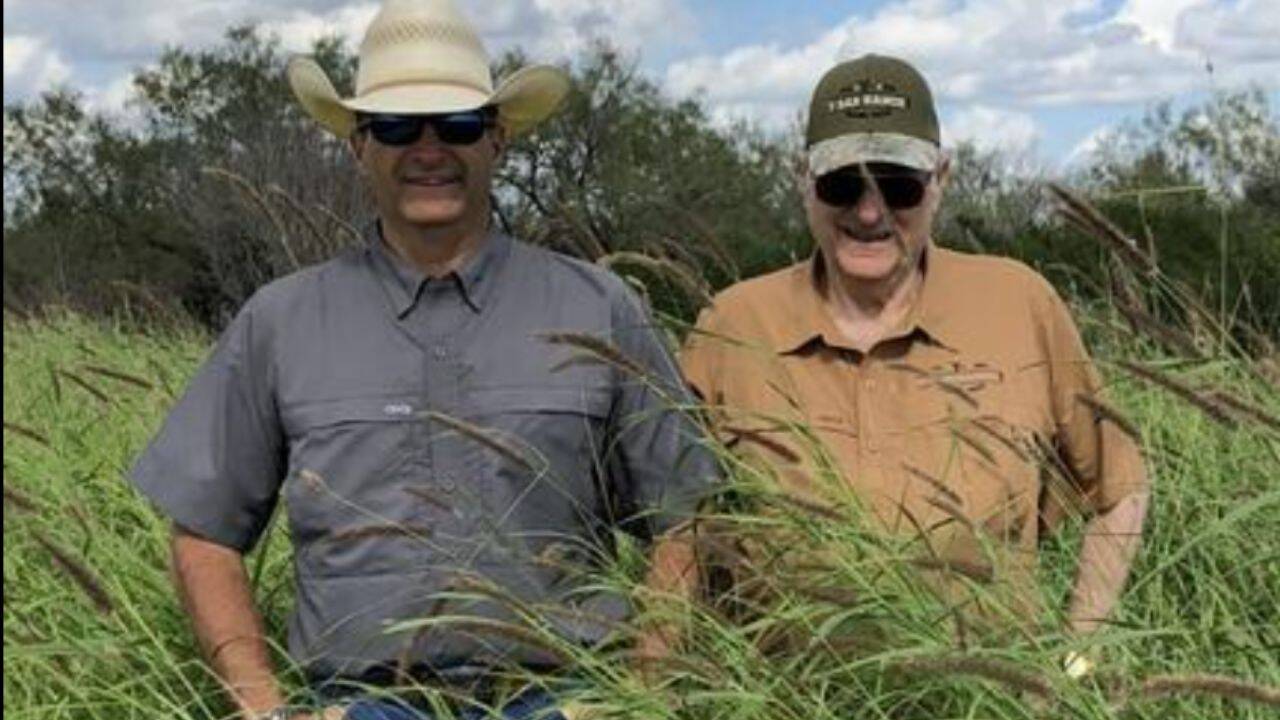
Two friends stood on that dust one afternoon, looking out over property that looked less like a ranch and more like a casualty.
Call them Mark and David. That is not their real names, but it is their exact story. They had bought the land not as a speculative play or a trophy asset, but out of an old, stubborn romanticism. They wanted a piece of earth to call their own. They wanted quiet. What they got was a wake-up call. The previous generations had managed the property the way textbooks and regional tradition dictated: heavy cattle stocking, continuous grazing, and the quiet assumption that nature needed a firm hand to keep it productive.
Instead, the land was dying of thirst—not because it lacked rain, but because it had lost its ability to hold it.
When rain finally came, it did not sink. It raced across the baked surface, gathering speed, tearing away precious topsoil, and dumping it into dry creeks before vanishing entirely. The perennial grasses were gone, choked out by decades of selective grazing that left only the unpalatable, armored weeds behind. And with the native plants went the creatures. There were no jackrabbits bounding through the brush. There were no hawks circling lazily in the heavy air. Most notably, the bobwhite quail—once so abundant in this part of Texas that their afternoon calls served as a natural clock—were entirely absent.
Silence. That was the most striking thing about the ranch. Just wind and heat.
Mark crouched down and picked up a handful of dirt. It was gray, powdery, and completely dead. There was no smell of damp earth, no tangled web of fungal threads holding it together. Just tiny, lifeless granules slipping through his fingers.
"We are doing this wrong," Mark said.
David looked at the horizon, where the sun was beginning to bleed orange behind a barbed-wire fence. "How do we fix something that's been broken for fifty years?"
The answer did not come from a bag of fertilizer or a high-end tractor catalog. It came from looking backward to move forward. They realized that the land did not need to be conquered; it needed to be unburdened.
Restoration is rarely cinematic at first. It looks like waiting. It looks like removing livestock entirely for a season, letting the battered ground catch its breath. To the local old-timers driving past the property line, Mark and David looked like fools who had abandoned agricultural common sense. A rancher is supposed to run cattle. A rancher is supposed to clear brush. Leaving land idle looked like laziness, or worse, failure.
Yet, beneath the surface, a microscopic rebellion was brewing.
Without hooves constantly compacting the earth, water began to find tiny pathways down. Seeds that had lain dormant in the seedbank for decades—seeds buried under layers of calcified dust—finally felt moisture and sunlight. When the next spring arrived, tiny green shoots broke through the crust. They were not the manicured pastures of a golf course. They were a chaotic, messy explosion of native forbs, broomweed, and panicgrass.
Next came the birds.
It started with a single covey of quail, no bigger than your fist, darting across a newly overgrown patch of bluestem. Then came the horned lizards, the meadowlarks, and the sudden, frantic buzzing of pollinators that had not visited this acreage in a generation.
The two friends had not just brought back wildlife. They had remembered an old bargain. When you heal the soil, the soil feeds the plants. When you heal the plants, the animals return. It is a simple equation that modern efficiency tried to engineer out of existence.
Standing on that same porch years later, the dust no longer felt like an enemy. It had been replaced by deep, dark loam that smelled like rain even when the sky was bone-dry. The quail called out from the tall grass at dusk, their familiar, rhythmic whistles cutting through the cooling air. The land was whole again, not because it was tamed, but because it was finally free.