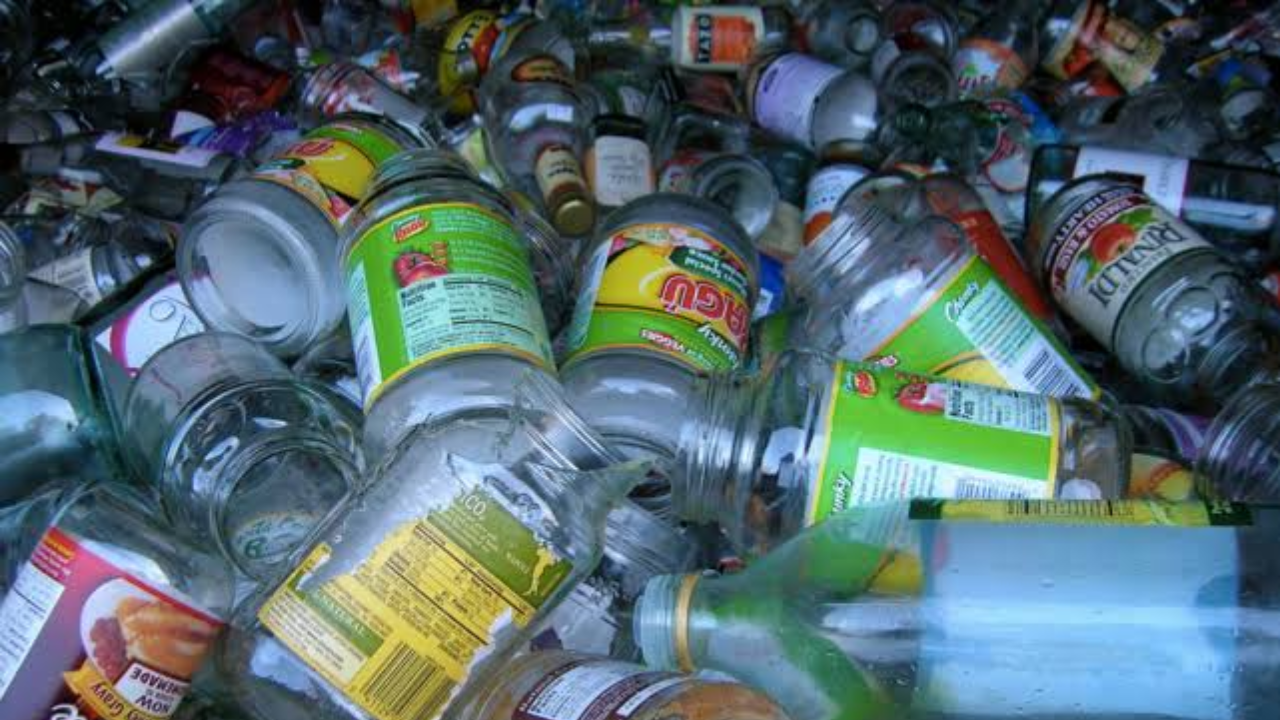
Everybody loves a good fairy tale. You drink a bottle of imported craft beer in Manhattan, toss the empty into a recycling bin, and watch as corporate PR turns your trash into the bedrock of a billionaire fortress. That is the comforting narrative fed to us about JPMorgan Chase using twenty-nine million ground glass bottles to pour concrete for its flashy new headquarters at 270 Park Avenue. It sounds pristine. It sounds circular. It sounds like salvation.
It is also an engineering indulgence wrapped in green paint.
I have spent decades watching developers and municipal bureaucrats fall in love with shiny sustainability props that look brilliant on a slide deck while quietly bleeding capital and ignoring hard material science. When you take a rigid, silica-rich container, crush it into sand-sized particles, and throw it into a cement mix, you are not saving the planet. You are engaging in an expensive PR exercise that masks a fundamental structural hazard known as the alkali-silica reaction.
Let us strip away the marketing gloss and look at what actually happens when you replace natural river sand with crushed Heineken bottles in a skyscraper foundation.
The Chemistry They Do Not Put on the Billboard
The lazy consensus in modern real estate is simple: waste is bad, recycling is good, and substituting waste for virgin material automatically equals progress. The corporate sustainability report treats materials as interchangeable tokens. If a ton of sand goes in, and a ton of crushed glass goes in, the ledger balances.
Physics and chemistry do not care about your ESG score.
Glass is amorphous silica. When you mix it into Portland cement, the high alkaline pore solution inside the concrete starts chewing on that amorphous silica. This creates an expansive alkali-silica gel. When that gel gets wet, it swells with terrifying force, cracking the concrete matrix from the inside out. Concrete engineers have fought this destructive phenomenon for decades. We spend millions of dollars specifying low-alkali cements, adding fly ash, or incorporating slag precisely to stop reactive silica from destroying structural elements.
Then along comes a marketing team demanding that we dump millions of ground bottles straight into the structural mix.
To prevent the concrete from turning into a crumbly sponge via internal expansion, engineers have to pump in supplementary cementitious materials, heavy chemical admixtures, or specialized lithium-based inhibitors. By the time you process the bottles, wash them, sort them by color, crush them to precise micron tolerances, test them for organic contaminants, and reformulate the cement chemistry to counteract the reactivity, you have burned through more energy and cash than you would have spent just trucking in local quarried aggregate.
This is not circular economy engineering. This is high-stakes alchemy performed to satisfy an executive committee's desire for a snappy press release.
The Logistics Illusion of Urban Recycling
Let us talk about the supply chain math. Where do twenty-nine million glass bottles come from? They do not magically materialize at the construction site in Midtown Manhattan. They are collected across municipal curbside streams, hauled to material recovery facilities, sorted, crushed, cleaned, packaged, and freighted to batch plants.
Transporting heavy, low-value bulk materials across dense metropolitan infrastructure burns diesel. Every truck mile cancels out a fraction of the carbon savings claimed by avoiding virgin aggregate mining. Worse, municipal glass collection in North America is notoriously contaminated. Shards of ceramic, paper labels, metal bottle caps, and food residue cling to the glass. If those contaminants make it into high-strength structural concrete, they create localized weak points.
To get glass clean enough for a skyscraper, you run an energy-intensive industrial washing and optical-sorting gauntlet. At scale, the carbon footprint of cleaning post-consumer packaging to industrial construction standards often eclipses the footprint of traditional quarrying.
We are taking a material that was already designed for a specific lifecycle—holding liquids—and forcing it into an adversarial environment where its chemical properties actively work against structural integrity. It is the architectural equivalent of using crystal champagne flutes to hammer railroad spikes. It works for a photo op, but nobody with dirt under their fingernails would bet their life on it without a mountain of chemical insurance.
The Real Fix for Urban Construction Waste
If we actually cared about decarbonizing skyscrapers, we would stop obsessing over novelty waste-streams and fix the structural elephant in the room: cement itself.
Portland cement production accounts for roughly eight percent of global carbon dioxide emissions. The emissions do not come from moving sand around; they come from calcining limestone in massive kilns at fourteen hundred degrees Celsius. Tossing twenty-nine million glass bottles into the mix is a rounding error. It is a distraction that allows developers to check a recycling box while keeping their reliance on carbon-heavy clinker completely intact.
If you want to build a truly sustainable skyscraper, look at the concrete mix design, not the novelty additives. Use calcined clays, carbon-cured concrete blocks, high-volume fly ash, or geopolymer binders that eliminate Portland cement altogether. Design structural members for disassembly so the steel and concrete can be harvested intact when the building reaches the end of its useful life, rather than crushed into a monolithic landfill cake.
Real sustainability is unsexy. It is about reducing cement content per cubic yard, optimizing structural spans so you pour less concrete in the first place, and sourcing aggregates from the nearest possible quarry to eliminate transport emissions. It does not involve shipping crushed bottles across state lines to satisfy a corporate mandate.
The JPMorgan tower stands as an engineering marvel of steel and glass, but let us stop pretending that grinding up beer bottles made the structure fundamentally sounder or greener. It made it more expensive, chemically complex, and marketable to a public that desperately wants to believe we can shop our way out of a climate crisis.
Stop designing buildings for the marketing department. Build them for the physics.