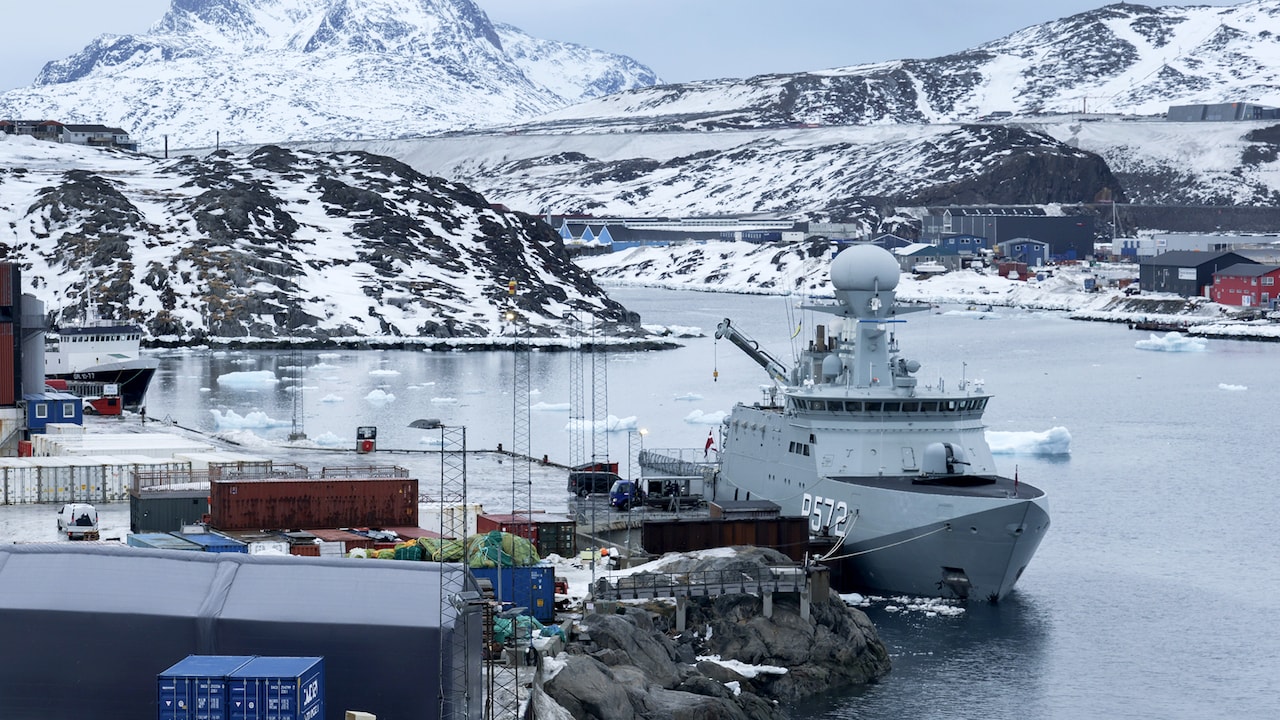
Tokyo is packing its bags for Nuuk, and the financial press is treating it like a masterstroke of economic warfare. The narrative is comforting: Japan, desperate to break its suffocating reliance on Chinese critical minerals, sends a high-powered delegation to Greenland to secure the untapped treasures of the Arctic. It sounds strategic. It sounds forward-thinking.
It is a logistical and geological fantasy.
The breathless coverage of Greenland’s rare earth element (REE) potential relies on a lazy consensus that confuses "resources in the ground" with "supply chains on the market." For decades, mining conglomerates and resource-starved nations have looked at melting Arctic ice sheets and fantasized about a mining bonanza. But sending diplomats to evaluate deposits like Kvanefjeld or Tanbreez ignores the brutal, unyielding physics of rare earth processing and the realities of geopolitical gridlock.
Japan is not securing its tech future. It is chasing a mirage.
The Myth of the Virgin Deposit
The global obsession with finding new rare earth mines stems from a fundamental misunderstanding of the industry. The problem has never been a scarcity of rocks. Neodymium, praseodymium, and dysprosium are not actually rare; they are distributed widely across the earth's crust.
The bottleneck is, and always has been, processing.
Extracting a cracked chunk of ore from a remote Greenlandic fjord achieves absolutely nothing if you cannot refine it. Rare earth mining produces a highly complex, often radioactive concentrate containing thorium and uranium. Separating these tightly bound elements into the 99.99% pure oxides required for advanced electronics or electric vehicle magnets is a toxic, multi-stage chemical nightmare.
Right now, China controls roughly 90% of global permanent magnet production and the vast majority of refining capacity. If Japan backs a mine in Greenland, where will the ore go?
Imagine a scenario where a joint venture successfully navigates Greenland's notoriously stringent environmental regulations and extracts thousands of tons of ore. Under current global infrastructure, that ore would likely still have to be shipped straight to Chinese separation facilities. You haven't broken a monopoly; you have just funded a new extraction outpost for it.
I have watched mining tech firms and sovereign wealth funds throw hundreds of millions of dollars at non-Chinese extraction projects over the last fifteen years. They almost always collapse in the pre-feasibility stage when they realize the capital expenditure required to build independent, localized refining infrastructure is economically ruinous.
Greenland Is Not For Sale (Or For Mining)
The geopolitical analysts cheering this delegation are blind to the domestic politics of Greenland. The country operates under a fragile, highly protective political framework that prioritizes environmental preservation and indigenous sovereignty over rapid industrialization.
Look at the scars left behind by previous attempts. In 2021, Greenland’s parliament passed a law banning uranium mining and halting the massive Kvanefjeld project, which was poised to be one of the largest rare earth mines outside of China. Why? Because the local population rightfully feared the radioactive waste byproducts threatening their pristine fishing grounds.
The Tanbreez project, often touted as a lower-radiation alternative, still faces monumental infrastructure deficits. Greenland lacks roads. It lacks deep-water ports capable of year-round bulk shipping in treacherous, iceberg-laden waters. It lacks a local industrial workforce to scale a complex mining operation.
To build a functioning mining eco-system in Greenland requires tens of billions of dollars in foundational infrastructure before you even pull a single gram of neodymium from the earth. The window of operation each year is dictated by brutal Arctic winters. When you calculate the true cost per ton of extracted material under these conditions, the economics fall apart.
Dismantling the "People Also Ask" Delusions
The public discourse surrounding this issue is warped by a few fundamentally flawed assumptions. Let's address them directly.
Can't Japan just use its own advanced processing technology?
Japan’s state-backed metal corporation, JOGMEC, possesses world-class metallurgical expertise. But expertise does not override geography or economics. Processing rare earths requires massive amounts of chemical reagents, heavy energy inputs, and vast tailings ponds to manage hazardous waste. You cannot build these facilities easily in Japan due to space constraints and strict environmental laws, and building them in the Arctic wilderness of Greenland is a logistical non-starter.
Won't high rare earth prices make Arctic mining profitable?
This assumes prices stay static. The rare earth market is notoriously volatile and highly manipulated. Whenever Western or Japanese projects get close to viability, Chinese state-backed producers can easily ramp up production, flood the market, and crash prices. They did it a decade ago, wiping out early-stage Western mining startups, and they can do it again. You cannot out-finance a state-subsidized monopoly using market-rate capital.
| Region / Project | Estimated Regulatory Approval Time | Infrastructure Readiness | Geopolitical Viability |
|---|---|---|---|
| Greenland (Kvanefjeld/Tanbreez) | 10+ Years (High political resistance) | Extremely Poor (No roads, seasonal ports) | Low (Target for environmental veto) |
| Australia (Lynas/Mt Weld) | Established | Excellent / Existing | High (Proven independent supply chain) |
| United States (Mountain Pass) | Established | Moderate (Ramping up refining) | High (Heavy domestic subsidies) |
The Real Strategy Japan Is Ignoring
If Japan wants to insulate its automotive and electronics industries from supply shocks, sending a delegation to look at rocks in Greenland is a waste of bureaucratic energy. They are solving the wrong problem.
Instead of trying to dig new holes in the most inhospitable corners of the planet, resource security requires a two-pronged approach that ignores the mining hype cycles entirely.
1. Weaponize Urban Mining
The most concentrated deposits of rare earth elements are not under the Greenland ice sheet. They are sitting in the landfills, recycling centers, and unused electronics of Tokyo, Osaka, and Nagoya. Urban mining—the systemic extraction of critical minerals from e-waste and discarded electric vehicle motors—avoids geopolitical risk, bypasses environmental mining bans, and keeps the supply chain entirely domestic.
The technology to recycle permanent magnets exists. What is lacking is the aggressive mandates and collection infrastructure to make it yield industrial-scale volumes. Japan should be pouring billions into automated e-waste harvesting rather than Arctic expeditions.
2. Radical Substitution Engineering
The ultimate victory over a monopoly is not finding an alternative supplier; it is making the monopolized material obsolete.
Companies like Honda and Nissan have already experimented with heavy rare earth-free magnets for hybrid and electric vehicles. The real battlefield is the laboratory, not the fjord. Funding material science research to develop synchronous reluctance motors or alternative magnetics that utilize abundant materials like iron and nitrogen is the only permanent solution to critical mineral vulnerability.
Stop Applauding the Photo-Ops
The downside to this contrarian view is obvious: material science breakthroughs take time, and e-waste recycling cannot yet meet 100% of surging demand. It is far easier for politicians to sign memorandums of understanding in Nuuk and issue press releases about "diversifying supply chains" than it is to fundamentally re-engineer an industrial manufacturing sector.
But let's be clear about what this Greenland trip actually is: geopolitical theater designed to soothe nervous shareholders and voters.
When the Japanese delegation lands in Greenland, they will be greeted by stunning landscapes, immense geological formations, and a total absence of the industrial reality required to turn those rocks into microchips. Western and Asian companies will continue to announce Arctic exploration ventures, raise capital on the promise of "breaking the monopoly," and subsequently watch that capital drown in the realities of Arctic logistics and toxic refining mechanics.
Stop buying into the romance of the frontier. The race for critical mineral independence will not be won by planting flags in the Arctic ice. It will be won by the nations that master the unglamorous, hyper-complex chemistry of recycling and substitution right at home. Everything else is just expensive tourism.