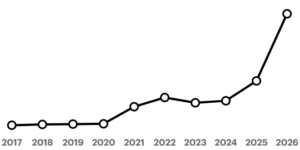
The steel remains, but the spirit of the thing has changed. If you walk through the industrial heartlands of northern Germany, the pipelines look the same as they did three years ago—great, silver arteries pulsing through the earth. But the molecules inside no longer carry the weight of a foreign empire.
When Russia invaded Ukraine in February 2022, a decades-long marriage of convenience between German industry and Russian energy didn't just end; it imploded. At the center of that wreckage sat SEFE, or Securing Energy for Europe. Back then, it wore a different name: Gazprom Germania. It was a subsidiary of the Russian state-owned giant, a Trojan horse of infrastructure that controlled everything from massive gas storage caverns to the billing systems of local municipalities.
Then came the seizure. The German government, realizing that their national warmth and industrial survival were being held hostage by a boardroom in Moscow, stepped in. They didn't just regulate it. They took it. Now, the German state is preparing to do something even more radical: they are putting it up for sale.
The Puppet Master’s Leftovers
Imagine owning a house where the previous tenant left the stove on, the doors locked from the outside, and a collection of fine china they might come back to claim at any moment. That was the situation Berlin faced. SEFE wasn't just a company; it was a sprawling, interconnected web of energy logistics.
When the German federal government took control through the Federal Network Agency, it was an act of desperation. They were staring down a winter of blackouts and shuttered factories. The "trusteeship" was a legal band-aid. By late 2022, the state had to go further, injecting billions of euros to prevent a total collapse. They became the reluctant owners of a Russian ghost.
But the European Union has rules about these things. You cannot simply nationalize a massive energy conglomerate and keep it on the public books forever. Under EU state aid rules, Germany was given a deadline. They have to reduce their stake to a maximum of 25% plus one share by the end of 2028. The clock is ticking, and the process of "privatization" is no longer a theoretical debate in a smoky committee room. It is a looming financial reality.
The Invisible Stakes of the Sale
To understand why this sale matters, you have to look past the spreadsheets. Consider a hypothetical mid-sized glass manufacturer in Thuringia. Let's call the owner Klaus. For thirty years, Klaus didn't care where his gas came from, as long as it was cheap and the pressure was steady. When the war started, Klaus watched his energy bills multiply by five. He faced a choice: fire half his staff or close the doors.
SEFE is the entity that ensures Klaus doesn't have to make that choice again. It manages the storage facilities that act as the nation’s battery. When the German government sells SEFE, they aren't just selling "shares." They are selling the guardianship of Klaus’s furnace.
The risk is immense. If the sale is handled poorly—if it is sold to a private equity firm looking to strip the assets and flip them for a profit—the security that Berlin fought so hard to reclaim could vanish. If it is sold to a competitor who lacks the stomach for long-term infrastructure investment, the pipelines might rot.
The Search for the Right Suitor
The German Finance Ministry is currently scanning the globe for the right kind of buyer. They aren't looking for a quick paycheck. They need a partner who understands that energy infrastructure in 2026 is less about "business as usual" and more about "geopolitical defense."
Who wants to buy a former Gazprom division?
- Institutional Investors: Think massive pension funds that crave steady, boring returns over decades.
- Energy Consortia: Groups of European companies that want to ensure the grid remains integrated and stable.
- Hydrogen Pioneers: This is the wildcard. Germany is betting its future on green hydrogen. SEFE’s pipelines are the primary candidates for being "re-gassed" to carry hydrogen from the North Sea into the industrial south.
The complexity of the sale is compounded by the legal baggage. Gazprom, the original parent, hasn't exactly sent a "congratulations" card. There are lingering legal threats and the shadow of international arbitration. Any buyer isn't just purchasing pipes; they are purchasing a seat at a very litigious and high-stakes table.
A Transformation in Real Time
The SEFE of today is unrecognizable from the Gazprom Germania of 2021. It has spent the last two years scouring the world for non-Russian gas. It has signed deals with Norway, the United States, and Qatar. It has shifted from being a Russian outpost to a European hub.
This transition was expensive. The German taxpayer has billions of euros tied up in this entity. When the privatization begins, the government will be looking to recoup that investment. But "value" is a tricky word. Is the value of SEFE the profit it makes this quarter? Or is the value the fact that the lights stayed on in Berlin last January?
The tension between these two definitions of value will define the sale.
The Human Cost of Energy Security
We often talk about energy in terms of "terawatt-hours" and "cubic meters." These are cold, dead metrics. The real metric of energy is the temperature of a child’s bedroom or the reliability of a hospital’s backup generator.
When the German state eventually hands over the keys to SEFE, they are handing over the responsibility for those bedrooms and hospitals. The privatization of SEFE is the final step in Germany’s "Zeitenwende"—its great turning point. It is the moment they prove they can run their own house without relying on the benevolence of a neighbor who turned out to be an arsonist.
The process will be slow. It will be quiet. There will be no ribbon-cutting ceremonies or grand speeches. Instead, there will be thousands of pages of contracts, dry regulatory filings, and a series of wire transfers that move billions of euros across borders.
But as those contracts are signed, the last traces of a broken era will be wiped away. The pipes will remain. The gas—or perhaps one day, the hydrogen—will keep flowing. And the ghost of the old owner will finally be laid to rest, replaced by a new, purely European reality.
The silver arteries of the north are being reclaimed, one share at a time. The stakes are invisible until they aren't, until the heat stops or the factory falls silent. Germany is betting that by letting go, they are finally, truly, taking control.