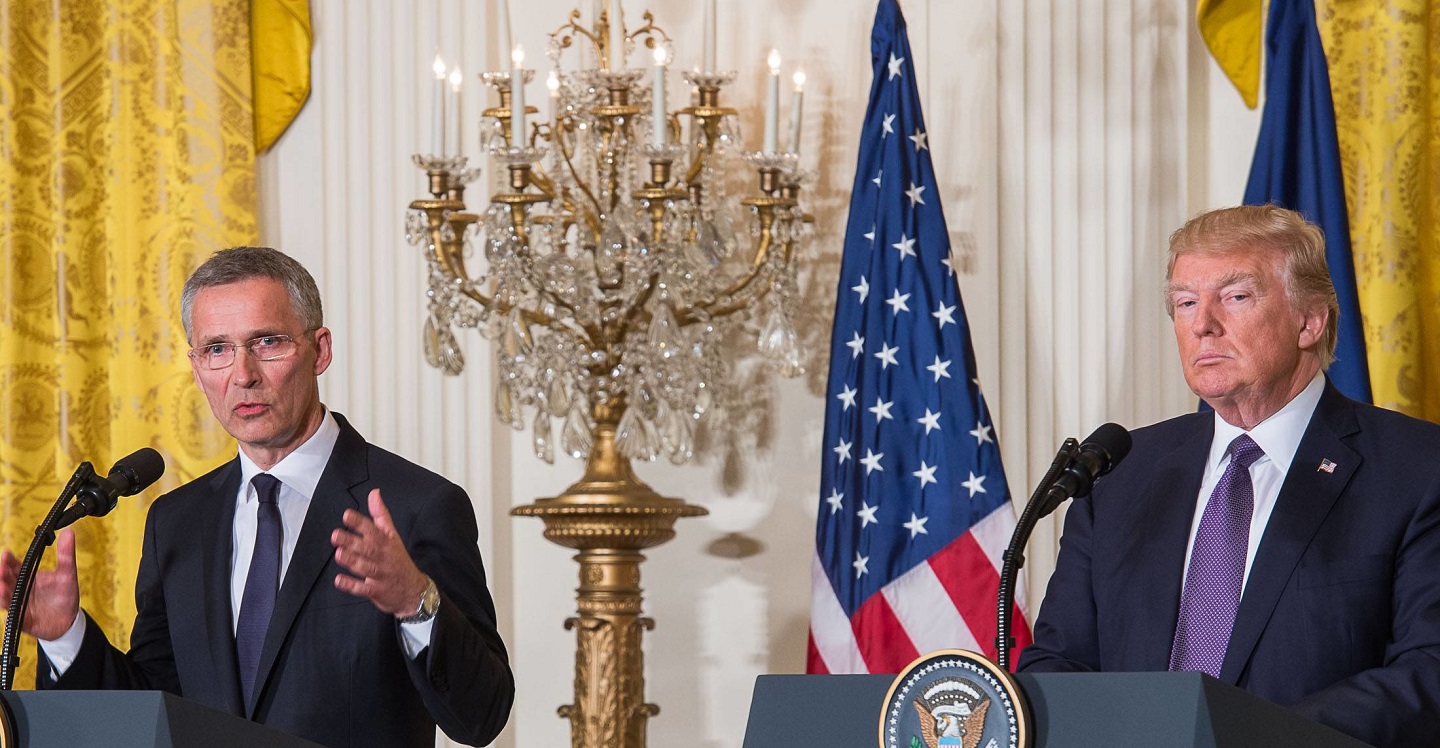
Emmanuel Macron and Keir Starmer are playing a dangerous game of maritime make-believe. Their recent high-profile summit aimed at "reopening" the Strait of Hormuz is a masterclass in geopolitical theater, designed to soothe nervous markets while ignoring the physical reality of the Persian Gulf. They talk as if the Strait is a door that has been slammed shut by a single hand, waiting for a European key to turn the lock.
It isn't. The Strait of Hormuz isn't closed in a legal or physical sense; it is being strangled by an asymmetric reality that Western navies are fundamentally unequipped to handle. Calling a summit to "reopen" a waterway that is technically open but tactically unnavigable is like trying to fix a software crash by polishing the monitor.
The consensus view—the one being spoon-fed to the press—is that a show of diplomatic unity and a few more destroyers will restore the status quo. This is a fantasy. We are witnessing the death of the blue-water navy’s relevance in narrow bottlenecks.
The $20 Trillion Hallucination
The world economy relies on the fiction that the Strait of Hormuz is a global commons. In reality, it is a 21-mile-wide shooting gallery. Macron and Starmer are clinging to the 1982 United Nations Convention on the Law of the Sea (UNCLOS) like a holy text, specifically the right of "transit passage."
Here is the truth they won't tell you: international law doesn't stop a $50,000 suicide drone from hitting a $200 million tanker.
The "lazy consensus" argues that Iran or regional proxies would never fully block the Strait because it would be economic suicide for them too. This ignores the shift from total blockade to calculated friction. You don't need to sink every ship to kill trade. You just need to raise the insurance premiums until the math stops working. When the London insurance markets hike "War Risk" surcharges, the Strait is effectively closed to anyone without a death wish or a state-backed bottomless pit of cash.
I’ve sat in rooms with maritime logistics officers who are terrified. They aren't looking for a "summit communiqué." They are looking for a way to explain to shareholders why a billion-dollar cargo is sitting ducks in a waterway that Starmer promises is "secure."
The Carrier Group Anachronism
The British and French obsession with sending carrier strike groups to the region is a leftover reflex from the 20th century. A Queen Elizabeth-class carrier is a magnificent piece of engineering, but in the Strait of Hormuz, it is a liability, not an asset.
The Strait is too narrow for these behemoths to maneuver effectively against swarm tactics. We are talking about an environment where the "enemy" uses speedboats, sea mines that cost less than a Parisian dinner, and shore-based anti-ship missiles.
$$v_s > v_m$$
When the velocity of the threat ($v_s$) and the density of the swarm ($v_m$) overwhelm the target's point-defense systems, the size of your ship just makes it an easier target. Macron’s talk of "strategic autonomy" in the Gulf is laughable when his fleet relies on the very US intelligence and logistical backbone he spends his afternoons critiquing.
The Mirage of Alternative Pipelines
People always ask: "Why don't we just use the pipelines?"
This is the classic "People Also Ask" trap that politicians love to exploit. They point to the East-West Pipeline in Saudi Arabia or the Abu Dhabi Crude Oil Pipeline. They want you to believe we can bypass the Strait entirely.
Let’s look at the brutal honesty of the numbers. The Strait of Hormuz handles roughly 20 to 21 million barrels of oil per day (bpd). The combined spare capacity of all functional bypass pipelines is less than 4 million bpd.
- Requirement: 21 million bpd
- Contingency: 4 million bpd
- The Gap: 17 million bpd of pure economic chaos.
Starmer and Macron aren't talking about this gap. They are talking about "diversification" as if it’s a solution for next week. It’s a solution for 2040, maybe. Right now, there is no bypass. There is only the Strait. To pretend otherwise is to lie to the energy markets.
The Merchant Marine Ghost Town
The most glaring omission in the Macron-Starmer summit is the human element. You can mandate a "protected corridor" all you want, but you cannot force a Filipino or Indian merchant mariner to sail into a zone where they might be incinerated by a drone.
We are seeing a massive "flight to safety" in crewing. I’ve seen data suggesting a 30% increase in crew "refusal to sail" clauses being triggered in the last six months. If the sailors won't go, the ships don't move. No amount of Anglo-French diplomacy fixes a labor strike at sea based on the very rational fear of dying for someone else's oil.
The Brutal Unconventional Advice
If these leaders actually wanted to solve the problem instead of just looking "presidential" for the cameras, they would stop the naval posturing and do the one thing they find repulsive: Acknowledge the asymmetry.
- Stop sending the big toys. Move toward small, autonomous escort vessels. The era of the Destroyer as a sheepdog is over. We need cheap, attritable drone escorts that can take a hit without costing a thousand lives and a billion Euros.
- Hard-code the insurance. If the UK and France want the Strait open, they should stop holding summits and start providing state-backed insurance guarantees that bypass the private markets. Put your own taxpayer money where your mouth is.
- Address the Shore, not the Water. The threat to the Strait doesn't live in the water. It lives on the rugged coastlines and in the command centers miles inland. A naval summit that doesn't address the terrestrial missile batteries is just a boat parade.
The Price of Pretending
The risk of this "summit diplomacy" is that it creates a false sense of security that leads to a catastrophic miscalculation. When you tell the world a route is safe, and a ship gets taken, the blowback is ten times worse than if you had admitted the danger from the start.
Macron and Starmer are trying to preserve a 1990s world order in a 2026 reality. They are using 19th-century gunboat diplomacy and 20th-century international law to solve a 21st-century asymmetric nightmare.
The Strait of Hormuz isn't a problem to be solved with a handshake in London or Paris. It is a geographic reality that has finally caught up with a global economy built on the delusion of frictionless trade.
Stop looking at the podiums. Look at the tankers anchored in the Gulf of Oman, refusing to move. They know the truth that the summit ignores: the Strait belongs to whoever is willing to get their hands dirty on the shoreline, not who has the best-tailored suit in the room.
Buy a sweater and get used to the cold, because the era of "reopening" things with a press release is dead. Use the time to harden your own energy grids instead of praying for a maritime miracle that isn't coming.