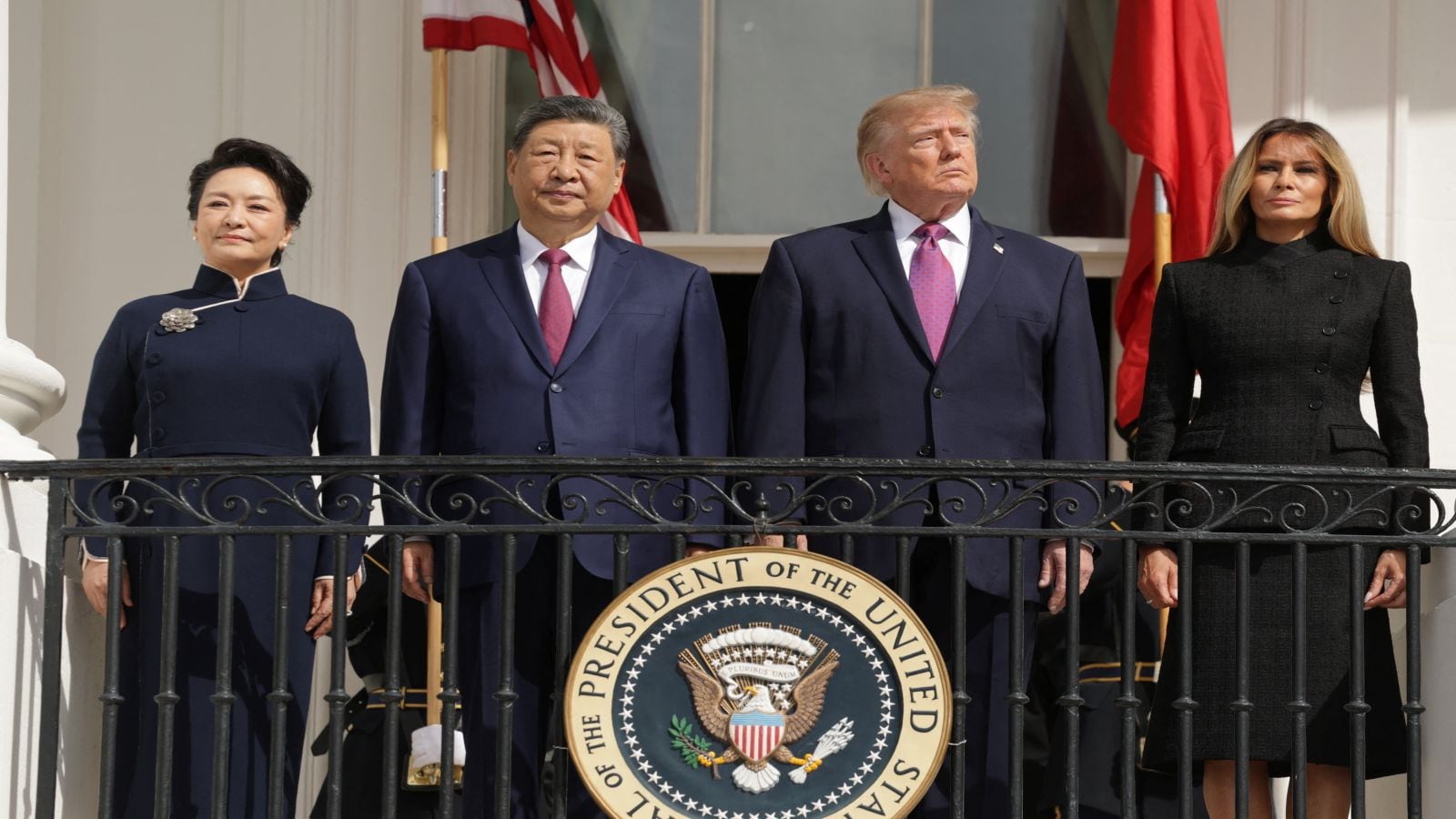
Every time a microphone catches two superpowers exchanging pleasantries about enduring friendships, the pundit class loses its collective mind. Headlines trumpet historic handshakes, toast grand visions of mutual prosperity, and treat a state visit like a romantic reconciliation. It is theater. It is choreographed distraction designed to soothe jittery stock markets and give press secretaries something to tweet about while the underlying machinery of economic decoupling grinds forward unabated.
The lazy consensus is that summits matter because symbolism matters. If leaders smile at each other across a banquet table, the theory goes, trade wars thaw and geopolitical friction cools. That is a comforting fairy tale for tourists and day traders. It ignores how global power actually functions in the twenty-first century.
I have watched corporate supply chains re-route billions of dollars in real time while diplomats were still posing for official portraits. While commentators swooned over declarations of mutual respect, boardrooms in Shenzhen and Austin were executing quiet, permanent divorces. The polite language of statecraft is a smoke screen for a structural cold war that has already moved past the point of no return.
The Fallacy of Personal Diplomacy
Personal chemistry between heads of state is the most overrated variable in international relations. When media outlets frame high-level visits as a test of interpersonal warmth, they project kindergarten psychology onto nuclear-armed economies. Leaders do not shape structural realities; structural realities shape leaders.
Look at the mechanics of capital and technology flows over the past decade. Tariffs, export controls, and national security restrictions have only expanded, regardless of who occupies which palace or oval office. When a government classifies semiconductor supply chains as a matter of national survival, no amount of banquet toasts can reverse the tide.
The mistake is believing that words alter incentives. They do not. Incentives dictate words. When economic interdependence becomes a vulnerability rather than a benefit, both sides hedge against catastrophe. They stockpile critical minerals, subsidize domestic manufacturing, and build parallel digital ecosystems. They can smile for the cameras all they want, but the customs offices are checking every cargo container with a magnifying glass.
Why Decoupling Is Not a Policy Choice
Politicians love to debate whether decoupling is a good idea, as if it were a dial they could turn up or down based on their mood or a successful summit. That debate is entirely detached from reality. Decoupling is not a policy preference. It is a mathematical inevitability driven by risk management.
When labor arbitrage advantages evaporate and intellectual property theft risks outweigh short-term margin gains, multinational corporations act out of self-preservation. CFOs do not care about geopolitical harmony; they care about existential business continuity. If a sudden regulatory shift or geopolitical flare-up can freeze billions in assets overnight, prudent risk models demand redundancy.
We are witnessing the death of hyper-globalization. In its place comes a fractured, regionalized model of commerce where trust is scarce and verification is mandatory. Pretending that a state visit can paper over fundamental divergences in governance, economic models, and strategic ambitions is like putting a band-aid on a severed artery.
The Real Battleground
If you want to understand where the world is heading, stop reading transcripts of diplomatic press conferences. Look instead at where patent filings are clustering, where venture capital is drying up, and how sovereign wealth funds are repositioning their portfolios.
The competition is no longer about who can export the most consumer plastic or assemble the sleekest gadgets. It is about foundational infrastructure. Energy grids, artificial intelligence computing clusters, quantum encryption, and genetic sequencing are the real frontiers. In these domains, collaboration is rapidly giving way to fierce technological nationalism.
Every nation is racing to secure a domestic monopoly on the critical inputs of tomorrow. When access to an advanced chip or a rare earth element can be weaponized with a single executive order, globalized integration ceases to function as a stabilizing force. It becomes a weaponized interdependency.
Stop Waiting for the Thaw
The most dangerous delusion in modern finance and geopolitics is the belief that things will eventually return to normal. There is no normal to return to. The era of frictionless global trade fueled by naive optimism is dead and buried.
Executives and investors who plan their strategies around a cyclical reconciliation are sleepwalking into obsolescence. The smart money has already accepted the new parameters. They are building localized supply chains, securing independent tech stacks, and pricing geopolitical risk into every single balance sheet.
Diplomacy has its place, mostly as a pressure release valve to prevent miscalculations from turning into hot conflicts. But treating a diplomatic handshake as a sign of economic integration is professional negligence. The velvet glove has worn completely through, and the iron fist of strategic competition is all that remains. Deal with it.