Stand next to a decommissioned wind turbine blade lying in the dirt, and your sense of scale breaks down.
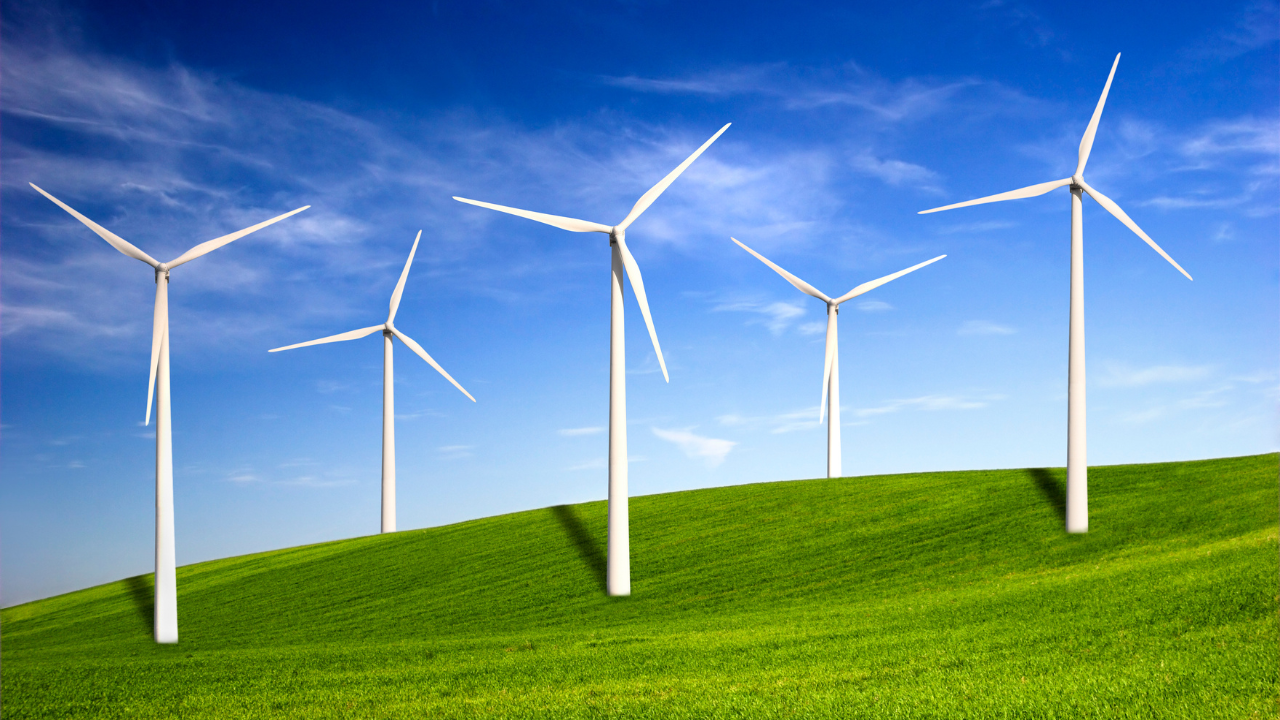
From the highway, spinning lazily against a blue sky, they look like delicate white toothpicks. Up close, grounded, they are terrifyingly massive. Longer than the wingspan of a Boeing 747. Heavy as a locomotive. And harder than bone.
For thirty years, we looked at those white giants and saw salvation. We saw clean air, falling carbon emissions, and a way out of the fossil fuel trap. We celebrated every megawatt added to the grid. Yet, nobody wanted to talk about the expiration date stamped onto the fiberglass.
Wind turbines do not live forever. After twenty to twenty-five years of enduring lightning strikes, freezing rain, and hurricane-force winds, the blades fatigue. They crack. They lose efficiency. And then, they come down.
Which brings us to the dirt.
Picture a hypothetical landfill supervisor named Marcus, standing at the edge of a freshly dug trench in the American Midwest. For the last decade, Marcus’s job has been relatively predictable. Household trash goes in, dirt goes over, methane gets vented. Then the flatbed trucks started arriving. Each truck carried a single, sliced-up section of a wind turbine blade. To fit them in the ground, crews had to attack the blades with diamond-tipped saws, sending clouds of microscopic fiberglass dust into the air—dust that ruins lungs and destroys machinery. Once buried, these blades will sit in the dark for a thousand years. They do not rot. They do not rust. They just take up space.
By 2050, the world will be dealing with an estimated 43 million tons of retired wind turbine blade waste.
Critics of renewable energy love those trenches. They point at photographs of buried blades in Wyoming and Texas and laugh at the hypocrisy of "green" power. For a long time, the clean energy industry didn't have a good answer. They shuffled their feet. They muttered about research grants. They admitted, quietly, that they had built a clean energy machine with a dirty, unsolvable funeral problem.
Until a group of chemists decided to stop trying to break the blades down, and started trying to cook them instead.
The Indestructible Curse
To understand why turbine blades are such a nightmare to recycle, you have to understand why they are so good at their job.
A modern blade is a masterpiece of composite engineering. It is made of glass fibers or carbon fibers woven together and drenched in thermoset plastics—usually epoxy or polyester resins—that are baked until they form an unbreakable chemical bond. Think of thermoset plastic like a baked cake. Once you mix the eggs, flour, and sugar and put them in the oven, you cannot un-bake the cake back into its raw ingredients. You can smash it into crumbs, sure, but you can never get the eggs back.
Because of this chemical permanence, traditional recycling fails miserably. You cannot melt a wind turbine blade down like an aluminum can. If you grind it into powder, the resulting dust is mostly low-value filler that nobody wants to buy. Burning it in an incinerator requires massive amounts of energy, releases toxic fumes, and leaves behind a sludgy mess of melted glass that clogs the furnace.
I remember the first time I walked through a composite manufacturing facility years ago. The smell of curing resin hits the back of your throat like sweet, chemical glue. Watching technicians lay down sheet after sheet of dry fiber before sealing it in a vacuum bag, I asked the plant manager what happened to the scraps. He pointed to a massive dumpster outside. "Landfill," he said, not meeting my eyes. "Once the resin cures, it's basically a rock. Only harder."
That permanence was the secret to surviving twenty years of brutal weather at three hundred feet in the air. It was also the reason the wind industry was sleepwalking into a public relations and environmental disaster. Thousands of first-generation wind farms built in the early 2000s are reaching retirement age right now. The trickle of discarded blades is turning into a tsunami.
A Flash of Lightning in a Lab
The breakthrough did not come from a bigger saw or a hotter furnace. It came from a laboratory at Rice University, where researchers led by chemist James Tour were experimenting with a violent, fraction-of-a-second burst of electricity.
The process is called Flash Joule Heating.
If you want a mental image of how it works, forget slow-cooking in an oven. Imagine capturing a bolt of lightning inside a quartz tube. Researchers take shredded pieces of discarded wind turbine blades—specifically, the glass-fiber-reinforced composites that make up the vast majority of the world's blades—and mix them with a tiny bit of conductive carbon to get the current flowing. Then, they hit the mixture with a massive jolt of electricity.
In less than one second, the temperature inside that tube spikes to over 3,000 degrees Kelvin. That is roughly half the temperature of the surface of the sun.
At that extreme heat, the indestructible thermoset plastic doesn't melt. It doesn't slowly burn. It instantly vaporizes. The carbon atoms inside the resin and fibers violently rearrange themselves, snapping out of their tangled polymer chains and locking together into flat, hexagonal sheets.
When the flash ends—literally a blink of an eye later—the toxic plastic glue is gone. What remains in the tube is a fine, dark powder rich in turbostratic graphene.
Pause and appreciate the absurdity of this alchemy.
Graphene is a single layer of carbon atoms arranged in a honeycomb lattice. It is two hundred times stronger than steel, lighter than paper, and conducts electricity better than copper. For twenty years, scientists have hailed it as a miracle material, yet its widespread adoption has been strangled by one brutal economic reality: making high-quality graphene is ridiculously expensive, often costing tens of thousands of dollars per ton.
Meanwhile, wind companies were paying thousands of dollars per ton just to haul their dead blades to the dump.
By zapping the trash with electricity, the researchers found a way to turn a financial liability into one of the most valuable materials on Earth. Even better, the process doesn't require sorting, washing, or stripping away the paint and copper wiring attached to the old blades. The flash vaporizes the contaminants, leaving pure, high-grade graphene behind.
Closing the Circle
Here is where the story shifts from a clever laboratory trick to an industrial revolution.
You don't just sell that graphene to smartphone makers or battery companies. You feed it back to the wind turbines.
Think about what happens when you mix even a tiny fraction of a percent of graphene—sometimes as little as 0.1 percent by weight—into the fresh epoxy resin used to cast brand-new wind turbine blades.
Suddenly, the new blade becomes dramatically stronger. Graphene acts like microscopic rebar inside concrete, preventing tiny cracks from spreading under stress. Testing shows that graphene-enhanced composites can withstand significantly higher mechanical loads, resist moisture absorption, and survive millions more fatigue cycles than standard fiberglass.
This means engineers can design blades that are thinner, lighter, and longer. Longer blades sweep a wider circle of air, capturing vastly more wind energy at lower wind speeds. Lighter blades put less strain on the gearbox and the steel tower, extending the life of the entire turbine.
The dead giants are literally giving birth to stronger, taller children.
Consider a hypothetical wind farm developer named Elena, planning a new offshore project in the North Sea. Five years ago, Elena’s biggest headache was the decommissioning bond—the millions of dollars regulators forced her to set aside to guarantee she wouldn't abandon the blades when they died. Investors hated the dead capital. Local communities fought the permits because they didn't want a future landfill sitting off their coast.
With flash graphene technology scaling up, Elena's math flips entirely. The end-of-life blades are no longer a toxic debt on her balance sheet; they are a domestic supply chain of raw material. Instead of mining new minerals or relying on foreign chemical imports, her company harvests its own retired fleet to build the next generation of turbines.
The Messy Reality of Scaling Up
I want to be careful here. It is easy to get swept up in the poetry of circular economies and forget how brutal industrial scale actually is.
Science journalism has a terrible habit of declaring victory the moment a beaker changes color in a university lab. The truth is that moving from a few grams of flash graphene on a lab bench to processing millions of tons of fiberglass is an engineering mountain.
First, there is the logistics problem. You still have to get a 250-foot blade off a mountain ridge or out of the ocean and chop it into pieces small enough to fit into a shredder. That takes heavy machinery, diesel fuel, and specialized crews. Nobody has invented a magic wand that teleports a turbine blade directly into a reactor.
Second, there is the energy question. Flash Joule Heating requires a massive surge of electricity. Even though the jolt lasts less than a second, running industrial-scale reactors around the clock demands serious grid infrastructure. If you power those reactors with coal-fired electricity, you eat away at the environmental victory you just won. The reactors have to sit right next to the wind and solar farms, drinking up excess renewable energy when the grid is overloaded.
Finally, there is the conservatism of heavy industry. When you are building a machine that costs ten million dollars and has to spin twenty feet above a highway or in the middle of a freezing ocean for twenty-five years, you do not take risks on new materials. Aerospace and wind engineers are paranoid by profession—and they should be. Proving that recycled flash graphene performs identically to virgin materials across every possible temperature swing and storm condition will take years of grueling certification tests.
Doubt is healthy here. We have been burned by green-tech promises before. Remember when biodegradable plastics were supposed to save the oceans, only for us to discover they only break down in industrial composters that barely exist? Skepticism isn't cynicism; it's scar tissue.
A Different Kind of Horizon
Yet, even with those hurdles standing tall, something fundamental has shifted.
For decades, our environmental movement has been defined by subtraction. Use less. Drive less. Consume less. Shrink your footprint until you disappear. It is a philosophy built on guilt, and frankly, human beings are terrible at sustaining guilt over the long haul.
What makes the graphene breakthrough so electrifying isn't just the chemistry. It is the realization that human ingenuity doesn't have to retreat. We don't have to stop building giant machines to power our civilization. We just have to get smarter about how we close the loops.
The first industrial revolution was built on a straight line: dig it up, burn it, throw the ashes away. We treated the Earth like an infinite pantry on one end and an infinite trash can on the other. When we built the first generation of wind turbines, we used clean fuel, sure, but we still designed them using that old, linear mindset. We built them to be thrown away.
Now, we are learning to bend the line into a circle.
Next time you drive past a wind farm and see those massive white blades turning silently against the clouds, look closer. You aren't just looking at a machine harvesting the breeze. You are looking at a bank of future carbon, waiting patiently for its second life.
And somewhere in the Midwest, the trenches are going to stay empty.