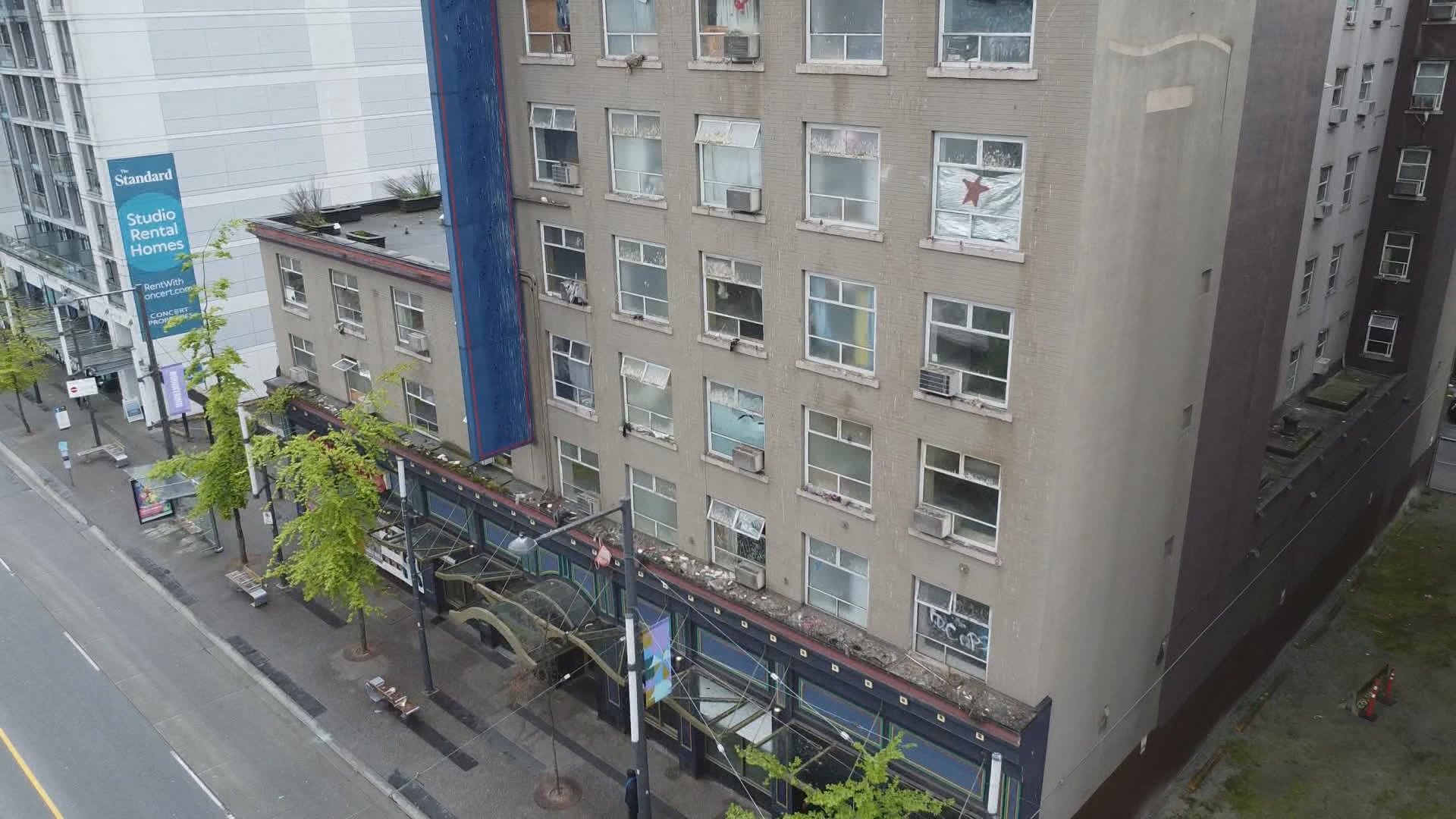
The headlines write themselves. Three vulnerable residents refuse to leave the Granville Single Room Occupancy hotel past a hard relocation deadline. The public narrative instantly hardens into a familiar script. Activists vilify the building owners. Bureaucrats issue hand-wringing statements about systemic gaps. The media frames the remaining tenants as heroic holdouts fighting a heartless machine.
It is a comfortable, comforting story. It is also entirely wrong.
The deadlock at the Granville is not a failure of empathy. It is the predictable, logical outcome of a deeply flawed housing policy that prioritizes temporary crisis management over real urban development. By treating Single Room Occupancy units as a permanent fixture of affordable housing rather than a relic of the past, cities perpetuate the very instability they claim to fight. The three residents staying behind are not breaking the system. They are responding rationally to a broken set of incentives created by advocates and city officials alike.
We need to stop pretending that dragging out evictions and preserving substandard housing is a victory for the working class.
The Myth of the Sacred SRO
For decades, housing advocates have treated SROs as the holy grail of low-income housing preservation. The logic seems straightforward on the surface. SROs provide cheap, accessible shelter in urban cores for people who would otherwise face homelessness. If you lose an SRO unit, you lose a safety net.
This view ignores reality. Having spent over a decade analyzing urban housing markets and managing redevelopment projects in major cities, I have seen how this preservation obsession plays out on the ground. SROs are frequently plagued by structural decay, shared bathrooms that compromise basic human dignity, and severe safety hazards. They are a nineteenth-century solution to a twenty-first-century crisis.
When a municipality issues a relocation deadline to clear an SRO for redevelopment or conversion, the immediate outcry assumes that moving residents is an unmitigated tragedy.
Imagine a scenario where a city spends hundreds of thousands of dollars per unit to patch up a crumbling hundred-year-old building with shared plumbing, rather than using those same funds to build modern, self-contained micro-apartments. That is not progressive policy. That is a sunk-cost fallacy disguised as compassion.
The Incentive Anatomy of a Holdout
Why do residents stay past the deadline? The lazy consensus blames a lack of available options or bureaucratic incompetence. While municipal relocation programs are rarely efficient, the real driver is a complex web of perverse incentives.
In almost every major municipal relocation framework, the incentives are skewed to reward the last people to leave. Relocation assistance packages typically scale up as deadlines approach. Building owners, desperate to meet construction timelines and avoid mounting carrying costs, offer increasingly lucrative cash-for-keys deals to the final few holdouts.
- Early movers: Comply with the rules, accept the initial city-provided housing offer, and receive standard moving assistance.
- Late holdouts: Receive intense, individualized attention from social workers, dedicated legal advocacy, and often substantial cash payouts from developers eager to clear the deed.
When the system rewards non-compliance, remaining in a building past a deadline is not necessarily a sign of having nowhere to go. It is often a highly rational negotiating strategy. By ignoring this mechanic, media coverage turns a transactional standoff into a moral crusade.
The True Cost of Delay
The damage caused by these deadlocks extends far beyond the walls of the Granville. When three residents halt a redevelopment project, they freeze capital, delay construction, and drive up the ultimate cost of the new housing stock.
High-density housing development relies on tight margins and predictable timelines. Every month a project sits in limbo due to litigation or delayed clear dates, carrying costs tick upward. Interest on construction loans accumulates. Contractors demand premiums for rescheduled work.
Who pays for these delays? Not the developers. They adjust their pro-formas and pass the costs down the line. The financial burden falls squarely on the future tenants of the new building through higher initial rents, or on the public treasury through increased subsidy requirements. By stretching out the relocation process for a handful of individuals, advocates actively diminish the city's ability to build widespread, high-quality affordable housing for thousands of others.
Dismantling the Right to Stay Put
The current urban planning orthodoxy treats the "right to stay put" as an absolute moral imperative. If someone has lived in a specific neighborhood—or a specific room—for years, the prevailing belief is that they have an entitlement to remain there indefinitely, regardless of changing economic or structural realities.
This concept is fundamentally incompatible with a functional, growing city. Neighborhoods must evolve to accommodate shifting populations, updated safety standards, and higher densities. Insisting that a building cannot be altered or emptied because it currently houses vulnerable people ensures the stagnation of the urban core.
True housing security does not mean anchoring someone to a specific twelve-by-twelve room with a shared hallway toilet. True security means providing a reliable path to stable, independent living conditions. The obsession with geographic permanence harms the very populations it aims to protect by trapping them in substandard environments under the guise of community preservation.
A Better Way Forward
To break this cycle of deadlines, standoffs, and media spectacles, cities must fundamentally rewrite their relocation frameworks. The solution requires a shift away from reactive crisis management toward predictable, structured transitions.
1. Front-Load the Relocation Incentives
Instead of letting cash-for-keys offers escalate as the deadline approaches, municipalities should mandate a declining incentive structure. The highest financial bonuses and the choice of premier alternative housing units should go to the residents who cooperate early in the process. Those who wait until the final deadline should receive standard, basic relocation assistance with zero premium payouts. This reverses the incentive structure, making early compliance the most lucrative path for the tenant.
2. Streamline the Appeals Process
Housing tribunals and tenant protection boards often allow relocation disputes to drag on for quarters or years through endless procedural loops. Cities need specialized, fast-track arbitration for building closures. Tenants must have access to legal counsel, but the evaluation of relocation adequacy should take weeks, not months. A swift determination prevents the bleeding of capital that sabotages future development.
3. Move Beyond SRO Preservation
Stop spending public funds to preserve obsolete SRO structures. When an SRO reaches the end of its functional lifespan, the goal should be rapid decommissioning and replacement with high-density, self-contained supportive housing. The preservation of architectural history should never take precedence over the creation of dignified living spaces.
The situation at the Granville is a reminder that good intentions do not guarantee good policy. As long as we treat the preservation of inadequate housing as a victory, we will continue to watch deadlines pass, costs rise, and vulnerable residents remain trapped in a system that values the status quo over genuine progress.
Stop romanticizing the holdout. Start building the future.