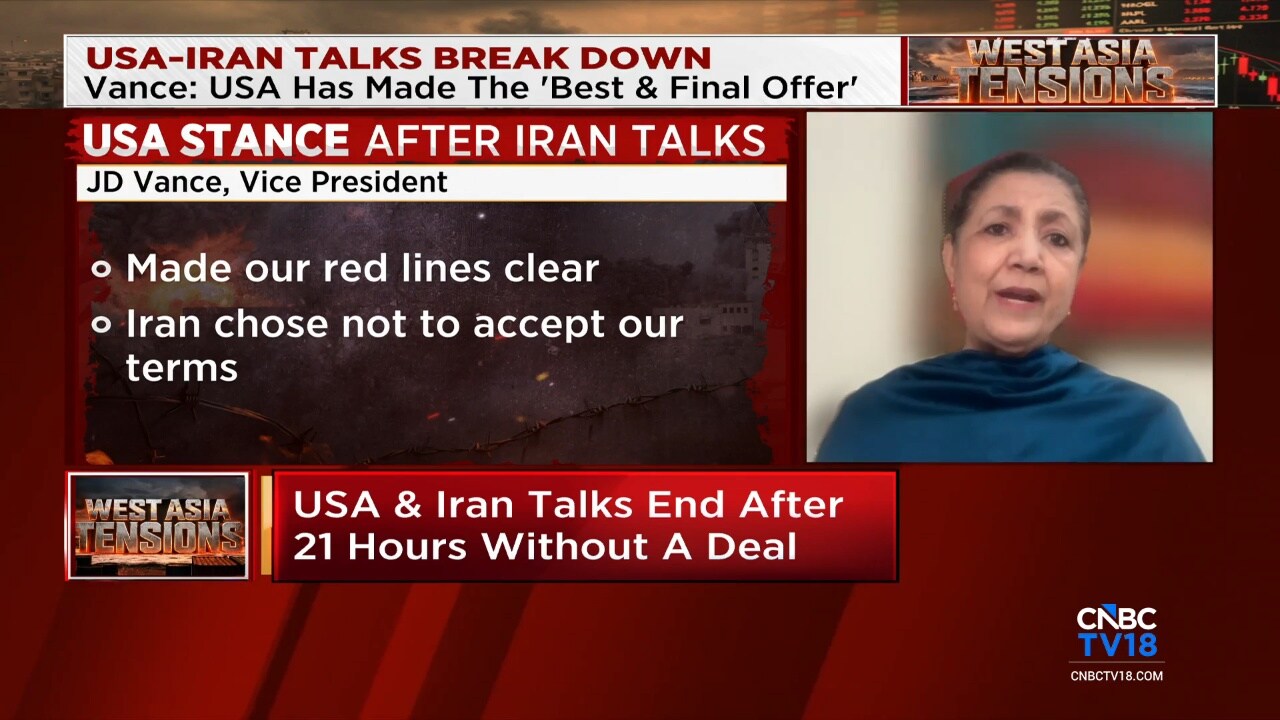
The deal is dead for now and your power bill is probably going to show it. After 21 grueling hours of face-to-face negotiations in Islamabad, Vice President J.D. Vance and the Iranian delegation walked away without an agreement. It's a massive blow to anyone hoping for stability in the global energy market. While diplomatic circles are busy pointing fingers, the reality for the rest of us is a looming supply crunch that could send crude oil prices screaming past $110 per barrel.
Meera Shankar, former Indian Ambassador to the United States, isn't sugarcoating the situation. She’s been vocal about how this specific brand of uncertainty doesn't just "affect" the market—it paralyzes it. When talks extend indefinitely or collapse as they did this morning, Sunday, April 12, 2026, the risk of a severe energy shortage moves from a "maybe" to a "when."
The Strait of Hormuz is the Global Economy's Jugular
You can't talk about US-Iran tensions without talking about the Strait of Hormuz. It's the most sensitive chokepoint on the planet. About 21% of the world’s petroleum liquids move through that narrow strip of water. If you want to know why your gas prices are about to jump, look at the map.
Donald Trump has already threatened a "blockade" following the breakdown of these talks. That's not just tough talk; it's a direct threat to the flow of global energy. Iran, for its part, has stalled negotiations over its right to "peaceful" nuclear energy and its own control over the Strait. When these two sides dig in, the market panics.
Energy traders hate a vacuum. Right now, they're staring into one. Without a deal, the two-week ceasefire that briefly lowered prices is essentially on life support. If the Strait closes or even sees restricted traffic, we aren't just talking about higher prices. We're talking about actual physical shortages in parts of Asia and Europe that rely on a constant stream of Middle Eastern crude.
Why These Negotiations Keep Failing
The sticking point is the same as it’s been for years, but the stakes are higher in 2026. The US wants a rock-solid, "affirmative commitment" that Iran won't touch nuclear weapons. Iran wants the sanctions lifted and their "civilian" nuclear program left alone.
It’s a classic stalemate, but with a modern twist. The world's energy infrastructure is more fragile than it was a decade ago. We've spent years underinvesting in new oil and gas projects because everyone assumed the "green transition" would be faster. It wasn't. Now, we’re stuck needing that Iranian oil to hit the market to keep inflation from eating our paychecks.
Meera Shankar has pointed out that this isn't just a bilateral spat. It’s a global security crisis. India, China, and much of the developing world are the ones who suffer most when these talks drag on. They need cheap, reliable energy to fuel their growth. When the US and Iran can't find common ground, it’s like a tax on every developing economy on earth.
The Domino Effect of $110 Oil
If the talks don't resume—and succeed—very soon, Morgan Stanley's "high-friction" scenario becomes our daily reality. We’re looking at $100 to $110 per barrel for the rest of 2026.
Think about what that does.
- Shipping costs skyrocket. Everything you buy that comes on a truck or a ship gets more expensive.
- Airlines hike fares. Say goodbye to that cheap summer vacation.
- Inflation stays sticky. Central banks won't be able to cut interest rates if energy costs are driving up the CPI.
Most people think of these talks as a political drama. They're wrong. It’s an economic survival story. When Meera Shankar warns about energy shortages, she’s talking about the very real possibility of blackouts and fuel rationing in countries that don't have the strategic reserves to weather a long-term cutoff from the Persian Gulf.
How to Protect Your Interests
Don't wait for the official announcement that we’re in a crisis. The signs are already there. If you're running a business or managing a portfolio, you need to move now.
- Lock in energy contracts. If you're a business owner, try to secure fixed rates for your power and fuel needs. Prices aren't going down anytime soon.
- Watch the headlines, but ignore the noise. The only headline that matters is a "signed agreement." Everything else is just posturing for the cameras.
- Hedge your bets. If you have investments, look at energy producers outside the Middle East. US shale and North Sea producers become significantly more valuable when the Strait of Hormuz is under threat.
The Islamabad talks were supposed to be the breakthrough. Instead, they’ve left us with more questions and a much higher risk profile. The two-week ceasefire gave the world a breather, but that breath is running out. Whether we like it or not, our energy future is currently being held hostage by a diplomatic stalemate that shows no signs of breaking. Prepare for a volatile year.