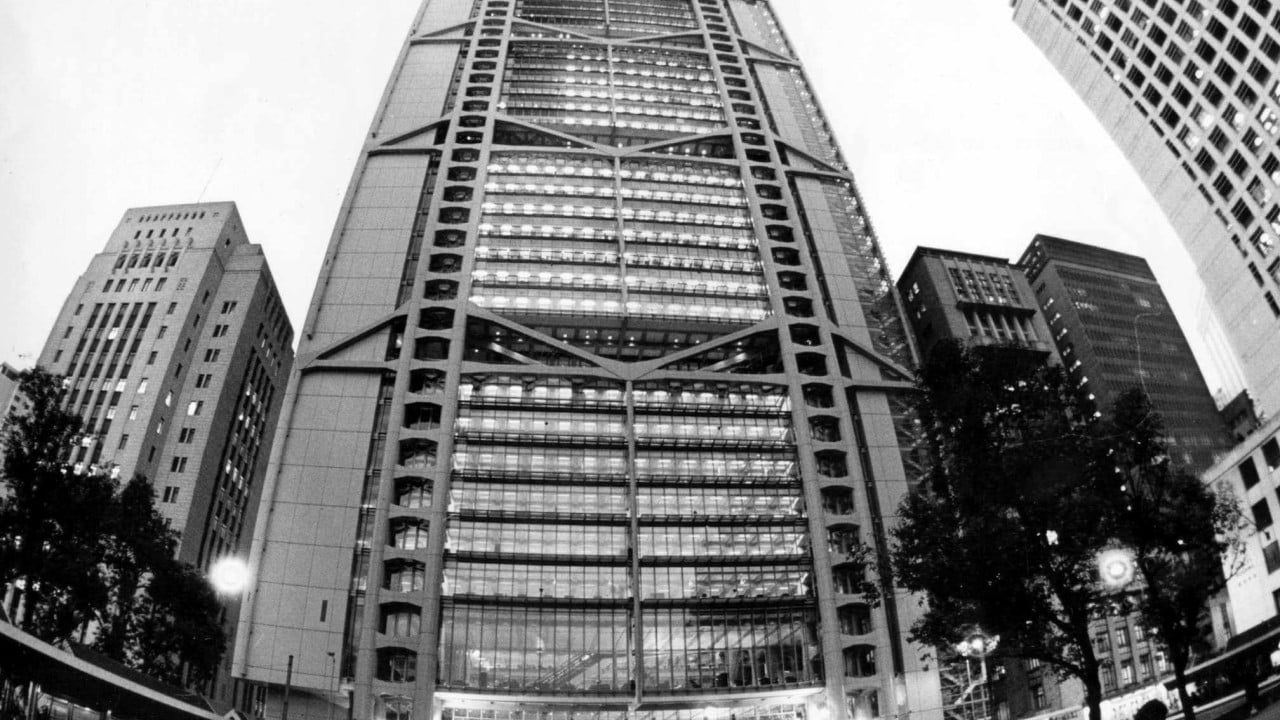
Norman Foster didn’t build a headquarters in 1986. He built a $1 billion panic attack disguised as a masterpiece.
When the HSBC Building (1QRC) opened its doors, the press swooned over the "building of the century." They talked about the modular steel, the sea views, and the sheer audacity of spending HK$5 billion—at the time, the most expensive building on earth. But the mainstream narrative misses the point. It treats the building as a triumph of high-tech architecture. In reality, it was a desperate, expensive bet on a geopolitical future that was already evaporating before the first crane arrived.
The "lazy consensus" says this building was a symbol of confidence in Hong Kong. The truth is much uglier. It was a physical manifestation of a bank trying to buy its way out of obsolescence while tethering itself to a rock that was about to change owners.
The Myth of Flexibility
Every architecture student is taught to worship the HSBC Building’s "plug-and-play" design. The theory: you can move modules, swap parts, and evolve the building as needs change.
I’ve spent twenty years watching firms blow millions on "flexible" infrastructure. Here is the secret nobody tells you: High-tech flexibility is the ultimate sunk cost.
The modularity of the HSBC building was supposed to make it future-proof. But in the world of high finance, "future-proof" is a polite way of saying "over-engineered and impossible to maintain." The sheer complexity of the steel exoskeleton—specifically the 30,000 tonnes of steel and 4,500 tonnes of aluminum—created a maintenance nightmare that requires a specialized army just to keep the sea salt from eating the joints.
True flexibility isn't found in expensive steel trusses; it's found in digital agility. By the time the bank finished its "building of the future," the actual future had moved to fiber optic cables and decentralized servers. They built a physical monument to a centralized power structure right as the world was starting to distribute it.
The HK$5 Billion Sun Cannon
Let’s talk about the "sunscoops." The building features a massive system of mirrors designed to reflect natural light down through a central atrium to the plaza floor below.
On paper, it’s a poetic blend of sustainability and feng shui. In practice, it’s a mechanical ego trip. I’ve stood in that plaza. The light is fine. But is it HK$5 billion fine? Of course not. The sunscoops represent the height of 1980s architectural hubris: using incredibly complex, failure-prone mechanical systems to solve a problem that could have been fixed with better floor planning.
We see this same mistake today in Silicon Valley "campuses" and "smart cities." We throw hardware at human problems. We mistake expensive complexity for innovative design. 1QRC isn't a "green" building; it’s an industrial machine that requires massive amounts of energy to simulate a natural environment.
The Great Feng Shui Defensive
The narrative around the building’s feng shui is often framed as a respectful nod to local culture. Two bronze lions, specific angles to ward off "sha qi" (killing energy) from the Bank of China Tower, and an open ground floor to allow positive energy to flow.
But look closer. The open ground floor isn't for "energy." It was a legal requirement. To get the floor area ratio the bank wanted, they had to provide public space. The feng shui was a convenient PR wrapper for a hard-nosed real estate negotiation.
Furthermore, the obsession with "defensive" feng shui reveals the bank's true state of mind in the mid-80s: fear. You don’t build a fortress with cannons (literally, the window cleaning cranes are positioned to look like cannons aimed at the Bank of China) if you feel secure. The HSBC Building is the world’s most expensive suit of armor, worn by a tenant who knew their monopoly on the region was ending.
The Architecture of Empire-Endings
The 1984 Sino-British Joint Declaration was signed while this building was still a skeleton of steel. The bank was spending record-breaking sums to cement its status in a colony that had an expiration date.
If you want to understand why big companies fail, look at their real estate. When a corporation builds the "world’s most expensive" anything, it is almost always a lagging indicator of success. It is a sign they have more cash than ideas. It is the "Edifice Complex."
- The Sears Tower: Completed as Sears began its decades-long slide into irrelevance.
- The Petronas Towers: Opened just in time for the Asian Financial Crisis.
- The HSBC Building: A British colonial bank building a cathedral to itself just as the Empire was handing back the keys.
The building didn't ensure HSBC's dominance; it anchored them to a specific physical and political legacy that they’ve spent the last forty years trying to diversify away from. They moved their legal domicile to London in 1993, barely seven years after the "ultimate" Hong Kong headquarters opened. That tells you everything you need to know about how much they actually trusted their own "symbol of confidence."
The Death of the Iconic Headquarters
We are told that an iconic building builds a brand. This is a lie sold by starchitects to CEOs with legacy fixations.
In the 2020s, a physical headquarters is a liability. It is a carbon-heavy, inflexible, tax-burdened anchor. The HSBC Building is a masterpiece of 20th-century thinking: the idea that power must be visible, heavy, and static.
Today’s power is invisible. It’s the firm that runs on distributed cloud networks and doesn't care where its employees sit as long as the code is clean. HSBC’s HK$5 billion would have been better spent on the digital infrastructure that they are now struggling to modernize.
The Real Cost of "Masterpieces"
The competitor article treats the 1986 opening as a historical milestone. I treat it as a warning.
The building’s design required 100,000 separate pieces to be shipped from around the world and assembled like a giant Meccano set. This "bespoke" approach is the enemy of progress. It makes every repair a custom job and every upgrade a structural challenge.
If you are an executive looking at a new office project, and your architect starts talking about "iconic profiles" and "modular exoskeletons," fire them. They are trying to build a monument to themselves with your shareholders' money.
The HSBC Building is beautiful. It is brilliant. It is also a HK$5 billion mistake that proved no amount of steel can stop the clock of history.
Stop romanticizing the 1986 archive. The building isn't a triumph; it's a cage made of the finest silver-grey aluminum money can buy.
Burn the blueprints. Build the network. Leave the glass cathedrals to the tourists.