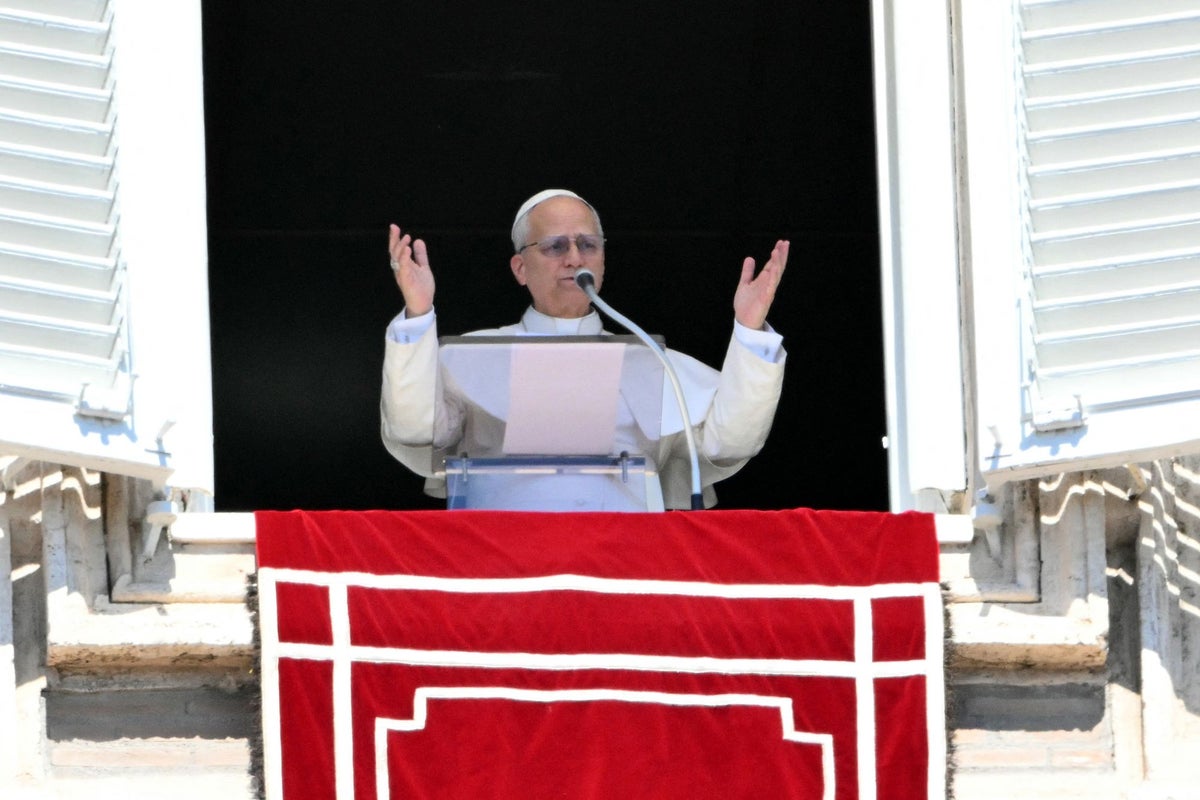
The bells of St. Peter’s Basilica carry a weight that has nothing to do with their physical bronze. When they ring, the sound doesn't just vibrate against the ancient stones of the Vatican; it ripples across the Tiber, over the Mediterranean, and into the dusty, high-tension corridors of Tehran and Washington. Inside those walls, a man dressed in white sits at a desk where the history of the world is often weighed against the fragility of human life.
Pope Leo’s recent exhale was one heard around the globe. It was the sound of a ceasefire. Don't forget to check out our recent post on this related article.
For weeks, the shadow of a massive, scorched-earth conflict between the United States and Iran had darkened the horizon. The air felt thick with the static of impending electricity. We have lived through these cycles before, where the rhetoric of leaders becomes a match held dangerously close to a powder keg. This time, the spark was a threat—a specific, public declaration from the American presidency that targeted cultural sites, a move that would not only violate international law but would attempt to erase the soul of a civilization.
Leo didn't mince words. He called the threat unacceptable. To read more about the background here, The Guardian provides an in-depth breakdown.
To understand why a religious leader would step so firmly into the mud of geopolitical posturing, you have to look past the spreadsheets of troop movements and the cold data of missile trajectories. Think instead of a family in Isfahan. They sit in a courtyard that has existed for centuries, surrounded by blue-tiled architecture that has survived empires, revolutions, and the slow erosion of time. To them, those "cultural sites" aren't just points on a map for a drone operator. They are the anchors of their identity. When a world leader threatens to vaporize a mosque or a museum, they aren't just threatening a building. They are threatening to delete the memory of a people.
The Anatomy of the Threat
War usually begins with the dehumanization of the "other." It starts when we stop seeing faces and start seeing targets. The tension reached a fever pitch when the White House suggested that fifty-two Iranian sites were in the crosshairs. The number was symbolic, a ghost of the 1979 hostage crisis, but the choice of targets was a departure from the "surgical" precision usually promised by modern military doctrine.
By targeting heritage, the rhetoric shifted from a battle of policy to a war on history itself.
Leo recognized this shift instantly. The Vatican functions as a bridge, a tiny sovereign state that speaks the language of diplomacy while claiming to represent the eternal. When the Pope spoke out against the "unacceptable" nature of these threats, he wasn't just playing politics. He was defending the idea that even in our most violent disagreements, there are lines that, once crossed, leave the entire human race poorer.
He waited. The world held its breath.
Then came the news of the ceasefire. The silence that followed the stand-down wasn't the joyous silence of a solved problem. It was the heavy, exhausted silence of a fever breaking.
The Cost of the Brink
Consider the psychological toll of living on the edge of annihilation. When two superpowers—one defined by its massive technological reach and the other by its deep-rooted regional influence—stare each other down, the rest of the world becomes collateral.
Economies stutter. Fuel prices creep upward, squeezing the budgets of people who couldn't find the Strait of Hormuz on a map if their lives depended on it. But the real cost is the erosion of trust. Every time a ceasefire is reached after such a visceral threat, we don't go back to the way things were. We settle into a new, more cynical normal.
The ceasefire is a victory, yes. But it is a fragile one.
Leo’s public welcome of the peace was tempered with the gravity of someone who knows how easily the glass can shatter. He spoke of the need for "dialogue and self-restraint." These are words that sound soft in the face of aircraft carriers and ballistic missiles, yet they are the only tools that have ever actually worked.
The standoff wasn't just about a drone strike or a retaliatory barrage. It was about the ego of nations. When the Pope condemned the threats, he was effectively telling the most powerful man in the world that there are laws higher than the ones written in Washington. He was reminding the world that the "unacceptable" must remain just that—not a new baseline for negotiation.
The Invisible Stakes
Why does a ceasefire in a desert thousands of miles away matter to someone sitting in a coffee shop in London or a suburb in Ohio? Because the world is no longer a collection of isolated islands. We are an intricate web of dependencies.
If those cultural sites had been hit, the cycle of vengeance would have likely outlived every politician currently in office. Radicalization isn't born from thin air; it is cultivated in the rubble of what people hold dear. By stopping the clock before it hit midnight, the ceasefire did more than save lives in the present. It potentially saved the peace of the next generation.
Leo’s role in this was that of the world’s conscience, a role that is increasingly lonely. In an era of "fire and fury" and instant Twitter diplomacy, the slow, deliberate moralizing of the Holy See can feel like a relic of a different century.
Yet, it worked.
The pushback against the targeting of cultural heritage came from all sides—military leaders, historians, and international bodies—but the Pope’s voice added a layer of moral finality to the dissent. It made the "unacceptable" truly radioactive.
The Weight of the Silence
Now, the soldiers stand down. The ships move to a different sector. The news cycle shifts to the next outrage.
But the tension remains. A ceasefire is not a peace treaty; it is a pause. It is a moment to breathe, to look around, and to realize how close we came to a fire that no one could put out. Leo’s welcome of this moment wasn't a celebration. It was a plea.
He knows that the same fingers that hovered over the buttons are still there. The same grievances that fueled the threats haven't been resolved. They have only been pushed back into the shadows.
We often think of peace as a natural state, like the weather on a clear day. It isn't. Peace is an active, grueling construction project that requires constant maintenance. It requires leaders to be willing to lose face in order to save lives. It requires a refusal to accept the "unacceptable" even when it is wrapped in the flag of national security.
As the sun sets over the dome of St. Peter’s, the bells ring again. They mark the end of another day without a new war. It is a small mercy, bought with the currency of diplomacy and the rare, brave act of calling a threat what it actually is.
The world continues its rotation, oblivious to the fact that just a few days ago, the axis almost snapped. We walk through our lives, buying groceries, picking up children from school, and planning for a future that was nearly traded for a headline.
Leo remains at his desk. He is watching. He is waiting for the next time the bells have to do more than just tell the time—the next time they have to scream a warning before the silence becomes permanent.



