The marble of Washington does not easily forgive a false note.
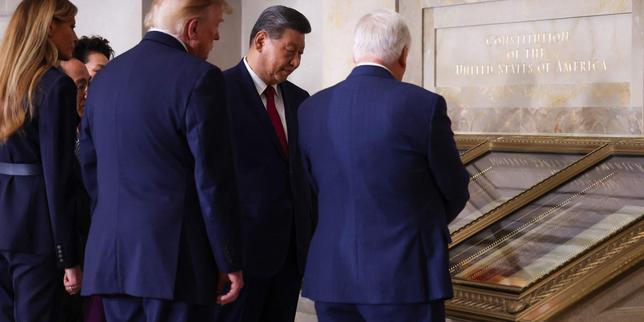
Under the crystal chandeliers of state rooms where history is quietly ironed into permanence, every millimeter of posture, every delayed translation, and every sudden shift in tone carries the weight of empires. When leaders of nuclear-armed superpowers meet, they are not merely shaking hands. They are engaged in a silent, high-stakes collision of worldviews.
History remembers the grand pronouncements. It rarely records the shudder in the room when protocol fractures.
Consider the machinery of a modern state visit. It is a ballet designed over months by exhausted bureaucrats who sleep with encrypted phones pressed to their ears. Every seating chart is a geopolitical chess move. Every menu is scrutinized for cultural offense. Every motorcade route is mapped down to the second to project absolute, unyielding strength.
Then reality intervenes.
In the brittle friction of high-level diplomacy, the gap between performance and execution can widen into a chasm. During high-profile encounters between Washington and Beijing—most notably during the turbulent diplomatic choreography of the Trump administration—the traditional guardrails of statecraft were frequently brushed aside in favor of a raw, transactional theatre.
To understand why these moments mattered, we must step inside the room. Not as historians safely removed by decades, but as observers feeling the chill of the air conditioning, smelling the faint scent of polished mahogany and expensive perfume, and watching the subtle twitches of men whose decisions could alter the price of bread in a thousand distant cities.
The Architecture of Misunderstanding
Power speaks different languages even when translated by professionals.
On one side stood an American administration built on disruption, speed, and the belief that unpredictable bluster could outmaneuver centuries of institutional memory. To this team, diplomacy was a real estate negotiation writ large. Everything was up for grabs. Nothing was sacred. Boundaries were moving targets designed to be tested on live television. Officials came and went in a revolving door of loyalty tests, sidelining the seasoned career diplomats who understood the deep historical anxieties driving foreign capitals.
On the other side sat a delegation shaped by a different clock entirely. Beijing operates on millennia, not election cycles. For Xi Jinping and his advisors, state visits are exercises in dignity, symmetry, and historical vindication. Every gesture is weighted with the prestige of a rising civilizational state that views respect not as a courtesy to be earned, but as a birthright to be reclaimed after a century of humiliation.
When these two forces collided in Washington, the friction was immediate and abrasive.
Imagine sitting at a state dinner where the silverware gleams under warm lighting, while the air outside hums with the unspoken tension of tariffs, trade deficits, and contested archipelagos in the South China Sea. Imagine the protocol officer watching the clock, knowing that a single unscripted remark from the podium could detonate months of delicate back-channel compromises forged in smoke-filled embassy basements.
This was not merely a series of awkward photo ops. It was a structural mismatch of historic proportions.
During key moments of engagement, the American side repeatedly leaned into personal showmanship at the expense of institutional stability. The desire for a quick win, a headline-grabbing concession, or a theatrical flourish often eclipsed the quiet, grinding work of diplomatic alignment.
The Chocolate Cake Calculus
Nothing encapsulates this dynamic quite like the surreal convergence of hospitality and geopolitical shock.
Picture the scene. Cameras flashing, plates being cleared, the polite hum of high-society conversation filling the air. Across the table, a visiting head of state shares a meal meant to symbolize warmth and burgeoning partnership.
And then, a sudden interruption.
Without warning, the American president casually informs his guest that a volley of Tomahawk missiles has just been launched against a Middle Eastern airfield. Not whispered in a secure SCIF. Not weighed through hours of solemn consultation with allies. Announced over dessert, between bites of chocolate cake.
In the language of Western reality television, it was a dramatic cliffhanger designed to project decisive strength and instantaneous resolve. In the language of traditional Chinese statecraft, it was an astonishing breach of decorum—a calculated humiliation wrapped in hospitality, signaling that American power operated on volatile whims rather than rules-based predictability.
The immediate fallout was invisible to the cameras, but palpable to anyone attuned to the subtle shifts in body language. Chopsticks paused. Smiles tightened into rigid lines. The translation earpieces suddenly felt heavier, transmitting silence more loudly than words.
That moment exposed a profound vulnerability in Washington's approach. By treating diplomacy as an extension of personal branding, the administration traded stability for shock value. And in the high-stakes arena of great power competition, unpredictability is a double-edged sword. It frightens adversaries, yes. But it also terrifies allies, alienates partners, and leaves no room for the graceful saving of face that prevents minor disputes from escalating into catastrophic conflicts.
The Translation Trap
Language is never neutral.
In rooms where the fate of global supply chains is negotiated, words are currency. Every nuance matters. Every omission is tactical.
During the summits in Washington, translation was frequently treated as an afterthought rather than a bridge. When leaders speak in broad, sweeping rhetoric, the subtle shifts between English idioms and Mandarin philosophical constructs can create massive blind spots.
Think of a hypothetical room in the West Wing. A senior official pounds the mahogany table, demanding a "hard deadline" on trade concessions. The phrase translates into Mandarin not as a firm timeline, but as an ultimatum backed by a threat of public loss of face. To Beijing, loss of face is an existential political threat. A sovereign state cannot capitulate under public duress without triggering severe internal repercussions for its leadership.
The American side, blind to these cultural triggers, interpreted China’s polite resistance as stubborn intransigence. The Chinese side, bruised by the public posturing, viewed American demands as an attempt at subjugation rather than fair negotiation.
Thus, a cycle of escalation began. Each side doubled down on its own internal logic, mistaking the other's defensive posture for unprovoked aggression.
The Cost of Abandoning the Playbook
Why does this matter years later, long after the motorcades have departed and the podiums have been dismantled?
Because diplomacy is the scaffolding that keeps the roof from caving in.
When an administration hollows out its own diplomatic corps—leaving ambassadorial posts vacant, sidelining career foreign service experts who have spent decades studying the cultural DNA of rival nations, and replacing institutional memory with familial loyalty and ideological purity tests—the state becomes blind.
The missteps during Xi Jinping’s visits were symptoms of a deeper rot. They revealed an overconfidence that believed historical laws could be rewritten by executive fiat. They demonstrated a dangerous ignorance of how a rival superpower perceives insult, injury, and sovereign dignity.
Consider the aftermath. Instead of locking in sustainable agreements that could weather political storms, the encounters produced fragile truces built on personal rapport between two men who would eventually cycle out of power. When that personal rapport inevitably frayed under the pressure of domestic politics, nothing was left beneath it. No institutional trust. No shared bureaucratic understanding. Just raw, unmediated rivalry.
The Quiet Rooms After the Lights Go Out
The motorcades have long since rolled back to the tarmac. The red carpets have been vacuumed. The translators have retired to quiet apartments to nurse their headaches and translate technical manuals instead of shifting global tides.
In those quiet rooms, the consequences of those theatrical years continue to ripple outward.
The rivalry between Washington and Beijing is no longer mediated by clumsy dinners or erratic press conferences. It has hardened into structural reality. The supply chains are decoupling. The technological iron curtains are descending. The maritime patrols grow bolder and closer by the month.
Every clumsy handshake, every ignored protocol memo, and every impulsive announcement over dessert contributed to this deep freeze. They proved that when leaders treat diplomacy like a stage play, the audience may clap for the drama, but the theater eventually burns down.
History does not care about your ratings. It cares about your foundations.
And as the world navigates the turbulent waters left in the wake of those missed signals and botched encounters, we are left to wonder what might have been built if the architects had bothered to measure twice before swinging the sledgehammer.
The marble halls are silent now.
The chandeliers cast their cold light over empty tables. Somewhere in the dark, a telex machine chatters, and the quiet, relentless work of real power goes on, far beyond the reach of cameras, waiting for the next time giants learn whether they can walk together without tripping over their own feet.