The water smells like wet slate and crushed fern leaves before you ever see the current.
If you kneel on the slick riverbanks of the Western Ghats—or along the muddy, tannin-stained tributaries of the Amazon or the fast, rocky streams of central Vietnam—cold water seeps straight through your canvas trousers within seconds. Your knees ache against the gravel. You hold your breath, watching a beam of yellow flashlight pierce the murk, and there it is.
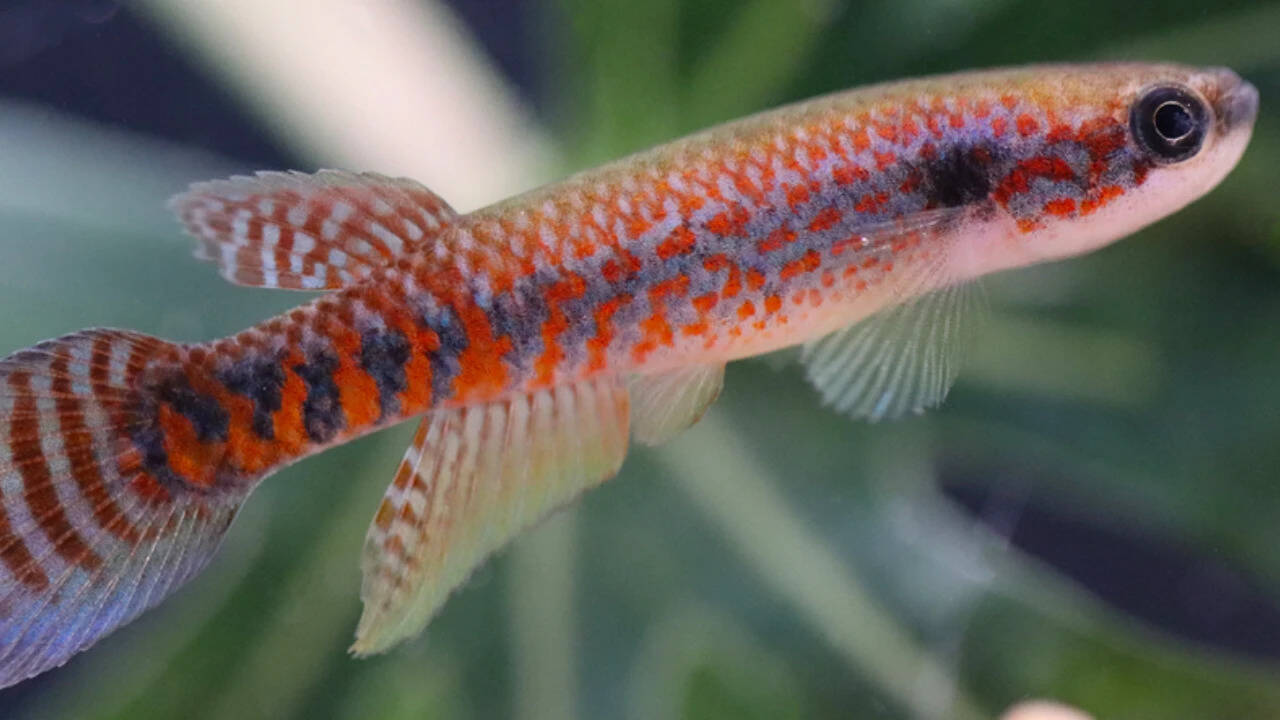
A flicker. A tiny, thumb-sized shadow hugging the underside of a submerged stone. Along its flanks, faint, luminous flecks of burnt orange catch the light like embers dying in wet ash.
You have just laid eyes on a creature that has survived ice ages, shifting tectonic plates, and millions of years of evolutionary pressure. You are also likely the first human being to give it a scientific name.
And if the bulldozers upstream stay on schedule, you might be the last person to ever see it alive.
The Strange Grief of Naming the Dying
We have a peculiar, romantic notion of scientific discovery. We picture explorers in pith helmets triumphantly planting flags, celebrating the moment a new species is added to the great ledger of life on Earth. In reality, modern taxonomy often feels less like a christening and more like writing an obituary while the patient is still breathing.
Consider the timeline of a newly discovered freshwater fish—like the orange-spotted species recently cataloged by ichthyologists working in threatened tropical watersheds. For millennia, this fish existed in total obscurity. It had no Latin binomial, no conservation status, no advocates in courtrooms or legislatures. It simply lived, wedged into the micro-habitats between river cobbles, eating microscopic larvae and grazing on algae.
Then came the survey team. Using fine-mesh hand nets and battery-powered electrofishers that temporarily stun aquatic life without harming it, researchers pulled a handful of specimens into clear acrylic viewing tanks. Under a macro lens, the differences became unmistakable. The fin ray counts didn't match known relatives. The lateral line scales followed a distinct, ancient pattern. And then there were those spots—vivid, rust-orange markings arranged like constellations along a silver-olive body.
DNA sequencing back at the laboratory confirmed what the morphology whispered. This was not a regional variant of a common minnow or goby. It was an entirely distinct evolutionary lineage, separated from its nearest cousin by millions of years.
But the same field notes that documented the fish's existence also recorded the excavator tracks cutting through the riparian forest fifty yards upstream. They noted the silt choking the gravel beds where the fish lays its eggs. They measured the rising water temperatures caused by stripped canopy cover.
Before the formal paper describing the new species could even clear peer review, conservationists were already drafting its assessment for the International Union for Conservation of Nature Red List. The verdict was grim. Critically Endangered. Possibly extinct in the wild within a decade.
Why a Two-Inch Fish Holds Up the Roof
It is easy, sitting in a climate-controlled room miles away from any wild river, to feel a quiet, pragmatic shrug at this news. Extinction is sad, sure. Nobody cheers for the disappearance of a pretty little fish with orange spots. Yet a nagging question lingers in the back of the modern mind, whispered whenever conservation collides with road construction, mining permits, or agricultural expansion.
Does it actually matter?
If this fish lived for three million years without us knowing it existed, and vanishes tomorrow, will the grocery stores close? Will the rain stop falling? Will anyone outside a dozen obsessed biologists even notice?
To understand why the loss of an obscure, two-inch fish is a warning siren for human survival, stop thinking of an ecosystem as a collection of separate parts. Think of it instead as a stone arch built without mortar.
Every stone in that arch presses against its neighbors, distributing weight downward toward the earth. Some stones are massive—the apex predators, the towering canopy trees, the rushing rivers themselves. Other stones are small, tucked into the corners where nobody looks. You can pull one small stone out of the arch, and the structure will probably stand. You can pull out a second, and a third, and point triumphantly to the fact that the bridge still holds traffic.
You never know which pebble is the keystone until the entire bridge drops into the gorge.
Freshwater fish are among the sharpest diagnostic tools we have for measuring the health of the water we drink. Unlike birds, which can fly away when a forest is poisoned, or mammals, which can migrate across ridges when drought strikes, a stream-dwelling fish is a prisoner of its watershed. Every drop of agricultural runoff, every plume of heavy-metal sediment from an illegal quarry, every degree of thermal pollution passes directly across its gills.
Let's trace a hypothetical scenario—a simplified illustration of how this plays out in real watersheds from Appalachia to Southeast Asia. Imagine a small, specialized bottom-dweller, much like our newly discovered orange-spotted fish. Its biological role is humble: it feeds exclusively on certain aquatic insect larvae and scrapes specific biofilms off submerged rocks.
When silt washes into the river from upstream deforestation, the spaces between the rocks fill with mud. The orange-spotted fish loses both its nursery and its pantry. Within three seasons, its population collapses.
Suddenly, the aquatic insects it kept in check boom unchecked, or conversely, the algae smothering the rocks thickens into an oxygen-robbing mat because nothing is grazing it clean. As dissolved oxygen plummets, larger fish—the catfish and carp that local villages rely on for daily protein—begin to suffocate or abandon the stretch of river entirely. Water treatment downstream becomes exponentially more expensive because the natural biological filtration of the streambed has broken down.
The disappearance of the orange-spotted fish wasn't an isolated tragedy. It was the smoke alarm going off before the ceiling caught fire.
The Invisible Crisis Beneath the Surface
If you ask ten people on the street to name an endangered animal, nine will mention tigers, pandas, polar bears, or rhinos. Almost nobody mentions freshwater fish.
Yet freshwater ecosystems are collapsing faster than almost any other habitat on Earth. While oceans cover seventy percent of the globe and terrestrial forests stretch across continents, all the liquid freshwater on our planet accounts for less than one percent of Earth's total water supply. Inside that tiny fraction of liquid live more than half of all known fish species—over eighteen thousand distinct kinds of vertebrates packed into a ribbon-thin network of lakes, rivers, and wetlands.
According to global biodiversity assessments, nearly one-third of all freshwater fish species are currently threatened with extinction. Since 1970, populations of migratory freshwater fish have plunged by more than eighty percent.
They die quietly, hidden beneath the glare of the water's surface. There are no dramatic aerial photographs of melting ice caps to accompany their demise, no heartbreaking viral videos of orphaned cubs. When a river is dammed, drained for irrigation, or choked with plastic and fertilizer, the victims simply stop appearing in fishermen's nets.
I remember standing beside a dried-up creek bed in the late summer a few years back, turning over sun-bleached stones that should have been slick with moss and teeming with life. Beneath one flat rock, trapped in a puddle no wider than a dinner plate, were dozens of tiny, gasping minnows. The water was warm to the touch, stagnant and low on oxygen. The local farmer standing beside me—a man whose family had worked that valley for four generations—looked down at the puddle with genuine bewilderment.
"They used to be everywhere," he said quietly, nudging a pebble with his boot. "When I was a boy, you couldn't step in this creek without a hundred of them darting around your ankles. I didn't think you could ever run out of them."
That is the trap of shifting baseline syndrome—a psychological blind spot where every generation accepts the degraded nature they grow up with as "normal." The farmer's grandfather remembered rivers boiling with life. The farmer remembered ankle-deep minnows. His grandchildren will look at a sterile, rock-lined drainage ditch and assume rivers were always empty.
When scientists discover a brand-new species on the brink of extinction, they are piercing that amnesia. They are handing us a receipt for wealth we didn't even know we owned before we spent it.
How a Species Hides Until the Twenty-First Century
A skeptical reader might reasonably ask how a brightly spotted fish managed to evade science until now. In an era of satellite mapping, drone surveillance, and global DNA databases, how do whole vertebrates remain invisible?
The answer lies in the geography of isolation.
Evolution loves a dead end. When a mountain range rises or a river system shifts course over millions of years, populations of fish get trapped in isolated headwaters—steep, boulder-strewn gorges miles from any paved road. Cut off from the main river below by impassable waterfalls, these isolated pockets become evolutionary islands. Over millennia, the fish trapped above the falls adapt specifically to the cold, fast, oxygen-rich water of their tiny valley. They develop unique coloration to blend into local granite, specialized mouths to scrape local algae, and distinct genetic identities.
Scientists call these creatures micro-endemics. A micro-endemic species might live its entire existence within a single three-mile stretch of one mountain stream. Nowhere else on Earth.
For centuries, those steep, inaccessible gorges protected them. Timber companies couldn't haul logs out of them; farmers couldn't plow the vertical slopes; cities couldn't build on them.
That geographic shield is gone. Modern infrastructure—driven by cheap heavy machinery, hydroelectric demand, and global supply chains—now reaches the last untouched headwaters on every continent. A single small-scale dam built to power a local processing plant, or a single unregulated sand-mining operation scooping gravel from a riverbed for concrete, can wipe out a micro-endemic species in a single dry season.
The fish didn't hide from us out of cleverness. It survived because we hadn't arrived yet.
The Race Against the Bulldozer
Discovery changes the legal and moral calculus, even if it arrives at the eleventh hour.
In environmental law across dozens of nations, an unnamed organism is an invisible organism. You cannot easily halt an infrastructure project or establish a protected watershed sanctuary to save a creature that officially does not exist in scientific literature. By rushing to describe, peer-review, and publish the findings on this orange-spotted fish, the research team did something profoundly practical: they gave the creature legal standing in the human world.
Once a species has a name and a Red List designation, local conservation groups have leverage. They can petition forestry departments to halt logging within a buffer zone along the riverbank. They can work with downstream communities to establish community-managed fish sanctuaries—stretches of river where netting, dynamiting, and gravel extraction are strictly forbidden by local taboo and village bylaws.
Surprisingly, these grassroots river sanctuaries work remarkably fast. Unlike tigers or elephants, which require vast territories and take years to reproduce, small freshwater fish bounce back with astonishing speed when given clean water, shade, and intact gravel beds. Protect a two-mile stretch of stream from silt and poison, and within twenty-four months, a population teetering on the edge of oblivion can surge into the thousands.
There is even a role for responsible, regulated conservation breeding—partnering with specialized aquarists and zoological institutions to maintain "ark populations" in captivity while habitat restoration takes place in the wild. Several species of Mexican pupfish and African cichlids owe their continued existence today entirely to dedicated biologists and hobbyists who kept tiny breeding colonies alive in glass tanks after their native springs dried up.
None of this requires halting human progress. People still need roads, electricity, clean water, and livelihoods. What it demands is precision—the willingness to route a road half a mile to the east, to build a fish ladder around a weir, or to leave a fifty-yard strip of native trees standing along a riverbank to keep the water cool and the soil anchored.
What Remains in the Current
We are living through the final golden age of biological discovery, and it is a bittersweet privilege. Every year, taxonomists describe roughly eighteen thousand new species—beetles in cloud forests, orchids on limestone cliffs, deep-sea worms near hydrothermal vents, and tiny, jewel-like fish darting beneath mountain stones.
Every single one of those discoveries is a reminder of how much we still do not know about the machinery keeping this planet habitable. We are tearing pages out of a library before we have even learned how to read the language they are written in.
Think back to that cold stream at dusk. The flashlight beam cutting through the clear water. The flash of burnt orange against dark river stone.
That fish does not know what a scientific journal is. It has no concept of extinction, biodiversity indices, or economic development. It knows only the pull of the current against its fins, the cool oxygen flowing across its gills, and the ancient, unbroken rhythm of its river.
Whether that rhythm continues—or ends abruptly beneath a layer of mud and concrete—depends entirely on whether we decide a life is worth saving even when we have only just learned its name.


