The ice in the alpine morning doesn’t care about borders. It is indifferent to the friction of politics or the weight of a conscience. When a sit-skier carves a turn at seventy miles per hour, the only truth is the edge of the blade and the gravity pulling them toward the finish. But as the 2026 Winter Paralympics descend upon the peaks, a different kind of chill has settled over the athlete village. It is the silence that follows a question no one wants to answer.
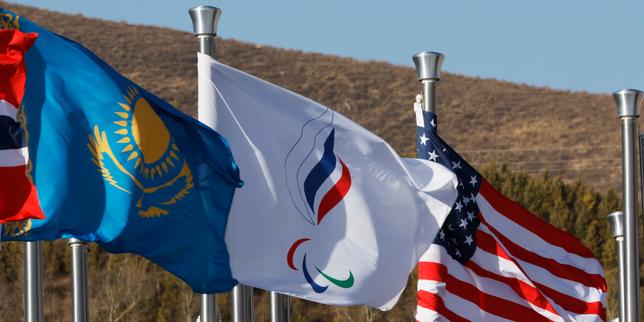
For two years, the starting gates were closed. Following the invasion of Ukraine, the International Paralympic Committee (IPC) enacted a total ban on Russian and Belarusian competitors. It was a rare moment of sporting clarity. The world agreed that the privilege of global play was contingent on the respect for global life. Now, that clarity has dissolved into a gray slush. The decision to allow these athletes back into the fold—complete with their national anthems and the three-colored flags—has turned the podium into a site of profound emotional debris.
Consider the hypothetical locker room of an athlete we will call Mykola. He is a cross-country skier from Kharkiv. He hasn’t slept through the night in months because his phone pings with air-raid alerts from an app that tracks his family’s safety. He trains in the dark. He competes with a prosthetic limb that represents a personal triumph over biology. Now, he is told he must line up next to a man whose travel is funded by a ministry currently overseeing the destruction of Mykola’s neighborhood.
This isn't about "keeping politics out of sports." That phrase is a luxury for those whose homes aren't being shelled. In the Paralympic movement, sports is politics. It is the politics of human rights, of the inherent dignity of the individual, and of the collective refusal to be erased. By restoring the flags and the songs of the aggressor nations, the IPC hasn't just invited athletes back; they have invited the state ideologies that those symbols represent.
The argument for the return is built on the bedrock of individual justice. The IPC governing board suggests that a person should not be punished for the sins of their government. On paper, it sounds like a masterpiece of fairness. If an athlete has spent four years—eight years, a lifetime—pushing a body broken by fate to its absolute limit, why should they be denied their moment because of a war they didn't start?
The flaw in that logic is the nature of the Russian sporting machine. Unlike the decentralized, private-club systems of the West, elite sports in Russia are a direct extension of the state. A medal isn't just a personal achievement; it is a tool of soft power. When the anthem plays, it isn't playing for the athlete’s perseverance. It is playing for the regime’s resilience.
This creates a visceral friction on the snow. At the 2026 games, the "neutral" status that was once a compromise has been stripped away. We are no longer looking at white flags and anonymous uniforms. We are looking at the full branding of nations that are currently under international sanction.
The logistical tension is just the surface. Beneath it lies a deeper, more corrosive psychological reality for the competitors. Sportsmanship requires a certain level of mutual recognition. You look at your opponent and see a mirror of your own sacrifice. But how do you find that mirror when the person in the next lane represents the very forces that have created thousands of new candidates for the Paralympic games in your own country?
Statistics tell a story that the official press releases try to soften. Since the conflict began, the number of amputations and permanent disabilities in Eastern Europe has spiked to levels not seen since the mid-twentieth century. The Paralympic pipeline is being filled by the wreckage of war. To ask a veteran-turned-athlete to stand on a podium while the anthem of their oppressor echoes through the stadium is more than a diplomatic faux pas. It is a fundamental betrayal of the "Spirit in Motion."
The IPC’s reversal wasn't a sudden moment of forgiveness. It was the result of a grueling, behind-the-scenes legal and financial tug-of-war. Governing bodies are terrified of lawsuits. They are terrified of losing the massive broadcasting footprints that certain regions provide. They found themselves caught between the moral high ground and the legal basement. They chose the path of least resistance, which often happens to be the path with the most corporate padding.
But the athletes don't live in the boardroom. They live in the village.
Picture the dining hall. It’s meant to be a sanctuary of shared effort. Now, it’s a minefield of avoided eye contact. The tension is a physical weight. Every meal is seasoned with the knowledge that some people in this room are celebrated by the same hands that are pulling triggers elsewhere. The "neutrality" of the past was a thin veil, but at least it was a veil. Tearing it down has forced a confrontation that most athletes are not equipped to handle while also trying to shave a hundredth of a second off their personal best.
What we are witnessing is the death of the "Olympic Truce" as a functional concept. The idea that the world can pause its horrors to watch people run and jump was always a fragile one. In 2026, that fragility has finally shattered. When the Russian flag rises in the crisp mountain air, it won't just represent a country. It will represent the moment the international sporting community decided that the discomfort of exclusion was more unbearable than the complicity of inclusion.
There is a cost to this return. It isn't measured in rubles or euros, but in the integrity of the movement itself. If the Paralympics are about the triumph of the human spirit over adversity, what happens when the games themselves become a source of adversity for the most vulnerable participants?
The ceremonies will still be beautiful. The cameras will still find the tears of joy. The broadcasts will focus on the "healing power of sport." But for those on the ground, the 2026 games will always have a ghost in the medal count. Every time a Russian or Belarusian athlete takes the podium, the silence from the Ukrainian side of the stands will be the loudest sound in the arena.
Gravity still works. The ice is still slick. The finish line is still there. But the map of the world has been dragged onto the slopes, and for many, the snow will never look white again. It is stained by a choice that prioritizes the comfort of the institution over the safety of the soul.
As the sun sets over the peaks on the final day, the medals will be packed into velvet-lined boxes. Some will go to Moscow. Some will go to Kyiv. Some will go to Minsk. The athletes will go home, but they won't all be returning to the same world. Some will return to parades. Others will return to ruins. And the flags that flew so proudly over the stadium will finally be folded, leaving behind a question that will haunt the next four years: what is a gold medal worth when it’s paid for with the silence of the grieving?
The wind picks up. The tracks on the mountain are blown over. In an hour, you wouldn’t even know anyone had been there at all. If only history were as forgiving as the snow.
Would you like me to analyze the specific legal precedents the IPC cited to justify this reversal of the athlete ban?