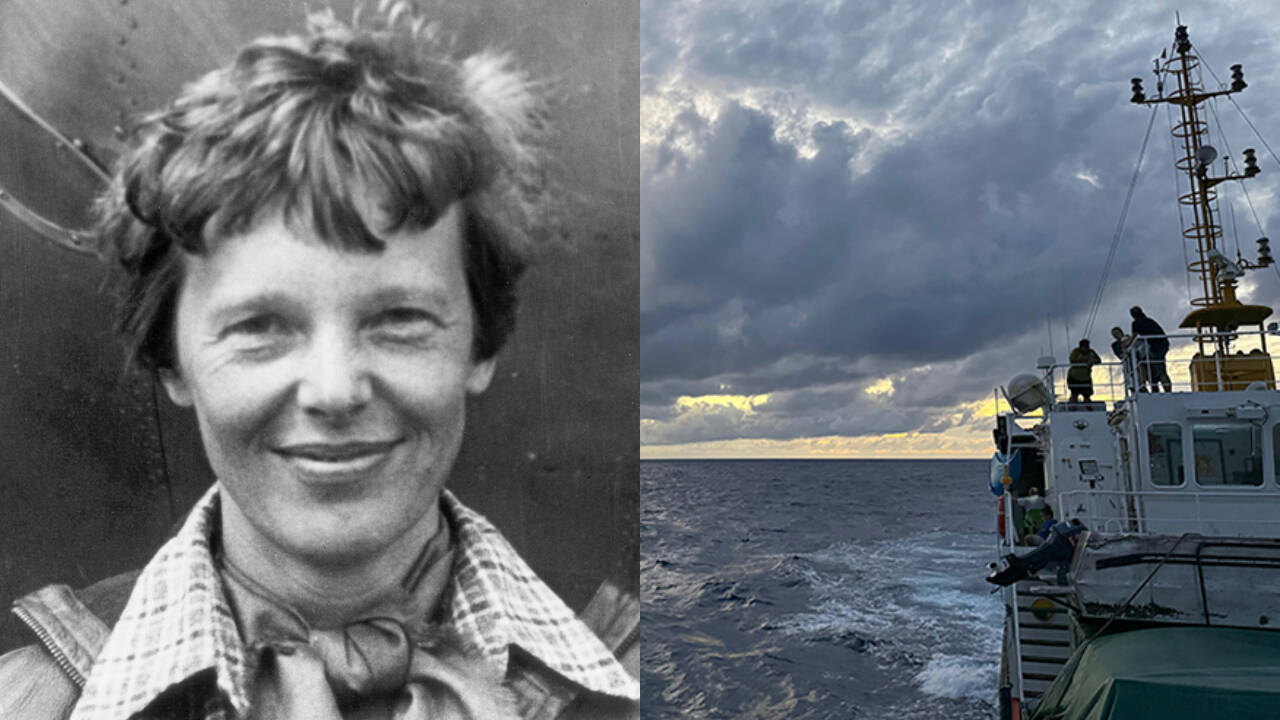
The sea does not give up its dead easily, and it guards its secrets with an indifference that humbles human pride. Imagine standing on the white-hot coral strip of Howland Island on July 2, 1937. The midday heat radiates off the earth. The air smells of salt, sun-baked guano, and vast, empty distance. Out there, somewhere beneath the horizon, a twin-engine Lockheed Electra is running out of fuel.
Inside that cramped cockpit sits Amelia Earhart, her hands steady on the controls, and Fred Noonan, bent over his charts, peering through a sextant that can no longer find a horizon through the thickening haze of clouds. They are looking for a speck of land two miles long and half a mile wide. They are looking for salvation in a blue desert.
Decades later, the modern search continues. Sonar sweeps the ocean floor. Deep-sea drones comb the abyssal plains. Yet the headlines remain frustratingly familiar: no conclusive evidence found. The plane remains missing. The mystery endures not because we lack the tools, but because the Pacific Ocean is a master of concealment.
To understand why Amelia Earhart’s disappearance still haunts the modern imagination, we have to look past the cold police reports and the oceanographic survey charts. We have to look at the human impulse to chase horizons.
The Weight Of The Sky
History often remembers the triumph and forgets the terror. In the summer of 1937, Earhart was not merely attempting a flight; she was attempting to circumnavigate the globe at its widest, most unforgiving girth. She had already conquered the Atlantic alone. She had crossed the United States in hops that left ordinary pilots breathless.
This final flight was different. It was a line drawn across the largest expanse of water on the planet, stretching from New Guinea to a tiny refueling stop on Howland Island.
Consider the margin of error. No GPS. No satellite communication. Just radio frequencies that faded with the rising sun and a navigator relying on dead reckoning and the angle of the stars. When you strip away the romantic sepia-toned photographs of leather jackets and silk scarves, you are left with a terrifying reality: two human beings flying blind over thousands of miles of water, trusting a compass and a prayer.
Radio logs tell a fragmented story of desperation. Earhart’s voice crackled through the static to the Coast Guard cutter Itasca waiting off Howland Island. We must be on you, but we cannot see you—gas is running low.
Then, silence.
The silence has lasted nearly ninety years.
The Anatomy Of An Endless Search
Why are we still looking? Why do expeditions launch year after year, spending millions of dollars to scan the muddy slopes of underwater volcanoes?
It is easy to dismiss it as a morbid obsession or an expensive treasure hunt. But the search for Earhart is fundamentally an act of human defiance against unresolved grief. When a story ends with a full stop, our minds rest. When a story trails off into an ellipsis, we are compelled to supply the missing words.
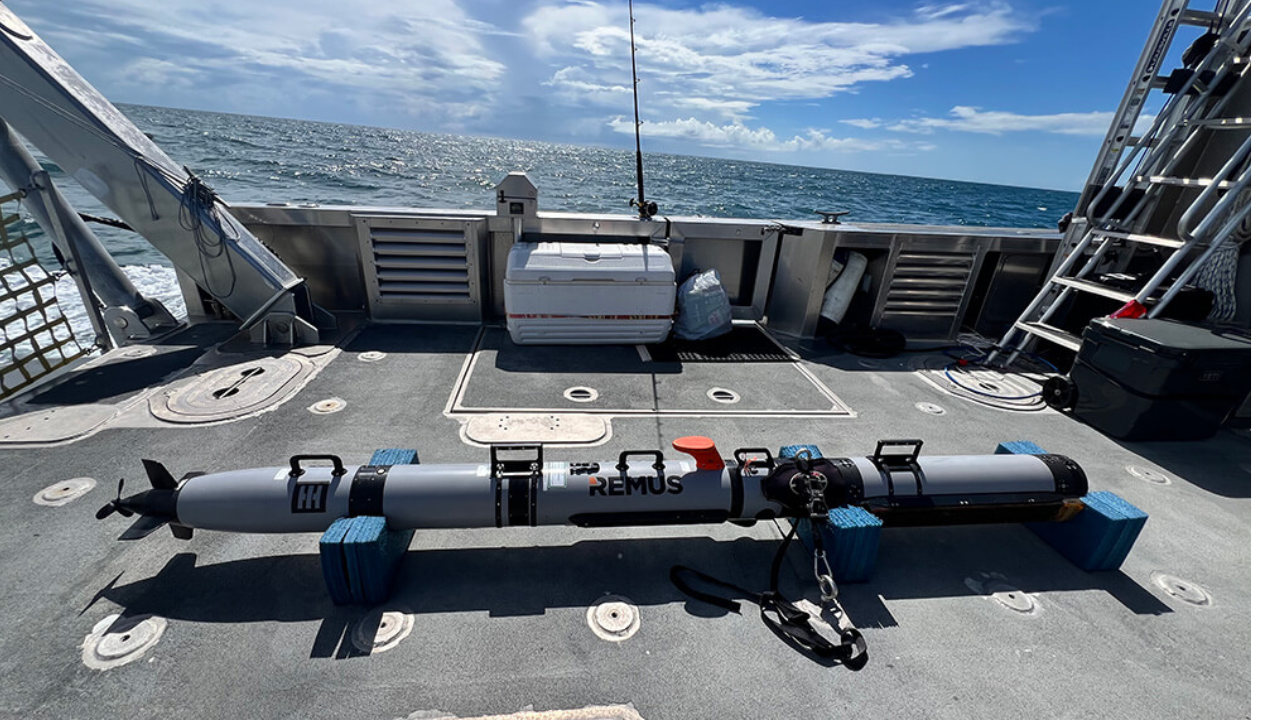
Modern researchers use autonomous underwater vehicles equipped with side-scan sonar, slicing through the crushing pressure of the deep sea. They map the contours of the ocean floor, looking for anomalies—a fuselage shape, a wing spar, a glint of aluminum against the dark silt.
Each expedition promises closure. Each expedition returns with sonar anomalies that turn out to be volcanic rocks, coral formations, or geological debris.
The public feels a collective whiplash. We want the definitive discovery. We want the photograph of the Lockheed Electra resting upright in the silt, its propellers still pointing toward the sky, proving that courage was not entirely in vain. Instead, science offers probabilities. It offers hypotheses. It offers the quiet, unromantic truth that metal corrodes, currents scatter, and the ocean grinds everything down to dust.
The Human Cost Of The Horizon
We project our own longing onto the missing plane. Earhart represents the archetype of the seeker—the person who looks at a boundary and asks what lies beyond it, fully aware of the risk.
When we read reports stating that no conclusive evidence has been found, it feels like a personal loss. It reminds us that not every question has an answer, and not every journey finds a safe harbor.
Yet, perhaps the absence of physical evidence is its own kind of monument. The plane is gone. The bodies were claimed by the tides. But the story persists because it speaks to something fundamental in human nature: the refusal to accept that someone can simply vanish without a trace from the memory of the world.
Out there on the lonely expanse of the Pacific, the water is dark, deep, and quiet. The wind sweeps across the whitecaps, touching nothing, leaving no footprints. And somewhere beneath the surface, the ghosts of aviation history keep their own counsel, waiting for a tomorrow that has already arrived.