Li Wei remembers the exact hum of the cooling fans in the Jurong East data center. It was a low-frequency vibration, more felt in the teeth than heard in the ears, a constant reminder that the digital heart of Singapore never sleeps. For twelve years, that hum was his clock. He knew when a server was struggling by the slight change in pitch. He was the whisperer of the racks, the man who could navigate a labyrinth of fiber optics in the dark.
Then came the silence.
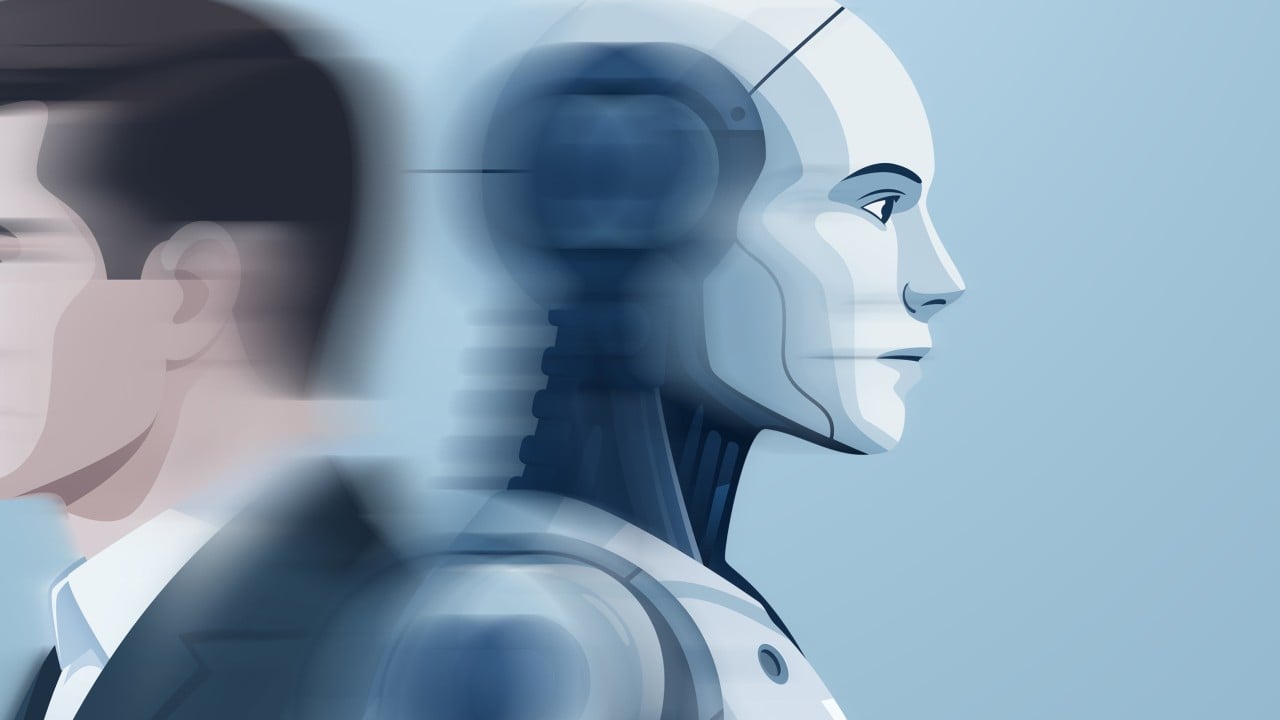
It wasn't that the machines stopped. It was that they stopped needing him to listen. A new layer of software, an autonomous diagnostic engine driven by large language models and predictive neural networks, began doing in milliseconds what took Li Wei an entire shift. It didn't just find the errors; it predicted them three days before they happened.
Li Wei is a composite of a thousand conversations currently happening in the kopitiams of Tanjong Pagar and the high-rises of Marina Bay. He represents a workforce standing at the edge of a transformation that feels less like a wave and more like a rising tide—slow, relentless, and impossible to command.
The Efficiency Trap
Singapore has always been obsessed with the friction-less life. We pride ourselves on the "Smart Nation" initiative, a sprawling ambition to weave technology into every pore of the island. But there is a hidden friction in being friction-less. When you optimize a society for maximum output, the most "inefficient" part of the machine eventually becomes the human being.
Consider the mid-level analyst at a bank in Raffles Place. For a decade, her value was her ability to synthesize three-hundred-page regulatory reports into a five-slide deck. She was the filter. Today, a specialized AI agent can ingest those same reports, cross-reference them with historical MAS guidelines, and produce the deck before her morning kopi has even cooled.
The data tells a stark story. Recent labor surveys indicate that nearly 25% of work tasks in Singapore are highly exposed to automation. We aren't just talking about robots flipping burgers or autonomous tugs at the Tuas Port. We are talking about the "cognitive elite." Lawyers, coders, accountants—the very roles that were supposed to be the safe harbor of the middle class.
The stakes are invisible because they are psychological. In a culture where your identity is often your vocation, what happens when the vocation is hollowed out?
The Arithmetic of Displacement
$A = (I + C) - H$
In this crude formula, $A$ is the level of automation, $I$ is the speed of information processing, $C$ is the cost of compute power, and $H$ is the human overhead. As $C$ plummets and $I$ reaches near-instantaneous speeds, the value of $H$ must be extraordinary to justify its place in the equation.
Singapore’s government knows this math better than anyone. They’ve launched SkillsFuture credits and mid-career subsidies, effectively telling a 45-year-old marketing manager that they need to go back to school to learn how to prompt a machine. It is a noble effort. It is also terrifying.
Imagine being told at the peak of your career that your intuition—the "gut feeling" you spent twenty years honing—is now inferior to a statistical probability engine. The disruption isn't just about losing a paycheck. It's about the erosion of mastery.
I spoke with a graphic designer who recently lost a long-term contract with a local publishing house. They didn't replace him with another designer. They replaced him with a subscription to a generative art platform that costs $30 a month.
"I used to spend days on a typeface," he told me, staring at his tablet. "Now, the client generates forty versions in a minute. They don't want 'good' anymore. They want 'now.' And 'now' is a commodity that humans can't produce."
The Myth of the Creative Safe Haven
We used to comfort ourselves with the idea that AI couldn't be creative. We said it lacked "soul." We told our children to study the arts because the machines would handle the math.
We were wrong.
Creativity, it turns out, is often just a highly complex form of pattern recognition. When an AI writes a poem or composes a jingle for a Singaporean mall, it isn't "feeling" anything, but the person listening to it is. If the effect is the same, does the source matter to the market?
The "creative safe haven" is shrinking. In a small, hyper-competitive market like Singapore, the pressure to adopt these tools isn't a choice; it's a survival tactic. If your competitor uses AI to cut their production time by 80%, you either follow suit or you vanish. This creates a race to the bottom in terms of billable hours, even as it creates a mountain of content.
The Reskilling Mirage
There is a common refrain in policy circles: "AI won't replace people; people who use AI will replace people who don't."
It’s a catchy line. It’s also a partial truth. If one person using AI can do the work of five people who don't, what happens to the other four? They don't all become "AI supervisors." Some of them simply become redundant.
The transition is messy. It involves a 50-year-old taxi driver trying to understand data analytics or a retail clerk learning to manage inventory bots. The cognitive load is immense. We talk about "lifelong learning" as if it’s a hobby, like gardening. In reality, for a large portion of the workforce, it is a desperate scramble to stay relevant in a language they don't speak.
The invisible cost is the burnout. The "always-on" culture of Singapore is now being turbocharged by tools that never sleep, never eat, and never ask for a raise. The expectation for human response times is beginning to mimic the latency of a fiber-optic cable.
The New Human Premium
If the machine can handle the logic, the math, and the synthesis, what is left for us?
The answer lies in the things that don't scale. Empathy doesn't scale. Conflict resolution between two heated personalities in a boardroom doesn't scale. The ability to look a client in the eye and say, "I understand your fear, and I am with you," doesn't scale.
We are moving toward an era of the "Human Premium."
In the medical field, we see this clearly. An AI can read a radiology scan with 99% accuracy, far better than a tired human doctor at the end of a 12-hour shift. But the AI cannot sit at the bedside and explain what that diagnosis means for a family’s future. It cannot hold a hand.
The workers who thrive will be those who lean into their "human-ness." We have spent decades trying to make humans more like machines—efficient, punctual, and predictable. Now, we have to reverse the process. We have to be more eccentric, more empathetic, and more intuitive.
Li Wei didn't stay unemployed. He didn't go back to school to become a coder, either. He realized that while the machines could monitor themselves, they couldn't explain their "decisions" to the non-technical stakeholders who owned the data. He became a translator. He sits in the gap between the black box of the algorithm and the human needs of the business.
He still misses the hum of the fans, though. He misses the feeling that he was the only thing keeping the lights on.
The lights stay on by themselves now.
We are living in a city that is becoming a masterpiece of automation, a shimmering grid of perfection where every train arrives on time and every transaction is seamless. But as the ghosts leave the cleanrooms and the algorithms take the wheel, we have to ask ourselves what we are building all this efficiency for.
Success used to be measured by how well you could follow the script. Now, the script is being written by something else entirely. Our value is no longer in the lines we memorize, but in the moments when we decide to go off-book.
The hum has changed. It’s quieter now. But if you listen closely, you can hear the sound of five million people trying to figure out who they are when the work they used to do is done by a flicker of electricity in a dark room.
The tide is still rising. We can't stop it. We can only learn to swim in deeper water.