We live in a room with the lights off, trying to guess the color of the furniture by feel alone.
For centuries, humanity looked up at the night sky and assumed that what we could see—every blazing star, every swirling spiral galaxy, every glowing nebula—constituted the entirety of existence. We built our physics on the visible. We mapped the cosmos using the currency of light.
Then came the rude awakening.
Astronomers realized that all the glowing matter we can see, touch, and photograph accounts for a mere five percent of the universe. Ninety-five percent of reality is made of things that refuse to shine. Roughly twenty-seven percent is dark matter, acting as an invisible gravitational glue holding galaxies together so they do not fly apart. The remaining sixty-eight percent is something even stranger. It is dark energy.
Dark energy is not a substance. It is an accelerator. It is the mysterious pressure driving the expansion of the universe faster and faster, pushing distant galaxies away from each other at rates that defy our comfortable intuition. Imagine blowing up a balloon, only to watch the rubber stretch itself at an accelerating speed, tearing the painted dots on its surface apart with violent indifference. That is what our universe is doing. And we have no idea why.
To understand it, we had to build an eye sharp enough to see what cannot be seen.
Enter the space telescope designed to hunt the phantom.
Picture an engineer standing in a sterile cleanroom, wearing a white bunny suit, wiping a microscopic speck of dust off a mirror that cost millions of dollars and a decade of sleepless nights. That engineer is not just building hardware. They are building a time machine.
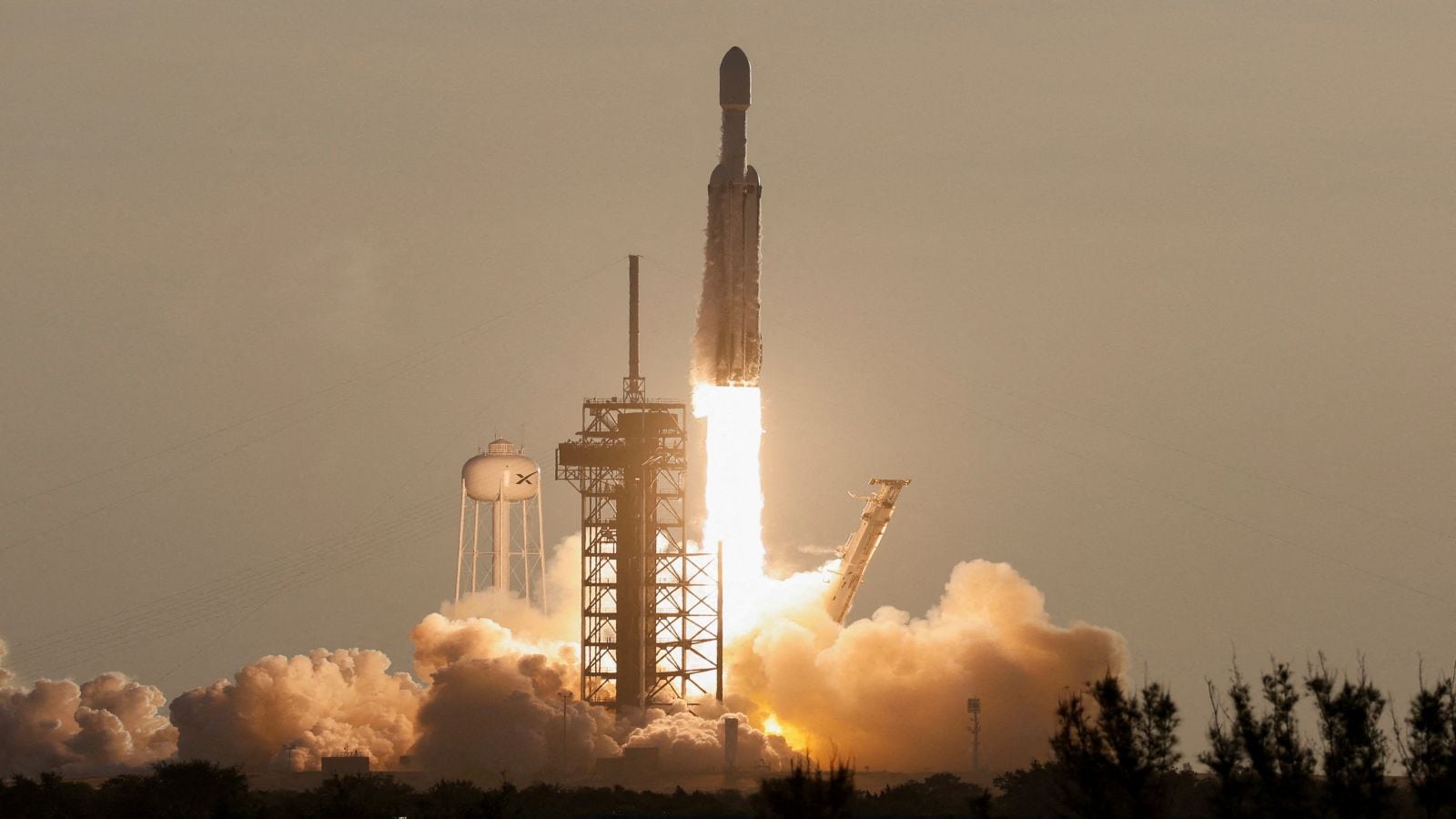
When SpaceX rockets thunder into the upper atmosphere, carrying these complex scientific payloads aloft on a pillar of fire and liquid oxygen, the physics are terrifyingly unforgiving. A rocket launch is not a graceful transit. It is a controlled explosion, a violent rebellion against gravity where twenty stories of metal and fuel experience forces that would crush a human chest like an eggshell. For the instruments inside the fairing, it is the ultimate stress test. Years of quiet laboratory work culminate in minutes of thunderous vibration and scorching heat.
When the rocket clears the atmosphere and the payload separates into the silent, freezing void of space, the real work begins.
This particular dark energy-hunting telescope is engineered to map the geometry of the cosmos across billions of light-years. By capturing light from billions of galaxies, it measures how the universe has expanded over cosmic time. Because light takes time to travel to us, looking deep into space means looking back into the past. We are watching the universe age in reverse, tracking how the invisible accelerator has stretched space itself over ten billion years.
Why does this matter to someone sitting on a couch on a Tuesday night, worrying about rent, bills, and the grocery bill?
Because it defines the ultimate fate of everything.
If dark energy remains constant, the universe will expand forever. Stars will burn out. Galaxies will drift so far apart that their inhabitants, if any remain, will look up into a completely black sky, unable to see neighbors. The universe will end in a cold, lonely freeze. But if dark energy changes, if it grows stronger or reverses, the end could look entirely different.
We are driven by a primal need to know the rules of the house we live in. We are curious apes clinging to a wet rock, refusing to accept that we are trapped in a dark room forever.
When the telescope opens its aperture and begins streaming data back to Earth, it will not hand us a neat, tidy answer wrapped in a bow. Science rarely works that way. Instead, it will hand us better questions. It will give us anomalies. It will give us data points that refuse to fit our equations, forcing brilliant minds back to the chalkboard to rethink gravity, space, and time.
That is the true engine of progress. Not the comfort of knowing, but the restless itch of the unknown.
Tonight, somewhere above the clouds, a sophisticated suite of mirrors and sensors is adjusting its focus, staring into the ancient dark. It is searching for the ghost that pushes our world apart. And down here, beneath the same stars, we wait to hear what it finds.