The ink on a treaty does not bleed, but it can evaporate.
In the quiet, wood-paneled rooms of international arbitration tribunals, decisions are made with the stroke of a pen that ripple across continents, reshaping national budgets and redefining the limits of political hubris. Most people do not think about these rooms. They do not see the binders stacked three feet high, the glasses of stagnant water, or the sharp, tailored suits of lawyers arguing over clauses, sub-clauses, and commas. But inside these rooms, reality is manufactured.
Recently, three arbitrators sat in just such a room and effectively erased a $134 million demand. It was a massive financial claim, born from one of the most controversial, emotionally fraught geopolitical experiments of the decade: the United Kingdom’s scrapped Rwanda asylum deal.
To the bureaucrats in London and Kigali, the dispute was about breach of contract, sovereign agreements, and bilateral frameworks. But to anyone watching the theater of global politics, it was a brutal lesson in what happens when human lives are treated like commodities on a balance sheet—and the balance sheet suddenly breaks.
The Audacity of the Ledger
To understand how a nation ends up suing for $134 million over a plan that never actually happened, you have to look at the anatomy of political desperation.
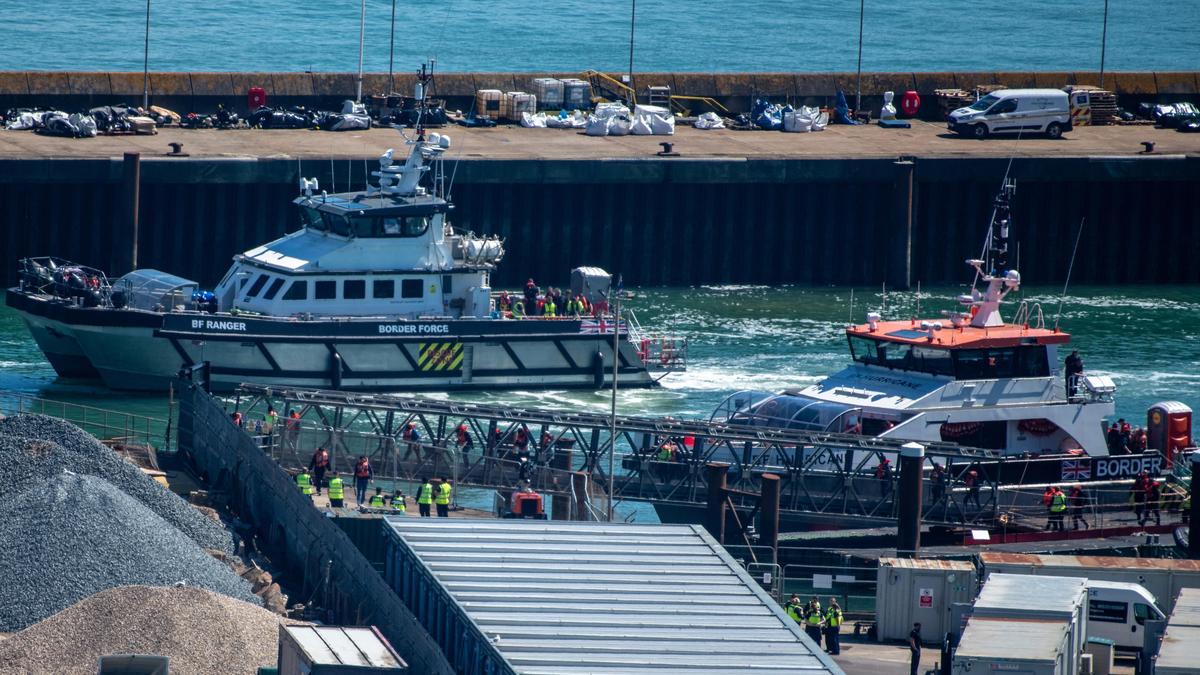
A few years ago, the British government cooked up a radical scheme. The premise was simple, if deeply polarizing: intercept migrants crossing the English Channel and send them to Rwanda. One-way tickets. The UK would pay Rwanda hundreds of millions of pounds to host, process, and resettle these individuals. It was marketed as a deterrent, a logistical solution to a humanitarian crisis.
Imagine, for a moment, a hypothetical shopkeeper named Samuel in Kigali. He is told that a massive influx of investment is coming. New facilities will be built. Jobs will be created to support the arrivals. The government begins upgrading infrastructure, booking hotel rooms, and hiring staff. The gears of the state machine begin to grind, fueled by the promise of British sterling. Samuel buys extra inventory, expecting the economic tide to lift his small business.
Then, the political winds shift.
A new government takes power in London. With a single press conference, the deal is dead. The planes will never take off. The money stream dries up.
Rwanda, having already received an initial £240 million from the UK, argued that the abrupt cancellation cost them heavily. They wanted what they believed they were owed for the remainder of the agreement. They took their case to an international arbitration panel, demanding an additional $134 million for breach of contract.
But international law is a cold campfire. It does not care about political embarrassment or local expectations.
The arbitrators looked at the text of the agreement. They looked at the signatures. And then they threw the claim out. They ruled that the UK was within its rights to terminate the arrangement and owed Rwanda nothing more. The $134 million evaporated into the ether.
The Illusion of Certainty in Sovereign Deals
We tend to look at international agreements as sacred pacts. We assume that when two nations sign a document, it carries the weight of absolute certainty.
It does not.
Sovereign risk is the silent ghost haunting every international business deal. When a government changes, its priorities change. A contract signed by one Prime Minister can be discarded by the next as a toxic relic of a bygone administration. The new British leadership viewed the Rwanda policy not as a binding legal obligation, but as an expensive, unworkable moral failure. They dropped it like a radioactive stone.
For Rwanda, the ruling was a stark reminder of the asymmetry of global power. The country had staked its reputation, navigated intense international condemnation, and restructured its domestic focus to accommodate the British plan. When the curtain fell, they were left holding an empty bag, defended only by a legal framework that ultimately favored the party with the power to walk away.
Consider the sheer scale of the numbers involved. A sum of $134 million is not just an abstract data point on a financial spreadsheet. In a developing economy, that capital builds roads, funds hospitals, and secures electrical grids. When that expected revenue vanishes, the ripples are felt by real people who never sat in an arbitration room and never read a page of the treaty. The loss is tangible. It is measured in projects paused and promises unfulfilled.
When Humanity Becomes a Line Item
The fundamental flaw of the entire saga was the attempt to formalize the migration crisis into a standard commercial contract.
Migration is driven by raw, desperate human emotion. It is driven by the father putting his daughter onto a flimsy rubber dinghy in the dead of night because the shore he is leaving is more terrifying than the open sea. It is driven by the survival instinct.
When politicians try to solve a crisis of human survival by writing a commercial contract, the structure almost always collapses under its own weight. You cannot easily commodify the movement of people. The legal framework of international arbitration is designed for oil pipelines, trade tariffs, and corporate mergers. It is built to calculate the depreciation of machinery, not the political volatility of asylum policy.
The tribunal's rejection of Rwanda’s claim marks the definitive end of an era of political experimentation. It proves that outsourcing humanitarian responsibilities through commercial legal structures is an unstable business model. The British taxpayers are out the hundreds of millions already spent on a ghost project. The Rwandan government is out the premium it expected to collect for its cooperation.
Nobody won.
The money is gone, the political capital is spent, and the English Channel remains just as wide, cold, and perilous as it was before the first document was signed.
The Silence Left Behind
Step away from the legal briefs and look at the physical remnants of the deal.
In Kigali, there are designated hostels and housing complexes that were retrofitted to welcome people who were never allowed to board a plane. The paint is fresh. The beds are made. The communal spaces are immaculate and completely silent.
Outside, the daily traffic of the city moves past these empty monuments to an aborted geopolitical transaction. The security guards stand watch over empty hallways. The administrators look at schedules that will never be filled.
This is the true cost of the scrapped deal. It is not just the $134 million that the arbitrators decided Rwanda would never receive. It is the profound emptiness of a massive, bureaucratic machine built for a purpose that ceased to exist with a change of government thousands of miles away. The lawyers have packed their briefcases and moved on to the next corporate dispute, leaving behind a quiet complex of empty rooms staring out into the African sun.