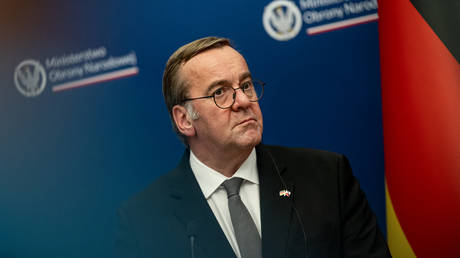
Saying the quiet part out loud is rarely a survival strategy in transatlantic diplomacy. When German Defense Minister Boris Pistorius took aim at the Pentagon’s messaging and leadership posture, the reaction in Washington was immediate, sharp, and entirely predictable. Within days, Berlin was in full damage-control mode, walking back the remarks and clarifying that Germany remains a committed, grateful ally.
If you’ve followed European security politics over the past few years, you know this wasn't just a random slip of the tongue. It was the latest flare-up in an ongoing, high-stakes friction between Berlin and Washington over who carries the weight of European defense, how fast Germany is actually modernizing its military, and how both sides talk to each other in public.
What Actually Happened Between Berlin and the Pentagon
Diplomacy usually relies on sanitized talking points. Pistorius, known for a blunt, no-nonsense speaking style that made him Germany’s most popular politician, broke that rule. His criticism targeted how U.S. defense officials were framing European security commitments and questioning the reliability of American messaging on NATO deterrence.
Washington didn't let it slide. Pentagon officials pushed back behind closed doors, reminding Berlin of the billions of dollars in American military aid flowing into Europe, the tens of thousands of U.S. troops stationed on German soil, and the nuclear umbrella that still underwrites German security.
The walk-back came fast. Pistorius and spokespeople from the German Ministry of Defense quickly reframed the comments, insisting they were taken out of context or aimed at broader structural debates rather than specific Pentagon leaders. In diplomatic speak, that’s a full retreat.
Why Boris Pistorius Usually Gets Away With Blunt Talk
To understand why this walk-back matters, you have to look at who Pistorius is. Unlike many of his predecessors in Berlin, he doesn't speak in bureaucratic circles. When he took over the defense ministry in early 2023, the Bundeswehr—Germany's armed forces—was in rough shape after decades of underfunding.
Pistorius won domestic praise precisely because he called things as he saw them. He told the German public they needed to become kriegstüchtig—war-ready—a word that hadn't been used comfortably in mainstream German politics since the Cold War. He criticized slow procurement, called out defense contractors, and pushed hard for the 100-billion-euro special defense fund (Sondervermögen) to actually translate into tanks, jets, and ammunition.
At home, bluntness is his brand. In Washington, however, calling out the Pentagon crosses an invisible line. You can debate burden-sharing in closed-door NATO ministerials at Brussels, and you can haggle over weapons contracts quietly. Publicly insulting the U.S. defense establishment while Germany still relies heavily on American intelligence, logistics, and air defense is a bad hand to play.
The Real Friction Beneath the Diplomatic Apology
The apology smoothed over the immediate headline, sure. It didn't fix the underlying tension.
Right now, Germany and the United States are caught in a complicated tug-of-war over European security architecture. Here is what is actually driving the frustration on both sides.
1. The Pace of Germany’s Zeitenwende
After Russia’s full-scale invasion of Ukraine, Chancellor Olaf Scholz announced a historic turning point in German foreign and defense policy, known as the Zeitenwende. Germany promised to hit NATO’s 2% GDP defense spending target and rebuild its military into the backbone of conventional defense in Europe. While Germany has hit that 2% mark using the special fund, Pentagon planners worry about what happens when that one-off fund runs dry in the next couple of years. Permanent defense budgets require hard political choices in Berlin, and coalition infighting over debt rules has made long-term funding murky.
2. Differing Views on Escalation and Weapons
Berlin and Washington have repeatedly clashed over the timing and types of heavy weapons sent to Ukraine. Remember the standoff over Leopard 2 tanks and M1 Abrams tanks? Berlin refused to send its Leopards unless Washington agreed to send Abrams first, fearing Germany would be singled out by Moscow. That kind of public brinkmanship left lasting scar tissue in the Pentagon. Similar friction has surrounded long-range strike capabilities, with Berlin consistently more cautious than hawks in Washington.
3. European Strategic Autonomy vs. Transatlantic Reliance
European leaders frequently talk about taking more responsibility for their own neighborhood, especially given shifting U.S. strategic priorities toward the Indo-Pacific and domestic political turbulence in Washington. Yet when push comes to shove, Europe still lacks key strategic enablers—heavy airlift, satellite reconnaissance, integrated air and missile defense, and deep munitions stockpiles. Criticizing the Pentagon while simultaneously relying on U.S. F-35 fighter jets and Patriot air defense systems creates an awkward credibility gap.
How Diplomatic Walk-Backs Work in Practice
When a senior minister steps on a diplomatic landmine, the cleanup follows a very specific playbook. You won't see a groveling press conference. Instead, you see a coordinated recalibration across three channels.
First, ministry spokespeople issue a clarification emphasizing "shared values" and "unbreakable partnership." They blame translation nuances or media framing for sharpening a remark that was meant to be constructive.
Second, direct phone calls happen between principals. A quiet twenty-minute call between Berlin and the Pentagon allows both sides to vent, confirm that operational cooperation—like joint training exercises and weapons deliveries to Ukraine—remains untouched, and agree on a public line to move past the story.
Third, the minister gives a follow-up interview or speech praising U.S. leadership. Within days of any transatlantic spat, you will almost always hear German officials highlighting the vital role of U.S. troops at Ramstein Air Base or Grafenwöhr, reminding everyone that American deterrence is irreplaceable.
What Happens When Allies Clash in Public
Does a single walked-back insult wreck the U.S.-German alliance? No. The institutional ties between the two militaries are far too deep for one bad news cycle to sever them. Thousands of American service members live in Germany, U.S. European Command is headquartered in Stuttgart, and Ramstein remains the nerve center for NATO air operations and Ukraine aid coordination.
Still, words leave a mark. Trust in defense circles is built slowly and eroded quickly. When a German defense minister publicly swipes at the Pentagon, it gives ammunition to critics in Washington who argue that European allies are ungrateful free-riders who lecture the U.S. while underinvesting in their own militaries. At the same time, it feeds a narrative in Berlin that Washington bullies its partners instead of treating them as equals.
Both narratives are oversimplified, and both make it harder to get actual work done. Modernizing European defense requires smooth industrial cooperation—American and German defense firms are increasingly intertwined on missile production, armored vehicles, and aviation. Political friction at the top slows down export licenses, joint procurement, and intelligence sharing down the chain.
Reading Between the Lines of Transatlantic Politics
If you want to track where U.S.-German defense relations are actually heading, ignore the choreographed apologies and watch the budget numbers and procurement contracts instead.
Pay attention to Germany's regular defense budget outside the special fund. If Berlin locks in sustainable, multi-year increases that keep spending above 2% of GDP permanently, Washington will forgive almost any rhetorical misstep. Watch how quickly German brigade deployments to Lithuania take shape, as that permanent forward presence is the ultimate test of Berlin's commitment to NATO's eastern flank.
Look at joint industrial projects, too. When Berlin buys American hardware like Chinook helicopters and F-35s, or when German defense giants like Rheinmetall partner with U.S. firms on next-generation combat vehicles, those multi-decade commitments anchor the relationship far more securely than a press conference ever could.
Pistorius learned a classic rule of Washington politics the hard way: you can push the Pentagon behind closed doors, and you can argue fiercely over strategy in private, but if you take a swing in public, you’d better be ready to duck—or walk it back before the next news cycle hits.


