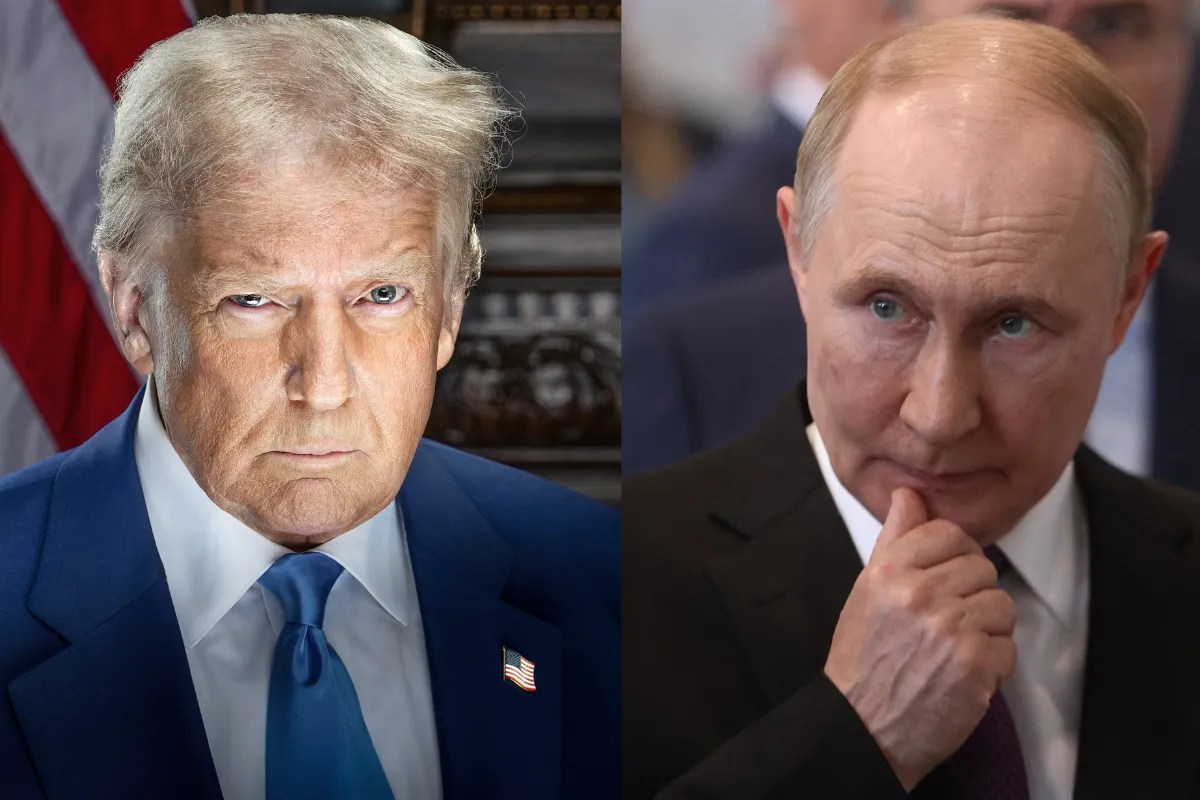
Donald Trump’s declaration following his G7 summit meeting with Ukrainian President Volodymyr Zelensky signals a forced structural shift in global energy markets: the engineered termination of discounted Russian crude oil. For past quarters, countries like India and China capitalized on a dual-tier pricing system, purchasing Russian Urals at significant discounts relative to the Brent benchmark. The announced policy pivot aims to dismantle this arbitrage window. To evaluate the viability of this declaration, one must analyze the specific economic levers, enforcement mechanisms, and supply-chain bottlenecks that dictate global oil flows.
The baseline mechanism sustaining Russia's wartime economy relies on volume optimization over price maximization. When Western sanctions and the G7 price cap took effect, the market split into two distinct clearing mechanisms: the transparent market governed by Western insurance and maritime logistics, and the shadow market utilizing non-Western services. The proposed policy seeks to eliminate the profitability of this shadow market by imposing secondary sanctions that increase the friction costs of processing, transporting, and financing restricted crude until the discount is entirely consumed by operational risks.
The Triad of Enforcement Levers
To collapse the discount structure without triggering a catastrophic global supply shock, a administration must execute three distinct strategic maneuvers.
Maritime Insurance and Logistics Chokepoints
The first lever targets the physical transport of the commodity. A vast portion of the global tanker fleet relies on Western Protection and Indemnity (P&I) Clubs for maritime insurance. While Russia developed a "shadow fleet" of aging tankers operating outside G7 jurisdiction, these vessels face severe structural limitations:
- Port State Control Restrictions: Major maritime chokepoints and sovereign ports require verifiable, top-tier insurance to cover environmental liabilities.
- Reinsurance Capital Constraints: Non-Western reinsurers lack the deep capital pools necessary to cover catastrophic oil spills, capping the total volume the shadow fleet can safely move.
- Hull and Machinery Depreciation: The operational lifespan of these unclassified vessels is rapidly declining, compounding maintenance costs.
By strictly enforcing compliance on maritime service providers and penalizing intermediary jurisdictions that allow unflagging or flag-of-convenience switching, the strategy systematically drives up the freight premium on Russian Urals. When the cost of freight matches or exceeds the market discount, the financial incentive for third-party nations to purchase the oil evaporates.
Financial Clearing and Secondary Sanctions
The second lever operates through the banking system. Buying discounted oil requires clearing mechanisms that bypass the SWIFT network and the US dollar. Transactions migrated to local currencies, such as the Indian Rupee (INR) and Chinese Yuan (CNY). This creates a structural bottleneck: currency illiquidity.
Russia accumulated massive balances of non-convertible currencies, particularly rupees, which cannot be easily repatriated or spent outside the issuing country. The threat of secondary sanctions on foreign banks processing these energy payments forces a choice between maintaining access to the US financial system or continuing to clear discounted energy transactions. As compliance costs rise for foreign banks, they demand higher transaction fees, further eroding the net margin Russia receives on each barrel sold.
Refined Product Trajectory Constraints
The third lever addresses the laundering of crude through intermediary refineries. Under current regulations, once Russian crude is substantially transformed in a third-country refinery—into diesel, jet fuel, or gasoline—it changes its country of origin and enters Western markets legally.
Ending the discount framework requires tightening the rules of origin. Implementing strict audits on refinery input-output ratios creates a regulatory barrier. If refineries in Asia face import bans on their finished products unless they certify zero usage of Russian feedstock, their internal economic calculus changes. They must weigh the discount on raw Urals against the loss of high-margin Western export markets for finished distillates.
Market Realignment and Price Elasticity Dynamics
Eliminating the discount window changes the global supply-demand equilibrium. A common analytical error is assuming that halting discounted sales removes that volume from the global market entirely. Oil is a fungible commodity; total global production capability remains the primary driver of the structural price floor.
[Global Crude Supply Portfolio]
       │
       ├──► High-Cost Marginal Production (US Shale, North Sea)
       │
       ├──► Fixed-Quota Production (OPEC core)
       │
       └──► Sanctioned / Discounted Volume (Russia, Iran, Venezuela)
                 │
                 ▼ (Policy Intervention: Increased Friction Costs)
       [Redirection to Domestic / Non-Aligned Infrastructure]
The friction introduced by the G7 declaration forces a redistribution of flows rather than an immediate shutdown of Siberian wells. Russia faces geological constraints; shutting down production in permafrost zones can permanently damage reservoirs, causing irreversible capacity loss. Therefore, Russian producers will absorb significant margin compression before cutting volume.
The strategy aims to force Russia to sell at production cost, effectively shifting the economic rent of the resource from the Kremlin to Western-aligned regulatory frameworks or forcing the oil to move through highly inefficient, high-cost alternative routes.
The risk inherent to this framework is price elasticity. If the enforcement mechanisms are applied too abruptly, global supply constricts, driving Brent prices upward. A significant spike in global benchmarks counteracts the policy goal: Russia could earn identical net revenue on lower volumes sold at a higher absolute price point, even without offering a steep discount.
Structural Bottlenecks to Implementation
Executing this strategy requires navigating severe diplomatic and operational limitations. The primary obstacle is the divergent national interests of major consuming nations.
For emerging economies, access to cheap energy is a domestic political necessity and an industrial competitive advantage. Convincing these nations to abandon the discount requires alternative supply assurances. The US must deploy its domestic production capability as a strategic counterweight. This requires maximizing US LNG and crude exports to fill any supply deficits in Europe and Asia, thereby stabilizing the global baseline price while the Russian discount mechanism is dismantled.
The second limitation is the tracking and verification infrastructure. The maritime industry developed highly sophisticated evasion techniques:
- Ship-to-Ship (STS) Transfers: Blending different crude grades in international waters to obscure the true origin of the cargo.
- AIS Transponder Manipulation: Dark port calls where vessels turn off tracking systems to hide loading operations.
- Corporate Layering: Using shell companies registered in non-aligned jurisdictions that dissolve and reform within weeks to evade legal accountability.
Overcoming these evasions requires significant intelligence asset allocation, satellite monitoring, and a willingness to seize non-compliant assets in international waters, elevating the geopolitical risk profile of the strategy.
The Strategic Play
To achieve the stated objective, the administration cannot rely on rhetoric; it must initiate a sequential rollout of economic disincentives.
First, issue immediate treasury directives mapping clear, enforceable timelines for secondary sanctions on financial institutions utilizing non-SWIFT clearing houses for energy products.
Second, establish a joint G7 maritime task force authorized to deny entry to any vessel lacking verified, Western-backed P&I insurance or displaying anomalous AIS tracking histories.
Finally, initiate direct bilateral negotiations with major non-aligned buyers, offering conditional access to Western technology and capital markets in exchange for a phased reduction in Russian crude imports. This systematic isolation of the shadow supply chain represents the only viable path to collapsing the discount structure without destabilizing global energy markets.