Diplomatic summits rarely alter structural realities, yet the gathering of European leaders in Budapest to mark the anniversary of the 1956 Hungarian Revolution represents a measurable shift in continental power dynamics. For over a decade, Hungary operated as an institutional friction point within the European Union, utilizing unanimity rules to extract financial concessions and delay collective foreign policy. The emergence of Péter Magyar as a central political force and the subsequent recalibration of Budapest's posture toward Brussels alters this equilibrium. This transition is not a sentimental return to European norms; it is a calculated restructuring of political incentives, fiscal dependencies, and geopolitical alignment driven by domestic economic pressure and shifting security architectures in Central Europe.
The Anatomy of the 1956 Historical Anchor
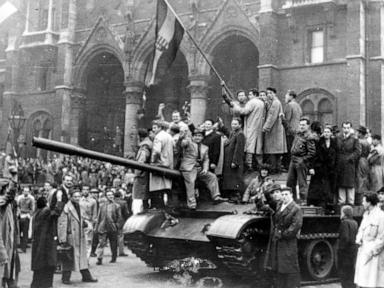
Historical anniversaries in Central Europe function as active political instruments rather than passive commemorations. The 1956 uprising against Soviet control serves as the foundational legitimacy myth for modern Hungarian sovereignty. For years, the ruling Fidesz administration framed the European Commission as the ideological successor to Moscow—an external imperial bureaucracy attempting to dictate domestic policy to a sovereign nation. This rhetorical framing allowed Budapest to justify institutional obstructionism as an act of national self-defense.
The presence of senior European Union officials and heads of state in Budapest during this specific commemoration signals an intentional reclamation of that historical narrative. By physically occupying the symbolic space of 1956 alongside Hungarian opposition and reformist figures, European leaders are executing a strategic re-framing:
- Sovereignty Through Integration: Aligning the 1956 demand for self-determination with modern European collective security rather than isolationist nationalism.
- Institutional Legitimacy: Validating political actors who advocate for rule-of-law compliance as the true inheritors of the anti-authoritarian tradition.
- The End of Diplomatic Quarantine: Replacing the previous strategy of isolating Budapest with a strategy of direct engagement to accelerate internal political realignment.
The mechanism here is straightforward. When external actors validate a domestic political alternative on sacred historical ground, they lower the perceived risk for undecided voters and institutional elites considering a shift in allegiance.
The Three Pillars of the Budapest Diplomatic Reset
Understanding the transition initiated by Péter Magyar and his political movement requires stripping away ideological rhetoric and examining the underlying structural mechanics. The reset between Budapest and Brussels rests on three distinct operational pillars: fiscal liquidity, institutional compliance, and regional security integration.
1. The Fiscal Liquidity Imperative
Hungary's economy suffers from severe structural vulnerabilities, including persistent inflationary pressures, high debt-servicing costs, and a heavy reliance on foreign direct investment in manufacturing sectors like automotive and battery production. The freezing of billions of euros in Cohesion Funds and Recovery and Resilience Facility (RRF) grants by the European Commission created an acute capital shortage.
Without access to these low-cost capital inflows, the Hungarian state was forced to rely on expensive commercial debt and bilateral loans from non-Western creditors, primarily China. This created a deteriorating cost function where the political utility of anti-Brussels rhetoric was outweighed by the macroeconomic damage of capital starvation. A reset with the European Union is primarily a liquidity event. Restoring access to frozen funds requires predictable adherence to judicial independence benchmarks and public procurement transparency—conditions that directly threaten the patronage networks sustaining the previous political order.
2. Institutional Compliance as Leverage
Under the previous administration, Hungary treated the European Union's unanimity requirement in foreign policy and fiscal matters as a bilateral extortion mechanism. Veto threats over Ukraine aid packages, sanctions regimes, and budget revisions were deployed to extract unfreezes of domestic funds. This strategy yielded diminishing returns as Brussels developed workarounds, such as constructive abstention mechanisms and off-budget financing vehicles, effectively neutralizing Hungary's veto power while leaving its funds frozen.
The strategic shift represented by Magyar's approach inverts this dynamic. Instead of using obstruction to extract concessions, compliance is used to restore normal capital flows and regain influence within the European Council. By committing to join the European Public Prosecutor's Office (EPPO) and implementing the super-milestones required by the Commission, Budapest trades the diminishing asset of veto power for the tangible asset of capital access and committee influence.
3. Re-anchoring in the Western Security Architecture
Central Europe's security environment changed permanently following the full-scale invasion of Ukraine. Hungary's previous policy of "connectivity"—maintaining deep energy and diplomatic ties with Moscow and Beijing while remaining a nominal member of NATO and the EU—became untenable as Western alliances hardened their supply chains and intelligence-sharing protocols.
European leaders gathering in Budapest are reinforcing the boundary lines of the continental security perimeter. A reset in Hungarian EU ties involves aligning Budapest's energy diversification strategies with European frameworks, reducing dependence on Russian pipeline gas and nuclear fuel contracts, and halting the use of Hungarian territory as a diplomatic and intelligence beachhead for non-European powers.
Domestic Political Mechanics and the Opposition Realignment
The rise of Péter Magyar disrupted a stagnant domestic political equilibrium that had persisted since 2010. Previously, the Hungarian opposition was fragmented across ideological lines, allowing the ruling party to maintain a constitutional supermajority through a first-past-the-post electoral system designed to punish divided challengers.
Magyar's strategy bypassed traditional left-right ideological debates, focusing instead on state capture, economic mismanagement, and institutional decay. This tactical focus achieved two critical outcomes:
- Consolidation of the Anti-Establishment Vote: By positioning his movement as a center-right, pro-European alternative, he absorbed voters disillusioned with both the ruling party's corruption and the legacy opposition's incompetence.
- Erosion of Rural Hegemony: Traditional opposition parties remained trapped in urban centers, particularly Budapest. Magyar executed an aggressive, decentralized ground campaign targeting mid-sized towns and rural districts, directly challenging the ruling party's demographic strongholds.
When European leaders engage with this emerging political reality in Budapest, they are responding to polling data and municipal shifts that indicate a viable path to a transfer of power. In international diplomacy, foreign capitals rarely back an opposition movement unless internal metrics suggest the incumbent regime's monopoly on state power is fracturing.
The Cost Function of Delaying Institutional Reform
For any Hungarian administration attempting to execute this reset, the transition presents severe operational hazards. Dismantling a deeply entrenched system of state-directed capitalism while simultaneously attempting to unlock European funds creates a dangerous synchronization problem.
The European Commission operates on strict procedural timelines. Disbursement of RRF funds requires not just the passage of legislation, but the verifiable implementation of judicial reforms, anti-corruption agencies, and transparent auditing systems. This creates a lag between political action and financial reward. During this lag, a reformist government must manage an economy strained by high deficits and entrenched oligarchic networks that control key media, construction, and telecommunications assets.
If the incoming political leadership fails to deliver rapid economic relief to households battered by inflation, the electorate may experience reform fatigue before European capital inflows materialize into tangible wage growth or infrastructure improvements. Furthermore, entrenched economic actors loyal to the previous administration possess the capital reserves to induce localized economic friction, such as delaying private sector investments or manipulating media narratives to amplify public discontent during the transition phase.
Geopolitical Ripple Effects Across Central Europe
A shift in Budapest's trajectory directly impacts the broader Visegrád Group (Poland, Hungary, Czechia, Slovakia) and the internal balance of power within the European Council. For years, the alliance between Warsaw and Budapest provided mutual protection against Article 7 rule-of-law proceedings, as both governments pledged to veto any punitive measures against the other.
Following the political transition in Poland that returned a pro-European coalition to power, Hungary lost its primary institutional shield, leaving Slovakia as its sole sympathetic neighbor in the region. A full realignment in Budapest isolates Bratislava's current populist leadership and restores a cohesive pro-European bloc stretching from the Baltic states down through Poland, Czechia, and Hungary.
This regional consolidation carries immediate operational consequences for European Union governance:
- Enlargement Acceleration: A cooperative Budapest removes a major roadblock to EU enlargement negotiations with Ukraine and the Western Balkans, shifting Hungary from a veto player to a regional advocate for accession frameworks.
- Defense Industrial Integration: Central Europe is rapidly becoming the manufacturing hub for European defense hardware. Full alignment allows Hungarian industrial capacity to integrate seamlessly into EU-funded joint procurement programs rather than remaining sidelined due to security clearance concerns.
- Energy Corridor Security: Unified regulatory oversight across Poland, Slovakia, and Hungary enables the rapid completion of north-south gas and electricity interconnectors, permanently eliminating Russian energy leverage in the landlocked regions of Central Europe.
The Limits of the European Reset
Assuming that a leadership transition or diplomatic reset in Budapest will resolve all friction between Hungary and Brussels is an analytical error. Structural divergences remain that will persist regardless of who occupies the prime minister's office.
First, Hungary's demographic decline and labor shortages remain acute. Any Hungarian government will face intense domestic pressure to maintain strict border controls and resist centralized EU asylum quotas, ensuring continued friction over migration policy.
Second, the economic model built over the past decade relies heavily on low corporate tax rates and generous state subsidies to attract foreign manufacturing, particularly from Asian electric vehicle and battery conglomerates. These subsidies frequently clash with European Union state-aid rules and Brussels' broader de-risking strategy toward China. Unwinding existing bilateral industrial agreements with Beijing without triggering a severe contraction in foreign direct investment will test the limits of Budapest's compliance with European trade policy.
Third, the institutional capture of the Hungarian judiciary, media landscape, and public foundations cannot be reversed overnight through simple legislative majorities. Many key appointments carry nine-to-twelve-year terms protected by constitutional supermajority requirements. A reformist government operating with a simple parliamentary majority will face institutional sabotage from entrenched officials within the state apparatus, slowing down the very reforms required to unlock European Union funding.
The Strategic Play for European Policymakers
European leaders must treat the Budapest gathering not as a victory lap, but as the opening phase of a complex institutional salvage operation. Relying solely on traditional bureaucratic conditionality will stall the transition and risk a populist backlash if economic conditions deteriorate before funds are released.
Brussels must deploy a phased capital release mechanism tied to verifiable, granular operational milestones rather than waiting for comprehensive systemic overhauls. Front-loading technical assistance, accelerating Hungary's integration into the European Public Prosecutor's Office, and establishing direct financing channels for Hungarian municipalities and small-to-medium enterprises will bypass entrenched oligarchic bottlenecks and deliver immediate liquidity to the real economy. Simultaneously, European security institutions must rapidly absorb Hungarian defense and intelligence structures into joint operational frameworks, locking in geopolitical alignment before domestic political headwinds can reverse the trajectory.