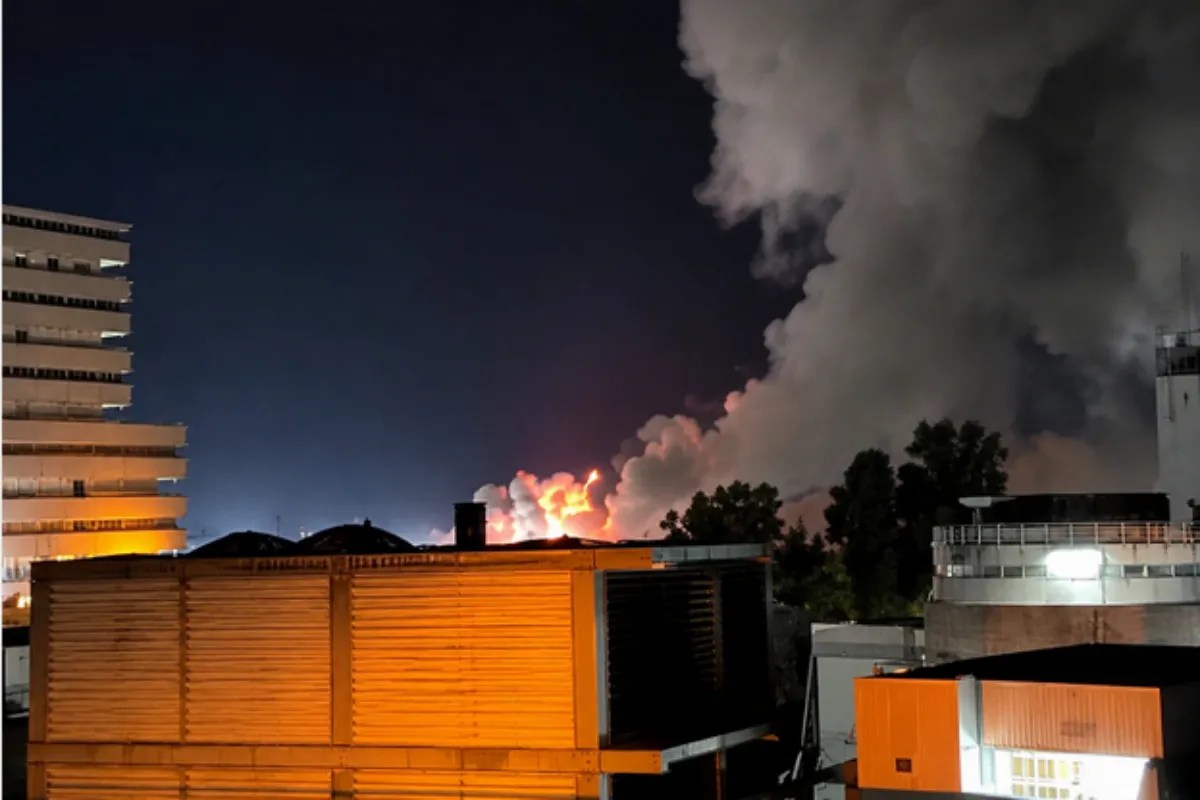
Mainstream media outlets are predictably flashing red alerts. Headlines scream that a single US airstrike killing eight Iranian-backed fighters has pushed the globe to the precipice of a "catastrophic, all-out regional war."
It is a tired, lazy narrative sold by talking heads who profit off panic. If you found value in this piece, you might want to check out: this related article.
The consensus view is fundamentally flawed. It operates on the naive assumption that international relations run on raw emotion and pride. The pundits want you to believe that a strike like this triggers an inevitable domino effect of escalation.
They are wrong. They miss the calculated, cold calculus of asymmetric deterrence. For another perspective on this story, check out the latest coverage from The Guardian.
The Theater of Calculated Aggression
The media looks at eight casualties and sees the spark of World War III. What they fail to comprehend is that these strikes are not precursors to a massive invasion. They are part of a highly choreographed, violent dialogue that Washington and Tehran have been conducting for decades.
Consider the mechanics of modern kinetic engagements in the Middle East. When the US strikes an Islamic Revolutionary Guard Corps (IRGC) asset or a proxy warehouse, it is not a random act of rage. It is a calibrated response designed to reset boundaries.
Iran understands this language perfectly.
The Reality Check: Tehran’s entire defense strategy relies on asymmetric survival, not conventional confrontation. A full-scale war with a global superpower would mean the immediate end of the regime. The ayatollahs are survivors, not martyrs. They will sacrifice a hundred proxy fighters before risking the destruction of their own command structure in Tehran.
When you look at past historical precedents, the data destroys the "inevitable war" thesis.
- 2020: The US eliminates Qasem Soleimani, the head of the Quds Force and the second most powerful man in Iran. The media predicted an immediate global conflagration. What actually happened? A heavily telegraphed, non-lethal missile strike on a US base, followed by a swift return to the status quo.
- 2024: Repeated strikes on Houthi and Iraqi militia targets yield localized, proxy-driven retaliations, never an open, state-to-state war.
The premise that tactical friction equals strategic collapse is a rookie analytical mistake.
Dismantling the "People Also Ask" Flaws
If you search for updates on these conflicts, the questions driving internet traffic are fundamentally wrong because they are built on sensationalized premises.
Will Iran declare open war on the United States?
No. To ask this question is to misunderstand the very definition of proxy warfare. Iran spent forty years building the "Axis of Resistance" specifically so it would never have to fight an open war against a superior military power. Using militias in Iraq, Syria, Yemen, and Lebanon allows Tehran to project power while maintaining plausible deniability.
An open declaration of war strips away that deniability. It forces a direct kinetic confrontation that Iran's aging conventional military cannot win. Tehran fights through exhaustion, economic pressure, and localized harassment. They play the long game. Mainstream analysts look at a 24-hour news cycle and panic; the regime looks at a thirty-year timeline.
Can the US completely eliminate Iranian influence with airstrikes?
Absolutely not. This is the mistake from the opposite side of the aisle. Hawkish commentators claim that "more bombs" will break the Iranian network. I have watched analysts push this narrative for twenty years while the network only grew more resilient.
Airstrikes destroy hardware and eliminate mid-level commanders. They do not erase the structural, sectarian, and political vacuums that allow these proxies to thrive. When a missile hits a warehouse in eastern Syria, it disrupts logistics for forty-eight hours. It doesn't solve the underlying governance collapse that made the warehouse possible in the first place.
The Downside of True Stability
To be brutally honest, the contrarian reality has its own dark truth: this cycle of controlled violence is sustainable indefinitely.
The downside to realizing that war isn't breaking out is realizing that peace isn't breaking out either. The current state of low-level, continuous friction serves the political needs of almost every actor involved.
- For Washington: It demonstrates resolve to domestic voters and regional allies without committing boots on the ground or trillions of dollars to another occupation.
- For Tehran: It cements their narrative as the defenders of the region against western imperialism, validating their domestic security crackdowns.
- For Defense Contractors: The endless cycle of replenishment ensures steady demand for precision-guided munitions and surveillance infrastructure.
It is a grim equilibrium. It is an ecosystem of managed instability.
Stop Reading the Maps, Look at the Balances
The next time a headline tells you that a localized strike is the beginning of a major war, ignore the inflammatory rhetoric. Look at the hard metrics instead.
Are oil markets panicking? No, because energy traders understand supply chains better than cable news anchors. Are major troop deployments moving across the Atlantic? No. Is the Iranian regime moving its leadership into deep underground bunkers? No.
The media sells fear because fear drives engagement. The actual players on the ground are executing a calculated, cold-blooded strategy where eight casualties are a tragedy for the families involved, but merely a line item in a geopolitical ledger for the states holding the controls.
Stop expecting the explosion. The script is already written, the boundaries are already set, and both sides know exactly how far they can push before the floor breaks. They have no intention of breaking it.