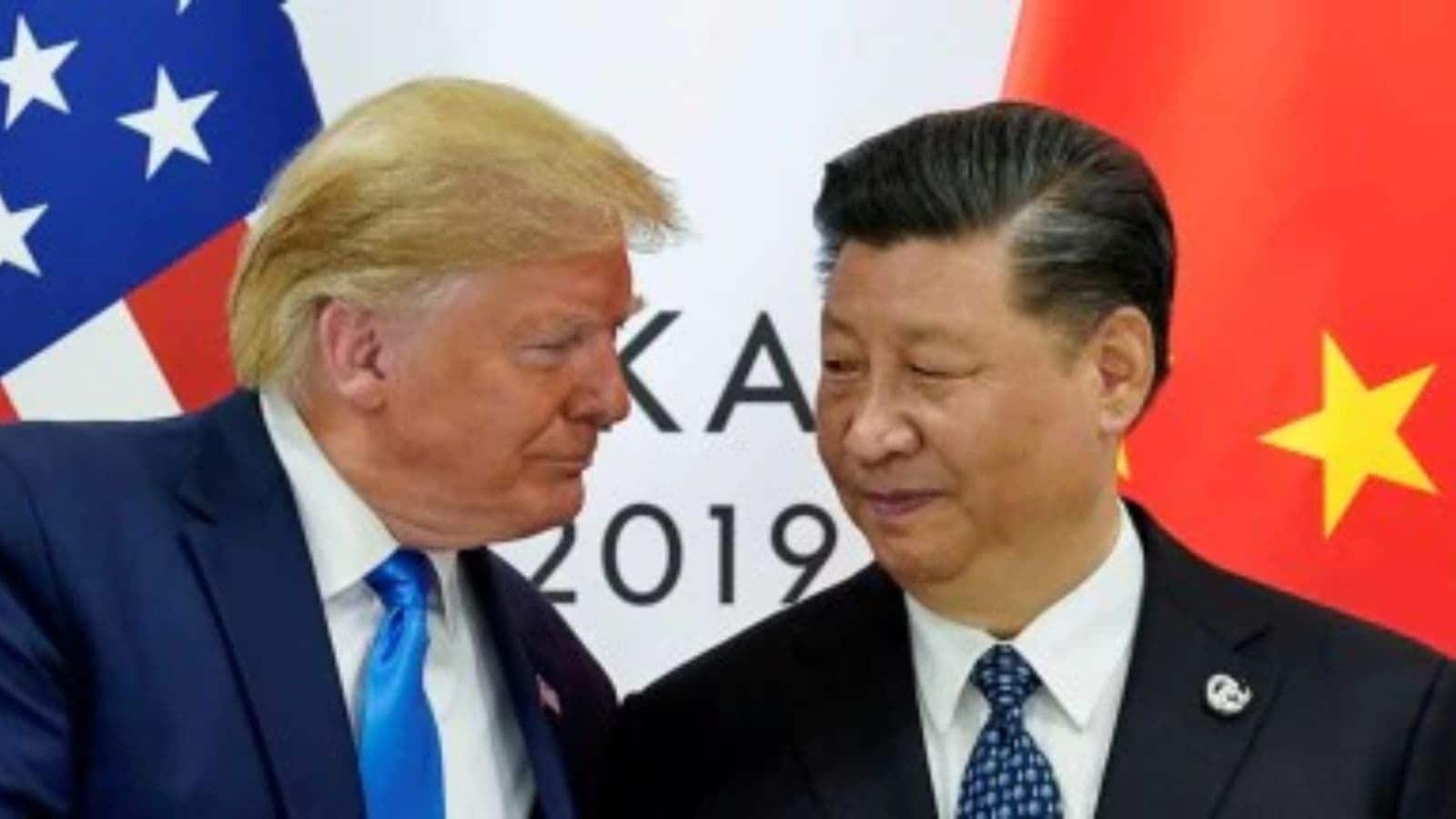
Donald Trump’s recent assertion that Chinese President Xi Jinping agreed to a major concession to help end a conflict involving Iran has ignited a firestorm in diplomatic circles. The former president claimed that the rapport between the two leaders would result in a "big, fat hug" and a structural shift in how Beijing manages its influence in the Middle East. At its core, the claim suggests that China is willing to trade its strategic partnership with Tehran for a more stable economic relationship with Washington. This represents a massive departure from established geopolitical norms.
The reality of the situation is far more tangled than a simple handshake or an embrace. For decades, China has positioned itself as the silent partner of the Middle East, buying oil from Iran while avoiding the military entanglements that have historically bogged down the United States. To understand whether Trump’s claim holds water, one must look at the specific mechanics of Chinese-Iranian trade and the leverage the U.S. actually holds over the People's Bank of China.
The China-Iran Oil Connection
The backbone of the relationship between Beijing and Tehran is energy. China is the largest buyer of Iranian crude oil, often utilizing a "dark fleet" of tankers and small, independent refineries in the Shandong province to bypass international sanctions. These refineries, often called "teapots," operate with a level of independence that makes top-down diplomatic concessions difficult to enforce.
If Xi Jinping were to actually "concede" on Iran, it would require a total shutdown of these back-channel financial networks. It is a tall order. China views its access to Iranian energy as a matter of national security, providing a hedge against potential disruptions in the Strait of Malacca. Cutting off Iran doesn't just satisfy a U.S. president; it leaves China vulnerable to the energy demands of other, more expensive markets.
The Myth of the Personal Deal
High-stakes diplomacy is rarely dictated by the personal chemistry of two men. While Trump emphasizes the strength of his individual bond with Xi, the Chinese Communist Party functions on a long-term strategic timeline that extends decades beyond any single U.S. election cycle.
The idea that a "hug" translates to a policy shift ignores the bureaucratic inertia of the Chinese state. Every concession made to the West is weighed against internal stability and the "Belt and Road" objectives. Iran is a critical node in that infrastructure project. To pull support from Tehran would be to signal to the rest of the Global South that China is an unreliable partner that can be swayed by the temperament of a Washington administration.
Economic Leverage vs Strategic Autonomy
The U.S. has tried for years to use secondary sanctions to force China's hand. It hasn't worked perfectly. The Chinese have developed sophisticated methods for settling trades in Renminbi rather than Dollars, effectively shielding a portion of their economy from the reach of the U.S. Treasury Department.
The Role of Small Banks
Much of the capital flowing to Iran doesn't move through the big, international Chinese banks that fear U.S. retaliation. Instead, it moves through smaller, regional institutions that have no exposure to the American financial system. These banks are essentially immune to the threat of being cut off from the SWIFT messaging system. For a deal between Trump and Xi to actually function, the Chinese government would have to actively police these small-scale actors, a task that would consume significant political capital at home.
The Tehran Perspective
Iran is not a passive observer in this dynamic. The leadership in Tehran understands that they are a pawn in a larger game between superpowers. They have responded by deepening their military cooperation with Russia and expanding their influence in the "Axis of Resistance."
If Iran perceives that China is preparing to sell them out for a better trade deal with the U.S., they have multiple ways to retaliate. They could disrupt energy flows in the Persian Gulf, driving up global oil prices and creating the very inflation that American presidents desperately want to avoid. The "big, fat hug" begins to look like a suffocating grip when you consider the volatility of the regional actors involved.
Intelligence Gaps and Public Rhetoric
There is a significant difference between a diplomatic "understanding" and a binding agreement. In the world of intelligence, we often see world leaders interpret vague nods as concrete promises. China is famous for the "non-committal commitment"—a statement that sounds like a concession but contains enough caveats to allow for a total reversal within twenty-four hours.
Observers should be wary of any claim that lacks a specific mechanism for verification. Without a clear timeline for the cessation of oil purchases or a verified freeze on military technology transfers, a claim of a "major concession" is simply theater. It serves a political purpose at home, signaling strength to a domestic audience, but it rarely changes the operational reality on the ground in the Persian Gulf.
The Fragility of Trade Wars
China’s primary concern remains its domestic economy, which has faced significant headwinds in recent years. This creates a window of opportunity for the U.S. to demand concessions. Xi needs a functional relationship with the American consumer market to keep Chinese factories running.
However, there is a limit. The CCP cannot afford to look weak. If a deal regarding Iran is framed as China bowing to American pressure, it will be rejected by the hardliners in Beijing. Successful diplomacy in this arena usually happens in the dark, far away from the cameras and the talk of hugs.
The Secondary Market Problem
Even if the official Chinese government stopped all Iranian imports tomorrow, the secondary market would likely absorb the slack. Traders in Malaysia, the UAE, and Singapore often "re-brand" Iranian oil as originating from other countries. This shell game makes it nearly impossible to track the true volume of trade.
The Cost of Compliance
For China to truly abandon Iran, the U.S. would have to offer something of equal or greater strategic value. This could mean a drawdown of U.S. naval presence in the South China Sea or a significant reduction in tariffs on high-tech exports. Is the U.S. prepared to trade its Pacific dominance for a temporary cooling of tensions in the Middle East?
History suggests the answer is no. Washington is increasingly focused on the "Pacific Pivot," viewing China as the primary long-term competitor. Settling the Iran issue through a deal with Xi would essentially be a tactical victory at the cost of a strategic defeat. It would validate China’s role as the regional powerbroker, the very thing the U.S. has spent eighty years trying to prevent.
Tactical Realism
The talk of hugs and concessions makes for a compelling narrative on the campaign trail. It simplifies a complex, multi-polar struggle into a story of two strongmen settling the world's problems. But the world is not a boardroom, and the "art of the deal" often fails when it meets the cold reality of ideological warfare and energy security.
If China were to pull back from Iran, it would do so because its own internal calculations changed, not because of a personal favor. The move would be signaled through subtle shifts in banking regulations and maritime patrols, not through a public declaration of friendship. Watch the movement of the "dark fleet" in the coming months. If those tankers keep docking in Qingdao, the hug was nothing more than a ghost.
The stakes are too high for anything less than a cold, hard analysis of the data. While the rhetoric escalates, the actual flow of oil and capital remains the only honest metric of power. If the ships continue to move, the policy hasn't changed.
The reality of 21st-century power is that no single leader, no matter how charismatic or aggressive, can unilaterally dismantle the deeply entrenched networks of global trade and regional survival. The "concession" is often just a pause in a much longer, much more dangerous game.