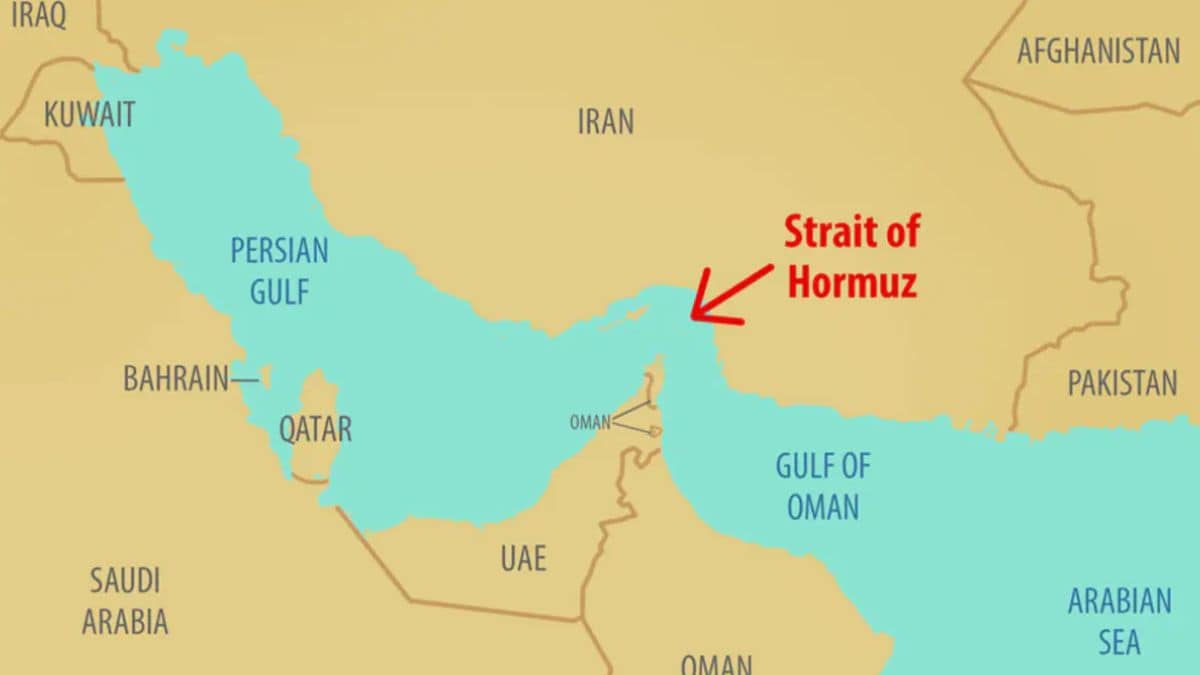
The proposed imposition of transit tolls by Iranian authorities on commercial shipping within the Strait of Hormuz is not a standard maritime tariff; it is a fundamental challenge to the United Nations Convention on the Law of the Sea (UNCLOS) and the established economic equilibrium of global energy markets. While Tehran posits these fees as compensation for "security and environmental services," the legal and operational reality is governed by the principle of Transit Passage. Oman’s rejection of these tolls signals a critical rupture in regional consensus, underscoring a collision between national sovereignty claims and international maritime law.
The Legal Mechanics of Transit Passage
The Strait of Hormuz serves as a "strait used for international navigation" between one part of the high seas or an exclusive economic zone (EEZ) and another. Under Part III of UNCLOS, specifically Articles 37 through 44, the regime of Transit Passage applies. This is a more permissive standard than "Innocent Passage," which applies in a nation's territorial sea.
The Constraint of Article 26
International law explicitly prohibits the levying of charges upon foreign ships by reason only of their passage through the territorial sea. Charges may only be levied for specific services rendered to the ship, such as pilotage or towage, and must be applied without discrimination. Iran’s attempt to frame a general "toll" for security or environmental protection fails this test because:
- General Security is a Sovereignty Duty: Providing security within one's territorial waters is a standard exercise of state function, not a billable service under maritime law.
- Lack of Proportionality: A flat or tonnage-based fee across all transit does not correlate to a specific service provided to an individual vessel.
The Omani Divergence
Oman’s refusal to support the toll reflects a strict adherence to the 1982 UNCLOS framework. Although Oman has specific declarations regarding its own territorial waters, it recognizes that any unilateral shift in the transit regime would invite retaliatory "freedom of navigation" operations (FONOPs) from global naval powers. Oman’s positioning creates a Geographic Veto; since the deep-water shipping lanes used by VLCCs (Very Large Crude Carriers) weave through both Iranian and Omani waters, a toll enforced only by one side is operationally unenforceable without escalating to kinetic maritime interdiction.
The Economic Impact Matrix
The Strait of Hormuz facilitates the passage of approximately 21 million barrels of oil per day (bpd), representing roughly 21% of global petroleum liquids consumption. Any tolling mechanism introduces a "Friction Tax" that ripples through the global supply chain.
Cost Function of a Maritime Toll
If a toll were successfully implemented, the total cost to the shipping industry would be calculated not just by the fee itself, but by the compounding variables of transit:
- Direct Tariff (T): The flat fee per deadweight tonnage (DWT).
- Insurance Risk Premium (P): The immediate hike in "War Risk" premiums triggered by the administrative or physical enforcement of a contested toll.
- Demurrage (D): Costs associated with delays if vessels are boarded or inspected for payment verification.
The total cost increase ($C$) can be modeled as:
$$C = T + \Delta P + (D \times R)$$
Where $R$ is the daily charter rate. Even a modest toll ($T$) could be eclipsed by $\Delta P$, as insurers react to the legal instability of the route.
Global Inflationary Pressure
Because crude oil is a fungible global commodity, a bottleneck or cost increase in Hormuz does not merely affect Persian Gulf exporters. It raises the "floor" of the Brent and WTI benchmarks. A sustained $2.00 per barrel increase in transit costs—factoring in tolls and insurance—would drain billions from global GDP, specifically hitting high-import economies in East Asia (China, Japan, South Korea) that rely on this specific artery for over 70% of their crude requirements.
The Security-Sovereignty Paradox
Iran justifies the toll as a means to fund "maritime security." This creates a logical paradox: the very act of enforcing the toll via the Islamic Revolutionary Guard Corps Navy (IRGCN) increases the security risk for merchant vessels, thereby necessitating the "service" Iran claims to provide.
The Environmental Externalities Argument
Tehran frequently cites the environmental burden of heavy shipping as a justification for the fee. While it is true that the Strait of Hormuz is a sensitive ecological zone, the International Maritime Organization (IMO) already manages environmental standards through MARPOL.
- Unilateral vs. Multilateral: Environmental fees are traditionally managed through international conventions or port-state controls, not transit-state levies.
- The Burden of Proof: To legally justify a fee, a coastal state must demonstrate specific remedial actions—such as active oil spill response fleets or advanced VTS (Vessel Traffic Services)—that go beyond the baseline requirements of a littoral state.
Strategic Deterrence and Gray Zone Tactics
The toll proposal is best categorized as a "Gray Zone" tactic. By introducing a legal and economic dispute, Iran tests the cohesion of the international community without resorting to a physical blockade. If the international community ignores the toll, Iran can claim a violation of its "rights." If the community pays, it implicitly recognizes Iranian sovereignty over an international waterway, setting a precedent that could be mirrored in other chokepoints like the Malacca Strait or the Bab el-Mandeb.
Structural Bottlenecks and Alternative Routing
The threat of tolls or interference forces a re-evaluation of the "Hormuz Bypass" infrastructure. Currently, the capacity to move oil around the Strait is limited and economically inefficient.
- The Habshan–Fujairah Pipeline (UAE): Can transport roughly 1.5 million bpd to the Gulf of Oman, bypassing the Strait.
- The Petroline (East-West Pipeline, Saudi Arabia): Has a nameplate capacity of 5 million bpd, though actual surge capacity is debated.
These alternatives combined can handle less than 40% of the usual Hormuz traffic. The remaining 60% is physically tethered to the Strait. This Inelastic Demand for Passage is what Iran seeks to monetize. In any other market, a supplier with 60% controlled market share and no substitutes would have massive pricing power. However, in maritime law, the "supplier" (the coastal state) does not own the "commodity" (the water space used for transit).
Operational Risks for the Shipping Industry
For ship owners and operators, the Oman-Iran disagreement creates a "Compliance Vacuum."
The Insurance Dilemma
Underwriters generally require vessels to adhere to all local laws. However, if a law is deemed illegal under international frameworks (like UNCLOS), a vessel paying the toll might inadvertently be funding a sanctioned entity (the IRGCN), leading to potential violations of US or EU primary and secondary sanctions. Conversely, refusing to pay risks vessel seizure. This puts the Master of the vessel in an impossible position:
- Option A: Pay the toll and risk sanctions/legal exposure in Western jurisdictions.
- Option B: Refuse payment and risk physical interdiction in the Strait.
The Role of Flag States
The response to the toll will likely be dictated by Flag States (Panama, Liberia, Marshall Islands). If these states issue a formal non-recognition of the Iranian levy, it provides a legal shield for operators. However, the lack of a unified "Flag State" response allows Iran to pick off individual vessels or companies, applying pressure where it is most likely to yield compliance.
Strategic Trajectory
The lack of Omani cooperation effectively kills the "legal" path for an Iranian toll. Without a bilateral agreement covering the entire width of the Strait, any enforcement action by Iran would require ships to be diverted from the Omani side of the TSS (Traffic Separation Scheme) into Iranian waters—an act that would constitute a clear violation of international law and likely trigger a military response.
The situation will likely devolve into a Persistent Friction State. Iran will continue to use the threat of the toll as a diplomatic lever in broader negotiations regarding sanctions and regional security. For energy markets, this means the "Hormuz Risk Premium" is no longer a temporary spike related to kinetic events, but a permanent structural feature of the oil price.
The strategic play for global stakeholders is three-fold:
- Diplomatic Isolation of the Claim: Formalizing the Omani position into a multilateral declaration signed by all major users of the Strait to prevent "creeping jurisdiction."
- Sanction Clarification: Providing clear "Safe Harbor" guidelines for shipping companies to ensure that resisting illegal tolls does not result in loss of insurance or legal standing.
- Infrastructure Redundancy: Accelerating the expansion of the East-West pipelines to reduce the "Leaded Value" of the Hormuz chokepoint.
The Strait of Hormuz remains a geographic reality that cannot be engineered away, but the legal and economic frameworks governing it are currently under the most significant stress test since the 1980s Tanker War. The resolution will not come through a simple "yes" or "no" on tolls, but through the reinforced enforcement of the UNCLOS transit regime by a unified coalition of maritime nations.