The Strategic Equilibrium of the Havana-Beijing Axis
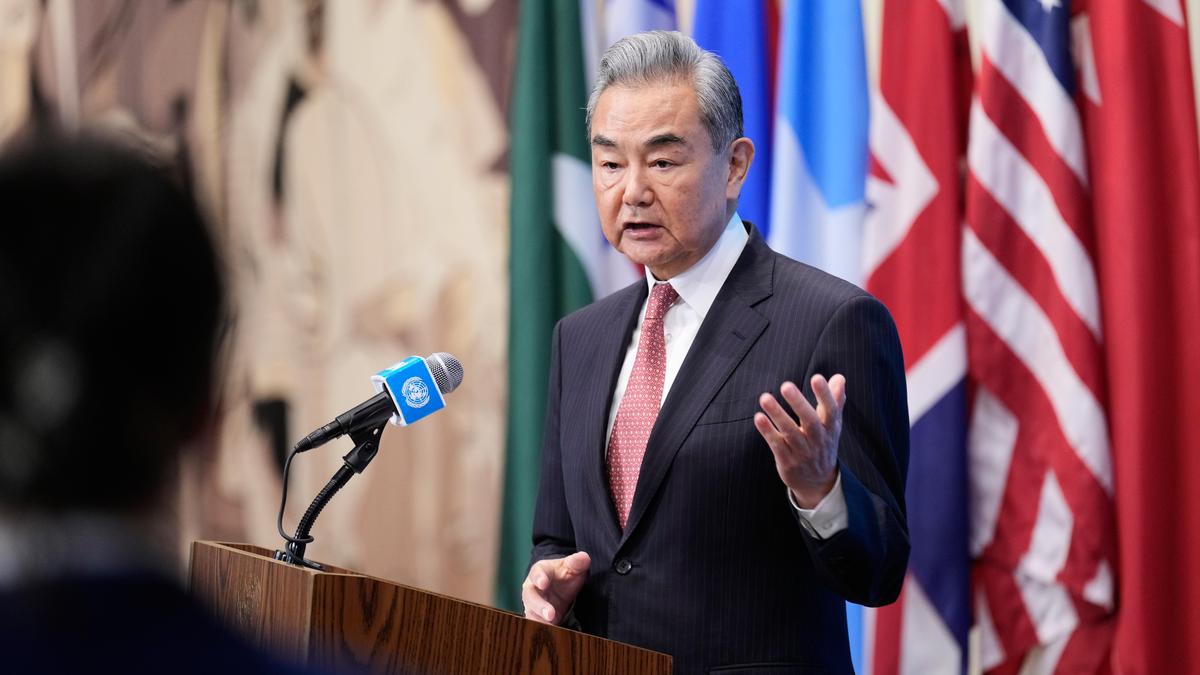
Bilateral diplomatic rhetoric frequently obscures the transactional and structural calculations governing state behavior. The recent declaration by Chinese Foreign Minister Wang Yi in New York—pledging systematic resistance against "power politics and bullying" directed at Havana—represents far more than ideological solidarity among socialist states. It is a calculated deployment of geopolitical hedging designed to maximize strategic leverage within the Western Hemisphere while maintaining a calibrated threshold of conflict escalation with Washington.
The geopolitical utility of Cuba to the People's Republic of China (PRC) operates as an optimization problem balancing asymmetric power dynamics, intelligence collection capabilities, and supply chain vulnerabilities. To comprehend the baseline drivers of this relationship, one must dissect the structural pressures currently altering the Caribbean basin. Following the disruption of Venezuelan oil flows to Havana due to heightened external intervention earlier this year, Cuba's domestic energy infrastructure has entered a systemic failure state. Concurrently, targeted legal and financial instruments executed by Washington—such as the recent indictment of Raul Castro and the arrest of high-level military conglomerate executives—have constrained the Cuban state's economic operational capacity.
By analyzing this relationship through formal strategic frameworks, we can isolate the actual mechanisms of Chinese support, map the explicit intelligence and security trade-offs, and project the bounds of this asymmetric alliance.
The Three Pillars of Sino-Cuban Strategic Asymmetry
The alignment between Beijing and Havana does not constitute a mutual defense pact or a comprehensive economic integration strategy. Instead, it functions across three distinct, parallel vectors, each serving specific state interests.
       [Sino-Cuban Strategic Vectors]
                     │
    ┌────────────────┼────────────────┐
    ▼                ▼                ▼
[Pillar 1]       [Pillar 2]       [Pillar 3]
Asymmetric      Intelligence     Macroeconomic
Geopolitical     Subsystem       Stabilization
 Leverage       (SIGINT / Cyber)     Subsidies
1. Asymmetric Geopolitical Leverage
For Beijing, Cuba serves as a low-cost, high-yield counterweight to Western naval and diplomatic presence within the First Island Chain of the Western Pacific. By establishing a persistent political and security footprint 90 miles from the United States mainland, the PRC injects a reciprocal security variable into Washington's geographic calculus.
This mechanism relies on tactical reciprocity. If Western powers increase their operational posture or naval transits through the Taiwan Strait, Beijing alters its strategic investments, diplomatic defenses, or security agreements within the Caribbean basin. This creates a direct strategic friction point that forces Western defense planners to divert surveillance, cyber defense, and naval assets to monitor their southern maritime approaches.
2. The Intelligence and Cyber Security Subsystem
The technical infrastructure underlying Sino-Cuban cooperation provides immediate, material utility. Intelligence disclosures confirm the operation of at least three Chinese signals intelligence (SIGINT) stations across the Cuban landmass.
- Geographic Interception Windows: These facilities exploit geographic proximity to intercept electronic emissions, military communications, and satellite telemetry from the southeastern United States—a zone dense with critical aerospace, naval, and cyber command centers.
- Asymmetric Cyber Defense Frameworks: The relationship expanded past pure hardware collection with the execution of a comprehensive bilateral cybersecurity agreement valued at 100 million dollars. This initiative focuses structurally on political survival, deploying network architecture designed to prevent external digital penetration, monitor internal dissent, and stabilize the domestic information space under conditions of economic distress.
3. Macroeconomic Stabilization Subsidies
Cuba's economic model functions under severe structural structural deficits, characterized by hyperinflation, severe foreign exchange shortages, and near-total energy grid degradation. China's economic intervention is not designed to modernize the Cuban economy but rather to prevent a total structural collapse that would eliminate a key partner in the region.
The capital allocation strategy involves targeted sovereign injections rather than broad capital investment. The deployment of 80 million dollars in direct financial assistance, alongside a 60,000-ton emergency rice allocation, serves as a basic caloric and fiscal floor. These actions aim to suppress domestic civil unrest driven by acute food and electricity scarcity without committing the deep capital resources that would be required to overhaul Cuba's inefficient state-controlled markets.
The Cost Function of Asymmetric Confrontation
The strategic utility of Cuba to the PRC is limited by an explicit cost function. Beijing's regional operations are bounded by the necessity of avoiding a direct, uncontrolled escalation cycle with Washington, which would threaten broader trans-Pacific commercial corridors.
We can conceptualize the boundary conditions of Chinese support through a clear risk-reward matrix:
| Operational Variable | Chinese Objective | Strategic Boundary Condition |
|---|---|---|
| Sovereign Debt & Credit | Extension of interest-free credits for consumer goods and infrastructure. | Complete avoidance of debt-equity swaps for deep-water ports that could trigger a hard Western military response. |
| Energy Infrastructure | Installation of solar parks across six provinces to mitigate the post-Venezuela energy blockade. | Total omission of high-volume, state-backed oil transport guarantees to avoid direct maritime interdiction risks. |
| Biotechnology Joint Ventures | Tech-transfers via entities like the Center for Genetic Engineering and Biotechnology (CIGB). | Containment within dual-use research parameters, deliberately stopping short of offensive biosecurity development. |
This matrix illustrates a structural bottleneck. While Cuba demands absolute financial guarantees and explicit defense commitments to counter aggressive Western maneuvers—such as energy curbs characterized by Havana as acts of war—Beijing restricts its actions to non-kinetic, legalistic, and minor financial mechanisms. The Chinese Ministry of Foreign Affairs routinely deploys phrasing condemning "coercive diplomacy" and the "judicial stick," but deliberately avoids entering into formal mutual defense agreements.
This mismatch reveals a core friction point in the partnership. The leadership in Havana has historically shown resistance to implementing market-oriented, Chinese-style economic reforms, which frustrates Chinese planners who prefer to see self-sustaining socialist models rather than perpetual capital sinks. Consequently, Beijing balances its desire to maintain a strategic listening post and diplomatic ally against its unwillingness to underwrite an insolvent economic system indefinitely.
Projected Scenarios for the Caribbean Security Architecture
The trajectory of the Sino-Cuban relationship over the next 18 to 24 months depends directly on the intensity of external pressure applied to the island. Rather than looking at this as a simple political alliance, the strategic outlook can be split into two primary structural paths based on how these competing geopolitical forces play out.
Scenario A: Accelerated Asymmetric Integration
If the combination of Western legal indictments, financial restrictions, and naval blockades brings the Cuban state close to a total collapse, the current regime will have to offer up deeper sovereign access to survive. To secure the financial backing and energy inputs needed to stay afloat, Havana would likely concede expanded operational rights over its domestic infrastructure to Beijing.
This path would result in the expansion of Chinese-managed SIGINT and cyber-warfare installations across the island. It would also lead to the formalization of regular People's Liberation Army Navy (PLAN) port calls at refurbished maritime facilities. In this scenario, Cuba transitions from a diplomatic partner into an explicit, integrated outpost of Chinese state power within the Western Hemisphere.
Scenario B: Calibrated Retrenchment
Alternatively, if Western strategic focus shifts to other theaters or settles into a steady-state containment policy, the structural inefficiencies of the Cuban economic model will take center stage. Under these conditions, Beijing is highly likely to limit its financial exposure.
The PRC would maintain its existing intelligence facilities and provide just enough basic food and energy aid to keep the state functioning. However, it would withhold major capital investments until Havana removes the bureaucratic barriers and state controls that have stalled market reforms. This approach keeps Cuba viable as a strategic counterweight while capping China's financial risk.
Strategic Play: The Caribbean Balance
[Western Regional Sanctions] ──> [Cuban Economic Instability] ──> [Chinese Capital/SIGINT Infill]
              ▲                                                               │
              └─────────────────── [Asymmetric Leverage Shift] ───────────────┘
The data indicates that attempting to isolate Cuba completely through economic and legal pressure triggers a predictable geopolitical counter-response. Instead of forcing a domestic political transition, intense external pressure lowers the cost for Beijing to acquire critical strategic positions in the Caribbean basin.
For Western defense planners, treating Cuba solely as a localized, ideological issue ignores the broader global chessboard. Every economic sanction applied to Havana creates a financial vacuum that Beijing can exploit to buy strategic leverage. This dynamic alters the overall security balance, turning local economic pressure into an open invitation for a major competitor to expand its presence right off the southern coast.