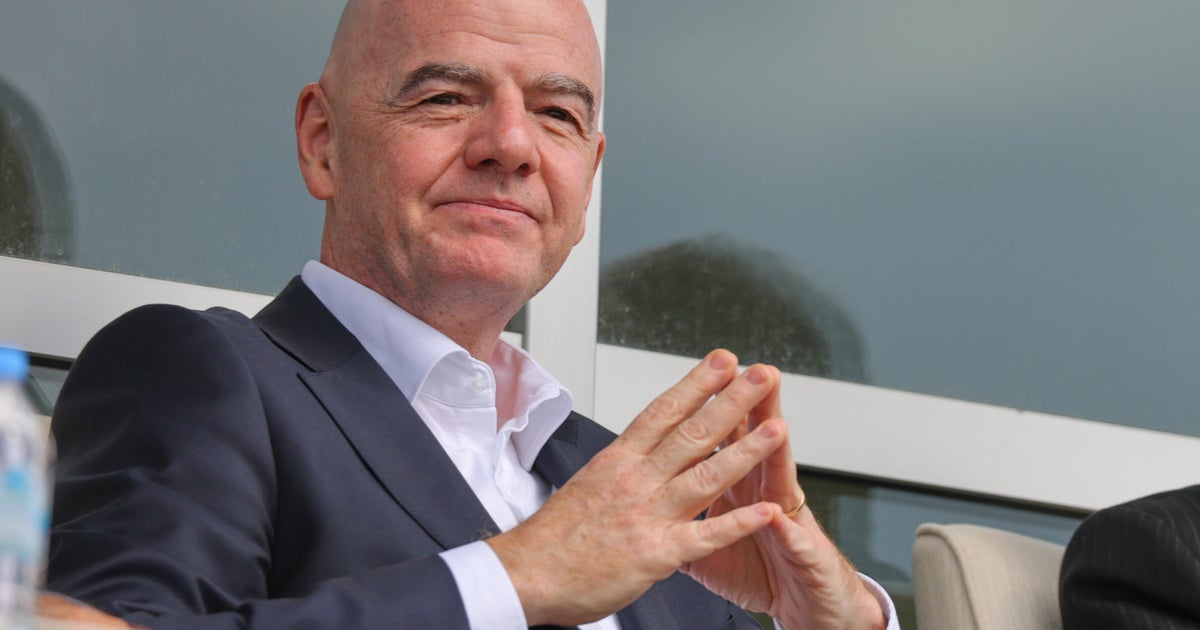
Gianni Infantino stands at the podium of the 76th FIFA Congress in Vancouver and speaks about unity. He tells the room that the world must be brought together through the medium of the ball. To the casual observer, it is the standard, saccharine rhetoric of a sports executive. But to those watching the mounting military tension in the Middle East and the escalating rhetoric coming from the White House, Infantino’s declaration that Iran will play its 2026 World Cup matches in the United States is a massive, high-stakes gamble.
Iran will not just be at the tournament; they are scheduled to play their group stage matches in Los Angeles and Seattle, the very heart of the country with which they are currently in a state of open hostility.
This is not a theoretical scheduling conflict. It is a direct collision between the rigid machinery of international sports and the volatile reality of a global conflict. While the Iranian Football Federation has spent months quietly pleading for a relocation to Mexico, FIFA has shut the door. There is no plan B. There is only a forced march toward a June 16 kickoff at SoFi Stadium.
The Mirage of Neutral Ground
FIFA has long hidden behind the shield of being "apolitical," yet every decision made in the Zurich headquarters is an exercise in soft power. By insisting that Iran play on American soil, Infantino is attempting to preserve the commercial sanctity of the 2026 World Cup at the expense of genuine security concerns. The logistics of hosting a nation that is currently targeted by U.S. sanctions—and in a state of war—are a nightmare that no stadium's private security force is equipped to handle.
The Iranian government’s stance is predictably fractured. In Tehran, Sports Minister Ahmad Donyamali has signaled that participation might be impossible, citing the assassination of former Supreme Leader Ali Khamenei in February. To the hardliners, stepping onto a pitch in California is an act of submission. To the players, many of whom play for European clubs and have navigated the "Woman, Life, Freedom" protests of years past, the World Cup is a lifeline to a world that is rapidly closing its borders to them.
FIFA’s refusal to move these games to Mexico City or Monterrey is a calculated risk. Moving the matches would admit that the "United" theme of the 2026 tournament—shared between the US, Canada, and Mexico—is a failure. It would acknowledge that sport cannot, in fact, bridge every chasm.
Security at the Breaking Point
The United States government faces an unprecedented challenge. How do you provide "sovereign immunity" and protection for a national team whose government you are actively engaged in a conflict with? The Department of Homeland Security and the State Department are now tasked with ensuring the safety of Iranian players in Los Angeles, a city with the largest Iranian diaspora in the world.
This isn't just about protecting players from external threats. It is about managing the optics of a stadium filled with thousands of expatriates, many of whom view the current regime in Tehran with visceral hatred. We saw a glimpse of this in Qatar 2022, where the stands became a battleground for protest flags and slogans. In Los Angeles, that energy will be magnified tenfold.
The U.S. administration’s response has been carefully ambiguous. Donald Trump’s suggestion that it might not be "appropriate" for Iran to attend for their own "life and safety" was less a concern for the athletes and more a warning. It signaled that the federal government is not interested in providing the kind of red-carpet security blanket typically afforded to World Cup participants.
The Group G Powder Keg
The draw has placed Iran in a group that requires them to navigate some of the most high-profile venues in the American West.
- June 15: Iran vs. New Zealand at SoFi Stadium, Los Angeles.
- June 21: Belgium vs. Iran at SoFi Stadium, Los Angeles.
- June 26: Egypt vs. Iran at Lumen Field, Seattle.
Los Angeles is the focal point. The SoFi Stadium matches will be the most heavily policed sporting events in American history. FIFA requires a "clean site," meaning they control everything inside the fence, but the miles of parking lots and the surrounding Inglewood streets fall to local and federal law enforcement.
The Precedent of Exclusion
The elephant in the room is Russia. When Russia invaded Ukraine, FIFA and UEFA were swift to ban the Russian national team from competition. The "sport is not political" mantra was discarded within 72 hours.
Why hasn't the same logic been applied here? The answer lies in the sheer scale of the 2026 World Cup. With 48 teams and three host nations, the tournament is a $10 billion revenue engine. Infantino knows that removing Iran—a consistent powerhouse in Asian football—would trigger a domino effect of boycotts across the AFC.
Instead, FIFA is banking on the "Miracle on Grass" narrative. They want the world to see Iranian and American fans sharing a stadium as proof that football is the ultimate diplomat. It is a beautiful sentiment that ignores the reality of visa denials and the Fact that the President of the Iranian Football Federation, Mehdi Taj, was recently barred from entering Canada for the FIFA Congress. If the head of the federation can’t get a visa for a meeting, how does FIFA expect an entire delegation of 50+ people to clear U.S. Customs in the middle of a war?
The Players Caught in the Crossfire
Lost in the talk of H-visas and geopolitical posturing are the players themselves. For stars like Mehdi Taremi, this is the pinnacle of their careers. They are professionals who find themselves as unwilling diplomats for a government they are often at odds with.
In past tournaments, Iranian players have been pressured to sing the national anthem and face intense scrutiny over their social media activity. In 2026, every move they make on American soil will be analyzed for hidden meaning. If a player seeks asylum? If the team refuses to shake hands? If the crowd drowns out the anthem? These aren't "what-ifs"; they are the primary concerns keeping FIFA’s operations team awake at night.
Infantino’s "Plan A" assumes that the gears of international bureaucracy will turn smoothly because he says they must. It ignores the reality that the U.S. government, not FIFA, holds the keys to the border. The 2026 World Cup was pitched as a North American celebration. Instead, it is shaping up to be a test of whether the world’s most powerful sports organization can actually dictate terms to the world’s most powerful governments.
The stadium lights in Los Angeles will turn on in June. Whether the team from Tehran will be under them remains a question that FIFA’s slogans cannot answer.
The clock is ticking toward a kickoff that the State Department might never actually authorize.