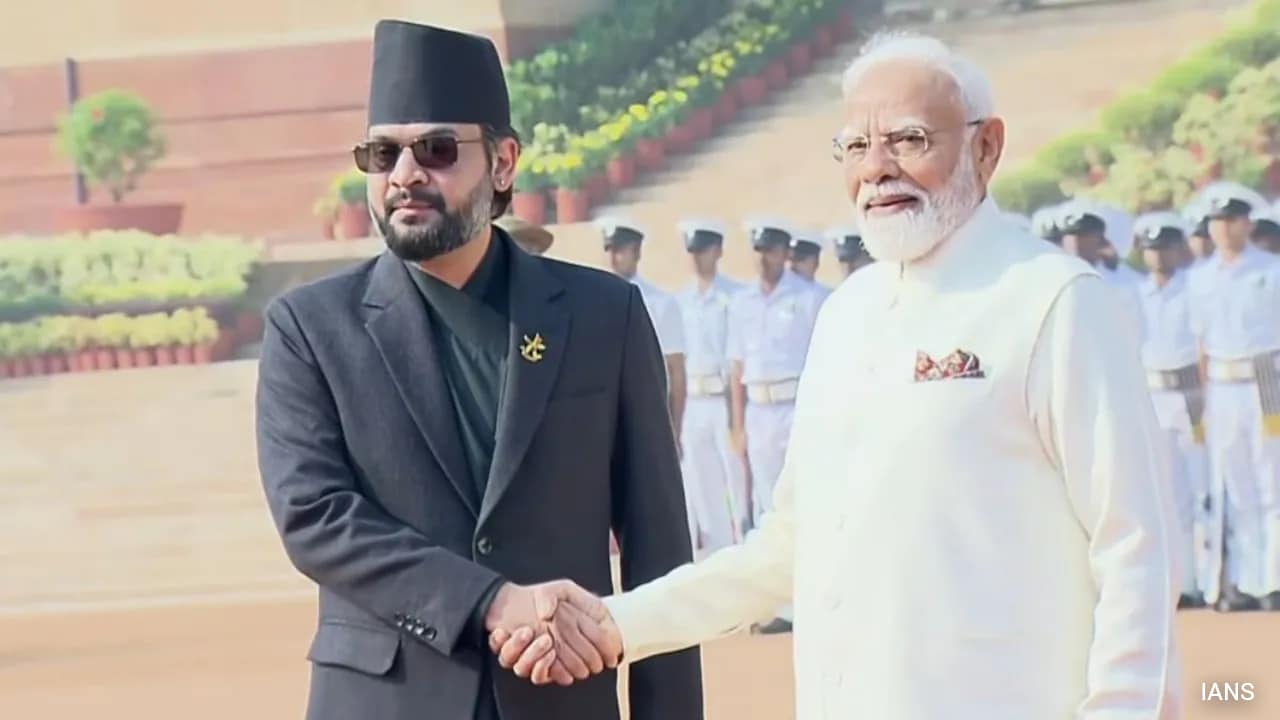
Bilateral diplomacy between Kathmandu and New Delhi operates as a constrained optimization problem where structural geography dictates economic survival. When Nepal Prime Minister Balendra Shah meets Indian Prime Minister Narendra Modi, the agenda is governed by four non-negotiable variables: cross-border energy transmission, transit corridor sovereignty, currency peg stability, and territorial boundary demarcation. Standard diplomatic coverage frames these summits around ceremonial goodwill, obscuring the hard transactional mechanics underneath. An executive evaluation of the Shah-Modi engagement requires stripping away political theater to examine the exact infrastructural bottlenecks, trade deficits, and asymmetric power dynamics that define every negotiation between the two states.
The Structural Asymmetry of Indo-Nepal Relations
To understand the negotiating posture of Balendra Shah, one must first quantify the structural dependence built into Nepal’s macroeconomic architecture. Nepal is a landlocked state bounded by the Himalayas to the north and the Indo-Gangetic Plain to the south. This topography creates a near-monopoly for Indian transit infrastructure. Roughly two-thirds of Nepal’s total foreign trade moves through Indian ports, primarily Kolkata and Visakhapatnam.
This physical dependency is reinforced by monetary policy. The Nepali Rupee (NPR) is pegged to the Indian Rupee (INR) at a fixed rate of 1.60 to 1.00. While this peg suppresses imported inflation and stabilizes currency risk for cross-border commerce, it surrenders independent monetary policy to the Reserve Bank of India (RBI). When New Delhi adjusts interest rates or experiences inflationary shocks, Kathmandu absorbs the downstream effects without recourse to currency devaluation as a competitive trade tool.
Balendra Shah enters this bilateral framework as an unconventional executive actor. Transitioning from municipal administration in Kathmandu to the premiership, his political brand relies on infrastructural execution, anti-corruption enforcement, and institutional accountability rather than legacy party patronage. In New Delhi, however, political style yields to geopolitical realism. Prime Minister Modi’s administration approaches neighborhood diplomacy through the "Neighborhood First" doctrine, which prioritizes regional security integration, infrastructure connectivity, and the containment of third-party influence—specifically Chinese capital and Belt and Road Initiative (BRI) projects—within India’s traditional sphere of influence.
The intersection of Shah’s technocratic domestic mandate and Modi’s strategic regional calculus sets the boundaries of what is achievable during their talks. Neither leader can alter the geography, so negotiations focus on pricing, access, and regulatory friction across four distinct operational domains.
Pillar One Cross-Border Hydropower and Grid Synchronization
Hydropower represents Nepal’s single viable mechanism for narrowing its chronic trade deficit with India. Nepal possesses an estimated 42,000 megawatts (MW) of economically viable hydroelectric capacity, yet domestic peak demand remains a fraction of that output. During the monsoon season, Nepal generates surplus electricity that must be exported immediately or spilled. During the dry winter months, river runoff drops precipitously, forcing Nepal to import power from the Indian grid to prevent load-shedding.
The Shah-Modi agenda centers on converting seasonal, ad-hoc power trading into long-term, bankable energy integration. Three specific mechanisms govern this pillar:
- Long-Term Power Trade Implementation: Under existing bilateral frameworks, India committed to importing 10,000 MW of Nepali hydropower over a ten-year horizon. The operational bottleneck lies in the approval process managed by India’s Central Electricity Authority (CEA). Every individual Nepali hydropower project requires explicit clearance from the CEA before its electricity can enter the Indian grid. Shah’s objective is to secure multi-year blanket approvals and streamline bureaucratic vetting so private developers can reach financial close.
- Third-Country Exclusion Rules: New Delhi enforces strict guidelines prohibiting the import of electricity generated by projects involving equity, contractors, or components from countries sharing a land border with India—a rule designed explicitly to block Chinese-built or Chinese-financed dams in Nepal from accessing the Indian market. Because Chinese firms dominate civil engineering contracts across Nepal’s infrastructure sector, this restriction strands significant generation capacity. Navigating this compliance trap requires Kathmandu to segregate its grid architecture or ring-fence Indian-bound projects for domestic and Indian developers.
- High-Voltage Transmission Infrastructure: Generation capacity is useless without evacuation corridors. Discussions must address financing and right-of-way clearances for high-capacity cross-border lines, specifically the New Butwal-Gorakhpur 400kV transmission line and proposed links in eastern Nepal. Without synchronized grid expansion, transmission congestion will cap export revenues regardless of diplomatic agreements.
A secondary operational front within this pillar is trilateral energy trade. Nepal has sought Indian facilitation to transmit power through Indian territory to Bangladesh. While initial pilot agreements established the precedent for wheeling charges and grid access, scaling this into a commercial corridor requires Modi’s administration to grant permanent transit rights across the Siliguri Corridor—a narrow, militarily sensitive strip of Indian territory.
Pillar Two Transit Infrastructure and Trade Deficit Compression
Nepal’s trade deficit with India consistently exceeds 60 percent of its total trade imbalance. Nepal imports refined petroleum products, vehicles, machinery, pharmaceuticals, and agricultural staples while exporting low-value agricultural goods, textiles, and processed palm or soybean oil—the latter often relying on tariff arbitrage rather than domestic value addition.
To reduce logistical overhead, which inflates the landed cost of imports in Nepal by an estimated 15 to 20 percent compared to coastal economies, the bilateral agenda targets hard infrastructure upgrades and customs harmonization:
- Integrated Check Posts (ICPs): India has funded and constructed modern ICPs at major border crossings such as Birgunj, Biratnagar, and Nepalgunj to consolidate customs, immigration, and quarantine facilities. The operational challenge is asymmetric modernization; while Indian border terminals operate on automated electronic data interchange systems, connecting Nepali highway networks and inland clearance depots often suffer from capacity bottlenecks.
- Cross-Border Rail Connectivity: The operationalization of the Jaynagar-Kurtha railway and ongoing construction of the Jogbani-Biratnagar and Raxaul-Kathmandu rail links represent a shift from road-dependent freight to bulk rail transport. For Shah, securing firm timelines and grant-versus-loan financing terms for the Raxaul-Kathmandu broad-gauge line is critical. A direct rail link into the Kathmandu Valley alters freight economics, though the engineering complexity of tunneling through the Mahabharat Range creates severe cost-overrun risks.
- Non-Tariff Barriers and Quarantine Standards: Nepali agricultural exporters frequently face sudden halts at Indian border posts due to non-recognition of Nepali laboratory certifications for food safety and plant quarantine. A technical agreement establishing mutual recognition of accredited testing laboratories on the Nepali side of the border would eliminate arbitrary perishable cargo delays without requiring major capital expenditure.
- Petroleum Pipeline Extensions: The Motihari-Amlekhgunj petroleum pipeline eliminated tanker-truck transit losses and pilferage along a vital supply artery. Extending this pipeline network to Chitwan and constructing a second corridor from Siliguri to Jhapa are high-priority items designed to insulate Nepal’s fuel supply from labor strikes and monsoon landslides.
Pillar Three The Geopolitical Friction of Territorial Boundary Disputes
No bilateral summit between Kathmandu and New Delhi can bypass the unresolved boundary disputes along the western frontier, specifically the territories of Kalapani, Lipulekh, and Limpiyadhura. Administered by India as part of Uttarakhand’s Pithoragarh district, these territories hold acute strategic value for New Delhi because the Lipulekh Pass provides the shortest direct land route from the Indian heartland to the Tibetan plateau and the Kailash-Mansarovar pilgrimage route.
In 2020, Nepal amended its constitution to include these territories in its official political map, creating a rigid legal constraint for any sitting Prime Minister. Balendra Shah cannot concede sovereignty over these areas without violating Nepal’s constitutional mandate and triggering immediate domestic political collapse. Conversely, Narendra Modi’s government cannot relinquish control over a strategic Himalayan pass overlooking Chinese military deployments in the Tibet Autonomous Region.
This creates a classic diplomatic stalemate where public maximalism collides with private pragmatism. The established mechanism for managing this friction is the Foreign Secretary-level Boundary Working Group, supplemented by the Eminent Persons’ Group (EPG) report—a bilateral document finalized in 2018 that New Delhi has consistently declined to formally receive due to disagreements over proposed revisions to the 1950 Treaty of Peace and Friendship.
During the summit, the optimal outcome for both leaders is compartmentalization. Rather than attempting a definitive territorial settlement—which is politically impossible in a single summit—the objective is to reactivate technical boundary survey committees to resolve less contentious riverine boundary shifts along the Susta and Mechi sectors while keeping the Kalapani dispute confined to diplomatic channels so it does not derail energy and transit agreements.
Pillar Four Civil Aviation Sovereignty and Air Entry Routes
A critical yet frequently overlooked friction point on the bilateral agenda is airspace management. Nepal has invested heavily in two new international airports—Gautam Buddha International Airport in Bhairahawa and Pokhara International Airport—constructed largely with multilateral and Chinese loans. Both facilities operate far below capacity, risking sovereign debt distress, primarily because India has refused to grant additional high-altitude air entry routes over its territory.
Currently, almost all international commercial flights entering Nepal must enter via a single entry point at Simara in the south-central plains, forcing aircraft flying from the Middle East or Europe to fly east past Bhairahawa and Pokhara before looping back west to land. This adds fuel burn, flight time, and operational cost, rendering the new airports commercially unviable for international carriers.
New Delhi’s reluctance stems from two factors: military airspace restrictions near the Gorakhpur airbase and strategic resistance to subsidizing the commercial viability of airports built by Chinese state-owned enterprises. For Shah, securing bilateral approval for the Mahendranagar, Nepalgunj, or Janakpur air entry points is an immediate financial necessity to prevent these infrastructure assets from becoming stranded liabilities on Nepal’s national balance sheet.
Operational Constraints and Execution Risks
Even if the Shah-Modi summit produces signed memoranda of understanding across energy, transit, and aviation, historical precedent demonstrates a severe gap between diplomatic announcements and ground-level execution. Three structural constraints limit the immediate impact of any bilateral agreement:
First, Coalition and Institutional Fragility in Kathmandu. Nepal’s parliamentary system routinely produces fragile coalitions where cabinet ministers from competing parties control key portfolios such as Energy, Physical Infrastructure, and Foreign Affairs. A prime ministerial commitment in New Delhi can be stalled indefinitely by inter-ministerial turf wars, environmental clearance delays, or procurement disputes within Nepal’s bureaucracy. Shah’s domestic challenge is enforcing administrative discipline across ministries he does not directly control.
Second, Asymmetric Bureaucratic Velocity in New Delhi. While India’s Ministry of External Affairs (MEA) prioritizes strategic neighborhood stability, line ministries—such as the Ministry of Power, the Ministry of Civil Aviation, and the Ministry of Home Affairs—operate under strict security and domestic regulatory mandates. Agreements championed by the Prime Minister’s Office frequently lose momentum when delegated to technical committees governed by risk-averse bureaucrats.
Third, The Third-Party Security Veto. India’s willingness to grant economic concessions—such as air routes or seamless power trade—is inversely proportional to Nepal’s security and infrastructure alignment with Beijing. If Kathmandu simultaneously advances sensitive Chinese security initiatives or awards strategic infrastructure contracts near the Indian border to Chinese state firms, New Delhi will quietly throttle implementation on its side of the border, using regulatory audits and technical delays rather than public diplomatic protests.
Strategic Allocation of Diplomatic Capital
To extract measurable value from the summit rather than accumulating non-binding declarations, Nepal’s negotiating team must abandon a broad, scattered wishlist and concentrate its diplomatic capital on two high-leverage, achievable deliverables.
First, Kathmandu must decouple the Pokhara and Bhairahawa air entry route negotiations from broader geopolitical disputes by proposing a joint technical airspace management protocol. Offering Indian aviation authorities real-time radar data sharing and strict flight-corridor altitude buffers directly addresses New Delhi’s military security concerns around Gorakhpur, removing the primary technical justification for blocking the western air entry routes.
Second, on energy and infrastructure, Shah must establish a joint bilateral project-monitoring mechanism with fixed 90-day audit cycles and binding escalation triggers to the Prime Minister’s Office in both capitals. By shifting the bilateral relationship from ceremonial summitry to continuous operational oversight, Nepal can convert its geographic dependence into a predictable, revenue-generating transit and energy partnership.