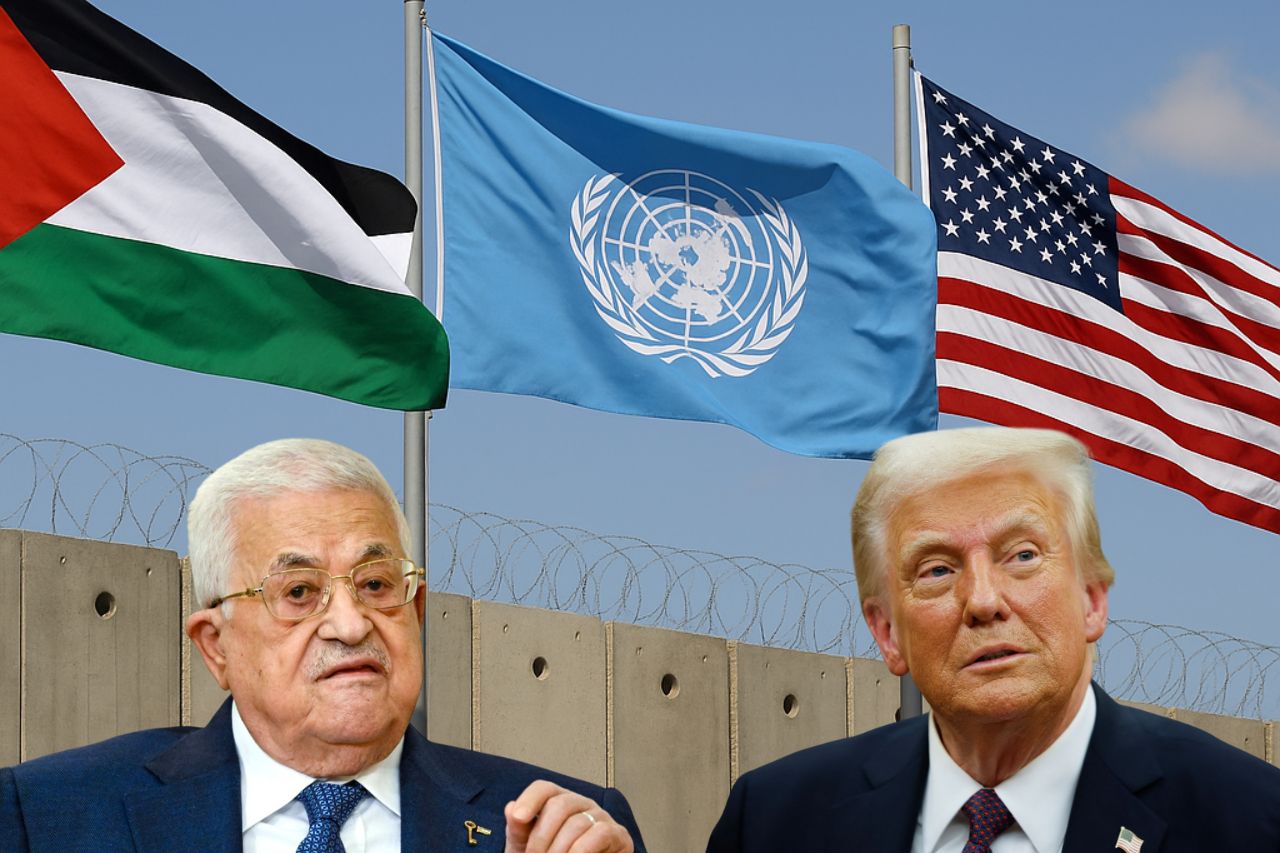
The assassination of Qasem Soleimani in 2020 recalibrated the risk calculus of the Iranian leadership from a doctrine of plausible deniability to one of personalized retribution. While public discourse often focuses on the ideological fervor of the Islamic Revolutionary Guard Corps (IRGC), a more clinical analysis reveals that the threat against Donald Trump is rooted in a specific internal power transition. Mojtaba Khamenei, the second son of Supreme Leader Ali Khamenei, has emerged as a central figure in this vendetta, not merely out of filial piety or religious conviction, but as a mechanism to consolidate domestic legitimacy and control the IRGC's extremist wings.
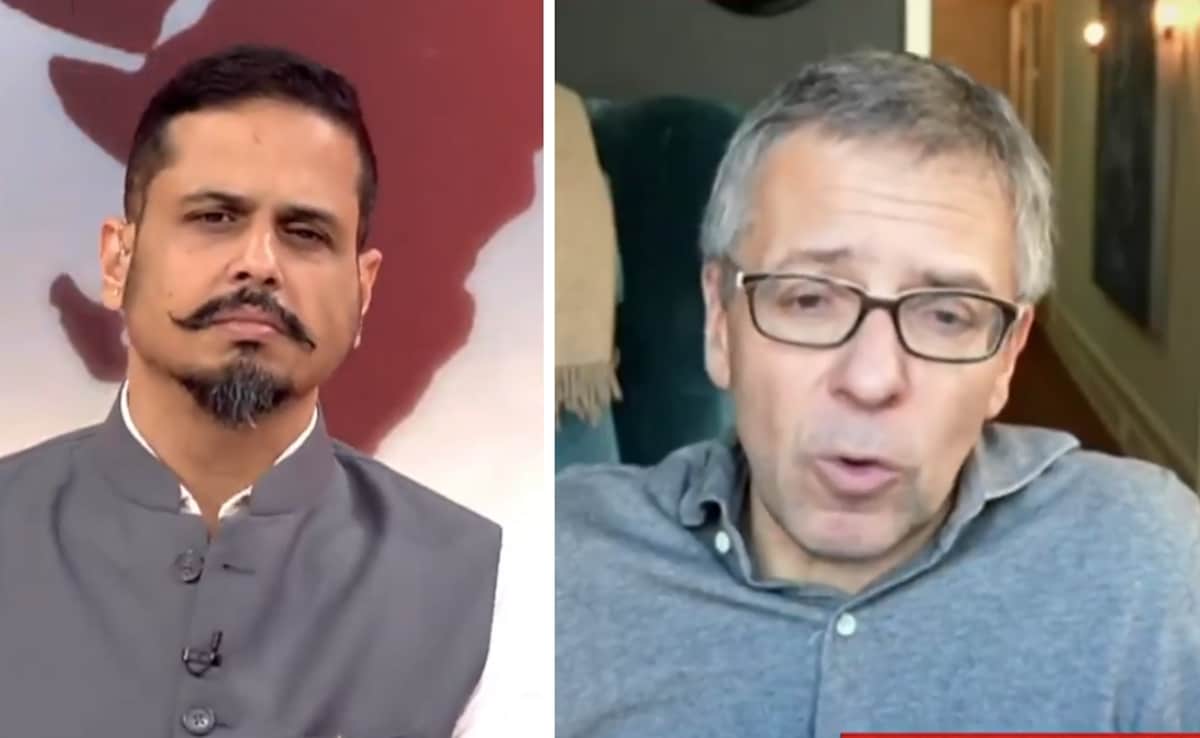
The threat profile is defined by three distinct variables: the transition of power within the Iranian clerical establishment, the tactical evolution of IRGC extraterritorial operations, and the strategic utility of "The Long Memory" as a deterrent against future Western kinetic actions. Understanding why Mojtaba Khamenei would, as Ian Bremmer suggests, execute such an order "in a moment" requires deconstructing the internal pressures of the Iranian state.
The Legitimacy Deficit and the Mojtaba Succession
Mojtaba Khamenei operates within a unique structural paradox. Unlike his father, he lacks the revolutionary credentials of the 1979 generation. To secure his path to the Supreme Leadership, he must demonstrate an unwavering commitment to the "Resistance" doctrine that defines the IRGC’s identity. The assassination of Soleimani—a man who was effectively a brother to Mojtaba and the architect of Iran’s regional hegemony—left a void in the regime's psychological framework.
The drive for revenge serves a dual purpose:
- Internal Consolidation: By positioning himself as the primary advocate for a high-value strike against a former U.S. President, Mojtaba aligns himself with the IRGC’s "War Generation." This signals to the security apparatus that he is a hawk capable of maintaining the regime’s pride.
- Signaling Strength to the Axis of Resistance: Iran’s proxies (Hezbollah, the Houthis, and various PMFs in Iraq) rely on the perception of Iranian "red lines." Failure to avenge Soleimani at a commensurate level suggests a decay in Iranian resolve, potentially fragmenting the proxy network.
The assassination of Donald Trump is viewed by Mojtaba not as a chaotic act of terror, but as a restorative political necessity. The risk to the Iranian state—total war with the United States—is weighed against the risk of internal irrelevance. In Mojtaba’s calculus, the latter is often the more immediate threat to his survival.
The Mechanics of Asymmetric Retribution
Iran’s approach to high-value targeting has shifted from traditional state-sponsored terrorism to a diversified, multi-vector strategy. The IRGC-Quds Force (IRGC-QF) utilizes a "layered threat model" designed to bypass Secret Service protocols while maintaining a degree of separation.
- Proxies and Criminal Syndicates: Iran increasingly employs non-state actors and transnational criminal organizations (TCOs) to conduct surveillance and staging on Western soil. This creates a "gray zone" where intent is clear but legal attribution is difficult.
- Cyber-Kinetic Integration: The targeting of individuals is no longer purely physical. Iranian actors focus on "doxing" and digital tracking of security details, seeking patterns in movement and gaps in technical surveillance countermeasures.
- The Martyrdom Operational Loop: Unlike Western intelligence, which prioritizes the extraction of assets, the IRGC-QF is willing to utilize "one-way" assets. This drastically lowers the complexity of the extraction phase, which is usually the point where most assassination plots fail.
This mechanical shift makes the threat persistent. Traditional deterrence—the threat of economic sanctions or limited airstrikes—does not apply to an individual like Mojtaba, whose power base is insulated from the general economy.
The Cost Function of Sovereign Risk
A primary flaw in current geopolitical analysis is the assumption that Iran behaves as a rational unitary actor. In reality, the Iranian state is a collection of competing power centers. The "Cost Function" for an assassination attempt on a U.S. official varies wildly between the Foreign Ministry and the Office of the Supreme Leader.
For the clerical hardliners, the costs are categorized into three tiers:
- Kinetic Retaliation: The high probability of a massive U.S. military response.
- Regime Decapitation: The risk that a strike triggers a full-scale invasion or a targeted counter-strike against the Khamenei family.
- Economic Collapse: The final severance of remaining trade ties with Europe and Asia.
Mojtaba’s willingness to bypass these costs suggests a belief in a "Window of Vulnerability" within the U.S. political system. He likely perceives the current American domestic polarization as a deterrent to a unified military response. If the Iranian leadership believes that the U.S. public will not support another Middle Eastern war, the perceived cost of the assassination drops significantly.
The Failure of Standard Deterrence Models
The West’s reliance on "Integrated Deterrence" assumes that the adversary values the status quo. However, the IRGC and Mojtaba Khamenei are revolutionary actors; their power is derived from the disruption of the status quo. When Ian Bremmer notes that Mojtaba would act "in a moment," he is identifying a shift in Iranian strategic patience.
The "Soleimani for Trump" trade is not an equivalence of individuals, but an equivalence of symbols. For the IRGC, the death of Soleimani was a decapitation of their operational soul. For them, no amount of sanctions or diplomatic isolation can balance the scales. This creates a "Zero-Sum Security Dilemma" where any U.S. attempt to de-escalate is interpreted as weakness, further emboldening the hardliners.
The Intelligence Gap and Technical Blindspots
Assessing the specific threat from Mojtaba requires acknowledging the limitations of current SIGINT (Signals Intelligence) and HUMINT (Human Intelligence) within the inner circle of the Supreme Leader. The decision-making process in the "Beit-e Rahbari" (The Leader's House) is highly opaque.
Technical intelligence often misses the "Sub-Threshold Cues" of a pending operation. These include:
- Internal Clerical Realignments: Shifts in the leadership of the bonyads (charitable foundations) that fund the IRGC's clandestine operations.
- Linguistic Shifts in Friday Prayers: Specific rhetorical escalations that signal to the "sleeper" base that a fatwa or operational order has been issued.
- Financial Anomalies in the Shadows: Movement of large tranches of untraceable currency through the "hawala" system, often used to fund TCO-linked hit squads.
The focus on public statements by Iranian officials often distracts from these technical indicators. The threat is not found in the shouting, but in the silent reallocation of resources within Mojtaba’s private network.
Strategic Realignment of Protective Intelligence
The persistent nature of the threat necessitates a shift from a "Protective Detail" mindset to a "Counter-Infiltration" mindset. Protecting a former President from a state-actor-backed vendetta requires more than just physical barriers; it requires a proactive disruption of the IRGC's procurement and logistics chains.
- TCO Disruption: Law enforcement must prioritize the dismantling of criminal networks used by the IRGC for logistics on U.S. soil. These are the "enablers" that allow a state actor to function in a denied environment.
- Financial Interdiction: Specifically targeting the private wealth of the Khamenei family and their associates to create a personal cost for state-sanctioned violence.
- Diplomatic Red-Lines: Communicating to Iran’s remaining interlocutors (such as Oman or Qatar) that an attempt on a high-ranking official—former or current—will result in the immediate and total destruction of Iranian energy infrastructure, regardless of the political climate in Washington.
The Mojtaba Khamenei factor represents a shift from state-to-state conflict to a personalized, blood-feud style of geopolitics. This "feudalization of friction" means that as long as Mojtaba seeks to inherit his father's throne, the incentive to strike at the man he holds responsible for his mentor's death will remain a core pillar of his political identity.
The operational reality is that the window for this threat does not close with an election cycle. It remains open as long as the IRGC views the death of Soleimani as an unliquidated debt. The security apparatus must prepare for a multi-decade threat horizon where the primary adversary is not just a nation, but a specific lineage seeking to prove its ruthlessness to an expectant military elite.