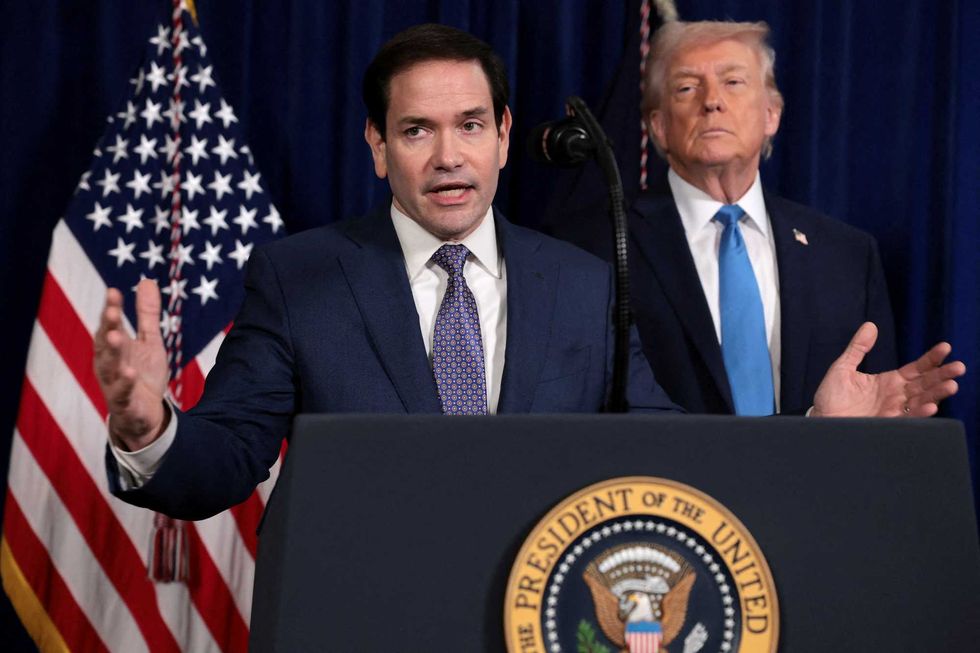
The fundamental tension in contemporary Transatlantic relations is not a product of personality; it is a structural misalignment between European institutional path-dependency and a burgeoning American "Return on Investment" (ROI) doctrine regarding global hegemony. While European capitals express astonishment at the potential volatility of a second Trump administration, and the MAGA base remains skeptical of the North Atlantic Treaty Organization (NATO) as an effective vehicle for American interests, both groups are responding to the same phenomenon: the collapse of the post-1945 security consensus. This breakdown is driven by a shift from Liberal Internationalism—which views alliances as a moral and legal end—to Transactional Realism, which treats geopolitical commitments as high-maintenance assets subject to strict cost-benefit audits.
The European Security Dependency Variable
Europe’s "astonishment" is less a reaction to specific policy proposals and more a systemic shock to their collective defense model. Since the signing of the North Atlantic Treaty, Western Europe has effectively offloaded its security "capital expenditures" (CAPEX) to the United States. This allowed European states to allocate a higher percentage of Gross Domestic Product (GDP) toward social welfare systems and internal infrastructure, creating what economists call a "security subsidy."
The friction arises because the European Union (EU) operates as a rules-based entity that thrives on predictability. Trump’s foreign policy, characterized by Strategic Unpredictability, creates a direct conflict with the EU’s bureaucratic DNA.
- The Credibility Gap: European leaders rely on the "Article 5" guarantee as a static fact. When an American president suggests that this guarantee is contingent upon a 2% GDP defense spending threshold, the asset—collective security—becomes a "variable-rate" contract.
- The Institutional Lag: Replacing American logistics, intelligence, and nuclear umbrella capabilities would require a decade-long investment cycle that European taxpayers are currently unprepared to fund.
- The Regulatory Divergence: The EU views foreign policy through the lens of trade agreements and climate accords. A Trumpian approach, which uses tariffs as a primary tool of diplomatic leverage, weaponizes the very trade links that Europe considers sacrosanct.
The MAGA Skepticism Framework
To understand why the MAGA movement remains skeptical of traditional alliances, one must analyze the "Opportunity Cost" of American globalism. The skepticism isn't inherently isolationist; it is an argument for Strategic Recalibration. The core logic suggests that the US has overextended its "security perimeter" while its domestic industrial base has decayed—a classic case of Imperial Overstretch.
From this perspective, the current international order is a legacy system that no longer yields dividends for the American middle class. The skepticism is rooted in three distinct logical pillars:
- The Burden-Sharing Disparity: In 2023, the US accounted for roughly 67% of total NATO defense spending. Skeptics argue this is a market failure where the US provides the "product" (security) while the "consumers" (Europe) refuse to pay the market rate.
- The Pivot to Asia Constraint: Maintaining a massive troop presence in Germany or Poland is viewed as a resource drain that prevents the US from effectively countering the rise of China in the Indo-Pacific.
- The Sovereign Priority: The MAGA base prioritizes border security and domestic manufacturing over the maintenance of the "Liberal Rules-Based Order," which they perceive as a project of the global elite that facilitates offshoring.
The Mechanics of Transactional Realism
The "side-eye" from both sides of the Atlantic stems from a misunderstanding of the Transactional Realism model. Unlike traditional diplomacy, which values the "long-term relationship," this model operates on "instantaneous leverage."
The Leveraged Tariff Model
In a Trumpian framework, a 10% or 20% universal baseline tariff is not just a protectionist measure; it is a diplomatic bargaining chip. By threatening the access of European cars or machinery to the US market, the administration forces concessions on defense spending or trade barriers. This replaces the "diplomatic communiqué" with "market pressure," a shift that leaves traditional diplomats without a playbook.
The Outsourced Security Thesis
The skepticism regarding Ukraine assistance is a primary example of this logic. The MAGA argument posits that if a conflict is on Europe's doorstep, it is a European regional issue. The US role should be that of a "Lender of Last Resort," providing material rather than the primary financier of the conflict’s longevity. This creates a bottleneck in European defense planning because the EU lacks the centralized military command to replace American leadership.
The Structural Incompatibility of Two Worldviews
The tension is exacerbated by the difference between Multilateralism and Bilateralism. European leaders prefer the "G7" or "G20" format because it dilutes the power of any single state through consensus. Trump’s preference for bilateral "deal-making" allows the US to exert its full economic weight against smaller, individual nations.
| Feature | Liberal Internationalism (Europe) | Transactional Realism (MAGA) |
|---|---|---|
| Primary Goal | Stability via Institutions | Hegemony via Leverage |
| Alliances | Permanent Obligations | Periodic Contracts |
| Trade | Mutual Prosperity | National Zero-Sum |
| Security | Collective/Shared | Pay-to-Play |
This table illustrates the fundamental disconnect. There is no middle ground between an "obligation" and a "contract." When a contract expires or its terms are violated (e.g., the 2% spending goal), the MAGA framework suggests the contract is void. For the European side, the idea that a security obligation can "expire" is a catastrophic risk to their sovereignty.
The Energy and Defense Nexus
A critical driver of this skepticism that is often overlooked is the Energy Sovereignty Gap. The US has become a net exporter of liquefied natural gas (LNG) and crude oil, while Europe remains energy-dependent.
During the first Trump term, the opposition to the Nord Stream 2 pipeline was framed as a security concern, but it was also a strategic play to increase European reliance on American energy exports. The MAGA movement views energy dominance as the ultimate geopolitical tool. If Europe is dependent on American LNG for its industrial survival and American troops for its physical survival, the US holds a "Double-Leverage" position.
European "astonishment" is partially a realization that their path to "Strategic Autonomy"—a goal championed by French President Emmanuel Macron—is currently a financial impossibility. They are trapped in a cycle of dependency where the guarantor of their safety is also the primary critic of their economic model.
The Decentralization of Geopolitical Risk
The second-order effect of this Transatlantic friction is the Decentralization of Security. We are seeing a shift away from a "One-Size-Fits-All" NATO umbrella toward regional "Minilateral" groupings.
- The Eastern Flank (The Frontliners): Countries like Poland and the Baltic states have significantly increased their own defense spending (Poland exceeding 4% of GDP). They have effectively bypassed Brussels to build direct "customer relationships" with the US defense industry.
- The Core (The Skeptics): Germany and France, less immediate targets of aggression, struggle with the political cost of re-armament. Their "side-eye" is a symptom of their declining influence within a fractured alliance.
This creates a "Two-Speed Europe." The MAGA administration is likely to reward the "Frontliners" who pay their way, while simultaneously de-prioritizing the security of the "Core" states. This is not the end of the alliance, but its Fractionalization.
Strategic Action: The European Pivot to Re-Armament
The only logical path for European states to mitigate the risk of a Trumpian "Pivot to Transactionalism" is the immediate and aggressive capitalization of a sovereign defense industry. This is no longer a theoretical debate about "autonomy"; it is a survival requirement in a world where the American security guarantee has been "marked to market."
- Defense Securitization: European nations must issue "Defense Bonds" to fund the rapid scaling of munitions, drone technology, and missile defense systems. Relying on annual budget cycles is insufficient for the required speed of re-armament.
- Standardization of Procurement: The current European defense market is fragmented by national champions. To achieve the ROI that a MAGA administration would respect, Europe must consolidate its procurement processes to achieve American-style economies of scale.
- The Energy-Security Trade: Europe should seek long-term, fixed-price energy contracts with US suppliers as a "goodwill" gesture of economic alignment. By linking their industrial survival to the American energy sector, they create a lobby within the US—energy producers—who will argue for continued European stability.
The era of "Free-Rider" security is over. Whether through the astonishment of the Europeans or the skepticism of the MAGA base, the data confirms that the cost of global stability is being re-priced. Those who fail to adjust their "defense balance sheets" will find themselves unable to afford the premium on their own sovereignty.
Direct your attention to the North Sea and the Eastern Flank; these are the new laboratories for a post-consensus world. The strategic play for any European actor now is to move from being a "Security Consumer" to a "Security Producer," thereby turning a liability into a partnership that survives the volatility of American domestic politics.
Would you like me to analyze the specific economic impact of a 10% universal tariff on the Eurozone's manufacturing sector?