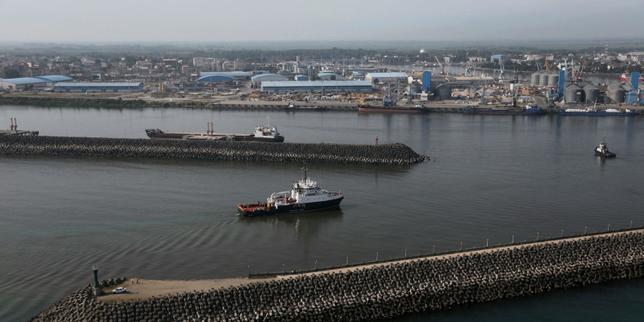
Strategic exposure to single-point maritime chokepoints creates permanent vulnerability for energy exporters and landlocked transcontinental corridors. When transit routes such as the Strait of Ormuz face systematic disruption, actors dependent on these vectors must immediately pivot toward internal waterways and overland corridors. The Iranian response to maritime security pressures in the Persian Gulf involves shifting logistical weight toward the Caspian basin. This mechanism is not a simple geographic substitution; it represents an expensive, structurally constrained reallocation of transport assets designed to preserve baseline export capacity under extreme duress.
Analyzing this redirection requires evaluating the physical, economic, and operational variables that dictate throughput capability. The core constraints governing this transition include inland draft limits, canal capacity bottlenecks, missing rail link segments, and severe vessel shortages. Understanding why standard trade volumes cannot simply be mirrored via inland seas reveals the stark limits of geopolitical maneuvering against the laws of transport economics.
The Structural Mechanics of Maritime Chokepoint Vulnerability
The Strait of Ormuz handles a massive fraction of global petroleum liquids consumption, serving as the literal bottleneck for energy exiting the Persian Gulf. Any risk profile that compromises this corridor forces a rapid re-examination of regional supply chains. Maritime security failures, naval blockades, or military escalation convert a routine transit lane into a high-risk zone where insurance premiums spike and commercial shipping refrains from entry.
When a nation-state faces this bottleneck, its primary objective is diversification of egress. However, geographic reality dictates that landmasses and closed basins cannot replicate open-ocean throughput without massive capital expenditure and years of infrastructure development. The Caspian Sea operates as an endorheic basin with no direct connection to the world ocean network, save for a complex system of Russian rivers and canals. This fundamental distinction means that any export strategy relying on the Caspian is legally, technically, and physically subservient to external transit authorities, primarily Moscow.
The Northern Vector: Rivers, Canals, and Draft Constraints
To move hydrocarbons or bulk goods from the Iranian sector of the Caspian Sea toward international markets via northern routes, vessels must navigate the Volga-Don Canal and the Volga-Baltic Waterway. These engineering structures impose hard physical caps on cargo capacity.
Deadweight tonnage limits within the Russian canal system restrict vessel sizes significantly compared to ocean-going tankers. A vessel utilizing these inland waterways generally cannot exceed standardized dimensions regarding length, beam, and particularly draft. The shallow draft of the canals means that large oil tankers cannot transit loaded to capacity. Consequently, operators must utilize smaller river-sea vessels or engage in costly transshipment operations, moving product from large storage facilities into smaller hulls, navigating the canal system, and potentially offloading again at deepwater ports for onward carriage.
This architecture introduces three distinct systemic frictions:
- Throughput Bottlenecks: The volume of cargo moving through lock systems is bounded by the physical speed of lock cycling and seasonal closures caused by winter ice.
- Fleet Deficits: Owning and operating specialized river-sea ice-class vessels requires capital that is isolated from standard global maritime financing loops.
- Regulatory Dependency: The transit fees, pilotage requirements, and navigation clearances are entirely controlled by the Russian Federation, turning a sovereign logistics play into a dependent bilateral arrangement.
The North-South Transport Corridor Integration
Beyond waterborne transport, the alternative vector involves land corridors, specifically the International North-South Transport Corridor. This multimodal network links Russian ports on the Baltic and Caspian through Iranian territory down to the Persian Gulf or Indian Ocean ports.
In reverse, this corridor functions as a sanctions-evasion and trade-diversion highway. Goods and commodities flow from Russia through Iranian rail and road links to bypass Western maritime blockades. Yet, the physical infrastructure suffers from chronic gaps. Missing rail links, gauge differences between national rail networks, and aging rolling stock prevent the corridor from achieving high-speed, high-density freight flow.
When analyzing the cost function of the North-South Transport Corridor, the expense per ton-mile dwarfs that of open-sea bulk shipping. Rail transport requires continuous energy inputs, locomotive maintenance, and labor-intensive handling at border crossings where customs and gauge shifts occur. As a result, this corridor acts as a high-cost safety valve rather than a scalable economic replacement for maritime oil and container transport.
The Capital Expenditure And Operational Cost Function
Substituting an ocean-going logistics chain with an inland network drastically alters the economics of trade. The marginal cost of moving a barrel of oil or a metric ton of grain through the Caspian basin is substantially higher than moving it via the Strait of Ormuz under normal conditions.
Capital allocation must focus on port expansion at northern Iranian hubs like Amirabad and Anzali. These ports require continuous dredging to combat sedimentation, modern gantry cranes for container handling, and expanded tank farm storage to buffer supply mismatches. Furthermore, shipyards inside the Caspian basin lack the capacity to rapidly construct large-scale commercial merchant fleets, forcing reliance on secondhand acquisitions or bilateral shipbuilding agreements with regional partners.
The financial burden is further compounded by insurance and financing realities. Vessels operating in enclosed or conflict-adjacent regional seas face elevated war-risk premiums. Even if domestic state-backed insurers underwrite these risks, the underlying capital depreciation of ships operating in brackish, ice-prone northern waters accelerates maintenance schedules.
The Strategic Balance Sheet
Relying on the Caspian basin during a Persian Gulf crisis is an act of logistical triage. It prevents absolute economic isolation, but it does so at a fraction of the required volume and at an inflated unit cost. The physical parameters of the waterways, the limits of the rail infrastructure, and the geopolitical dependence on intermediary states ensure that the Caspian functions as an auxiliary lifeline rather than a strategic panacea.
Future developments will hinge on whether capital investment in multimodal infrastructure can outpace the systemic degradation of aging Soviet-era engineering works across the region. Until those structural bottlenecks are resolved through multi-billion-dollar engineering overhauls, inland redirection remains an emergency measure constrained by geography, physics, and cost.