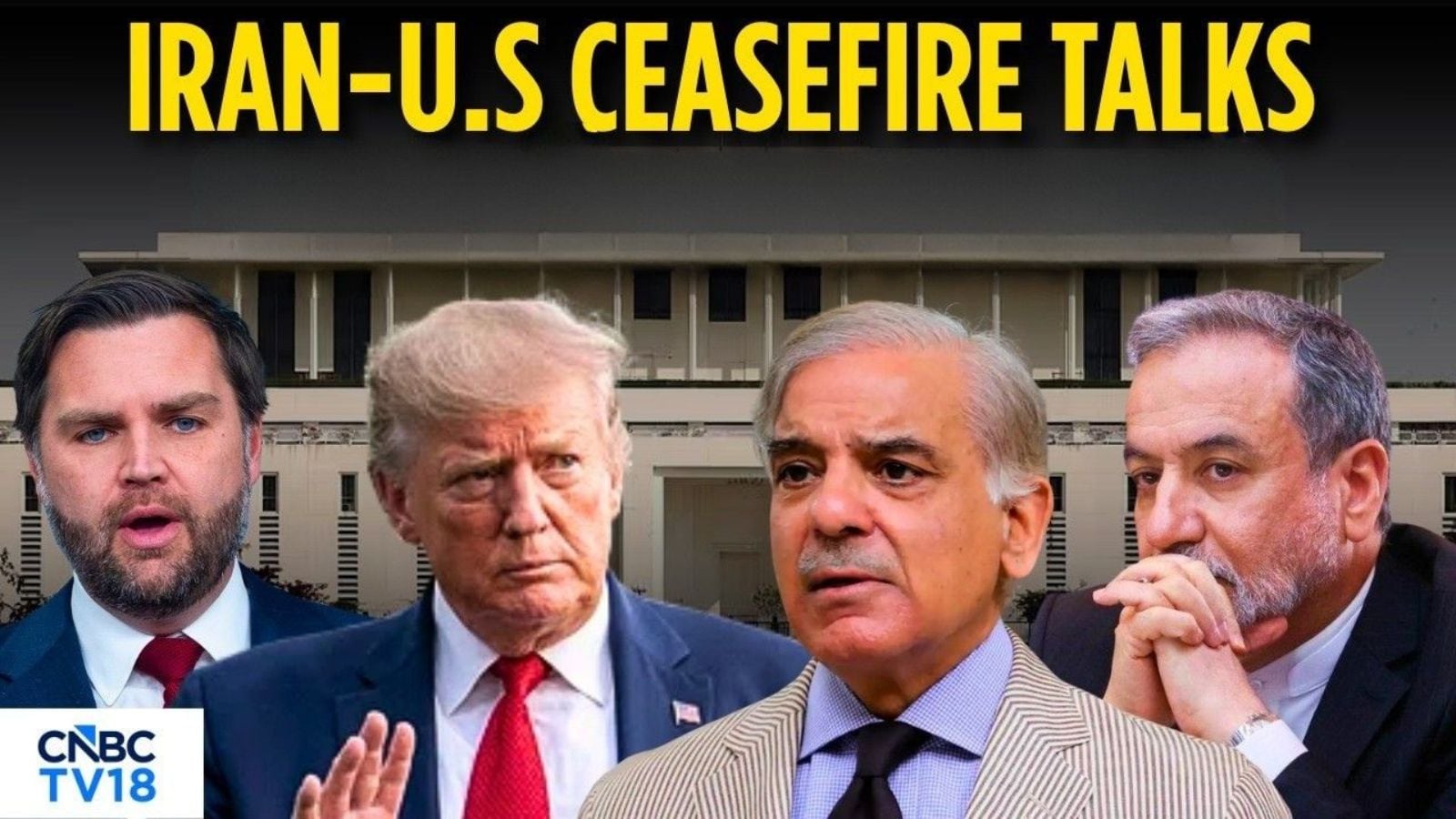
Every retired general loves a clean map. They spend decades staring at divisional boundaries, supply lines, and neat little blue and red arrows drawn across parchment, convincing themselves that human fury operates according to a Staff College textbook. When analysts like Lieutenant General Kamal Davar pontificate on where the West Asian conflict is headed, they lean heavily on this comforting illusion. They talk about state actors, proxy doctrines, and traditional deterrence as if the Middle East is still operating under the rules of the Cold War.
It is not.
The lazy consensus in mainstream security commentary is that this crisis is a temporary friction point between sovereign states that can eventually be managed through conventional diplomatic off-ramps and ceasefires. That is a dangerous fantasy. I have watched defense attachés and foreign policy pundits miss the structural reality on the ground for years, clinging to stale geopolitical frameworks while the actual mechanics of regional power undergo a violent, permanent mutation.
Let us dismantle the orthodox narrative piece by piece.
The Myth of State Rationality
The foundational error in conventional strategic analysis is the assumption that every player in West Asia acts as a rational actor protecting state sovereignty and economic stability. This is an artifact of Western political science projected onto a terrain where ideology, theological survival, and existential resistance completely override cost-benefit ledgers.
When conventional analysts look at non-state armed groups, they treat them as erratic anomalies or temporary proxies that can be starved of resources or coerced into submission through targeted strikes. This completely misunderstands the architectural shift of the past two decades. These entities are not temporary militias renting space inside failing states; they have institutionalized themselves as parallel states with deeply embedded social welfare networks, religious legitimacy, and decentralized command structures that laugh at traditional decapitation strategies.
I have seen organizations blow millions on counter-insurgency doctrines designed for the twentieth century, wondering why taking out a commander does not alter the trajectory of a movement. Leadership is modular now. Ideology is open-source. When you attack a decentralized network with centralized military logic, you are essentially trying to box a cloud.
Deterrence is Dead
For decades, the holy grail of regional security was deterrence. The theory went that if the cost of escalation became too high—measured in destroyed infrastructure, economic isolation, or military casualties—actors would back down.
Look at the scoreboard. Deterrence has completely collapsed.
When actors have nothing left to lose, or when their foundational theology demands permanent confrontation regardless of material cost, conventional deterrence transforms into an invitation for escalation. The deterrence model assumes that all parties share the same valuation of human life and economic prosperity. They do not. For certain ideological networks, prolonged asymmetric warfare is not a failure state; it is the primary operating environment through which they legitimize their existence and exhaust their adversaries.
Pundits keep asking when the parties will realize the economic toll of these endless skirmishes. The answer is never, because the architects of these conflicts are playing an infinite game with entirely different scoreboards.
The Energy Illusion
Another favorite talking point of the armchair strategist is the vulnerability of global energy corridors. Whenever tensions flare in the Strait of Hormuz or the Red Sea, the commentary class hyperventilates about oil spikes, supply chain blockades, and global economic strangulation.
Yes, shipping lanes are vulnerable. Yes, insurance rates skyrocket. But treating these disruptions as momentary anomalies misses the permanent weaponization of geography. Maritime chokepoints are no longer just commercial transit routes; they are economic pressure cookers that can be squeezed indefinitely with minimal investment.
Asymmetric actors do not need a blue-water navy to disrupt global trade. A few drones, cheap anti-ship missiles, and commercial-grade explosives can paralyze multi-billion-dollar shipping giants for months. The cost asymmetry is staggering. Spending millions of dollars to intercept cheap projectiles fired by non-state actors is an unsustainable economic drain on industrial democracies. Until military strategists solve the cost-exchange ratio of modern air defense, the strategic advantage remains firmly with the disruptors.
The Illusion of Normalization
Before the current conflagration exploded, the diplomatic circuit was obsessed with regional normalization deals. Technocrats and foreign ministers signed agreements in glossy conference rooms, convincing themselves that trade pacts and direct flights could permanently override historical grievances and the Palestinian question.
That was papering over tectonic plates with post-it notes.
The fundamental mistake was believing that elite-level diplomatic pacts could bypass the visceral, generational reality of occupation and statelessness. You cannot trade away a people's political aspirations with economic incentives and tech partnerships. The illusion of a new regional architecture shattered overnight because it was built on sand. Real stability cannot be purchased through backroom normalization deals while ignoring the core ideological and territorial wounds that bleed across the region.
The Real Trajectory
Where is West Asia actually headed? Not toward a grand regional peace conference, and not toward a neat, decisive military victory by any single superpower or regional hegemon.
We are entering an era of perpetual, low-intensity, multi-domain friction. The borders of the old order are dissolving into a gray zone of cyber warfare, drone swarms, proxy friction, and economic sabotage. State borders matter less and less, while transnational networks matter more and more.
The West can continue drafting stern communiqués, dispatching aircraft carriers to patrol empty horizons, and pretending that traditional diplomacy will stuff the genie back into the bottle. It will not. The old rules are burning, and the sooner we stop analyzing tomorrow's collapse through yesterday's textbooks, the sooner we can stop sleepwalking into the next escalation.
Stop waiting for a ceasefire that solves the root cause. There is no off-ramp. There is only the long, grueling reality of a fractured region rewriting the rules of global power in real time.


