The traditional boundary between military engagement and civilian consumption has been replaced by a high-velocity feedback loop of digital assets, speculative markets, and synthetic media. In this environment, conflict in the Middle East functions less like a localized geopolitical event and more like a globalized digital platform. This shift is not merely a change in how audiences perceive war; it is a structural transformation of the conflict's cost function and the emergence of "Information Liquidity" as a primary driver of escalation.
The Triple Convergence of Digitalized War
To understand why modern conflict resembles a game show, one must analyze the convergence of three distinct technological and economic phenomena: the financialization of outcomes, the decentralization of propaganda through generative AI, and the gamified architecture of social attention.
1. Financialization of Kinetic Outcomes
Prediction markets and cryptocurrency-based betting platforms have turned kinetic strikes into tradable assets. When a strike occurs in Tehran or Tel Aviv, the event is immediately indexed by global betting pools. This creates a direct financial incentive for "information warfare."
- Market-Driven Misinformation: If a user holds a significant position on a specific military outcome, they are incentivized to seed social media with "slop"—low-quality, AI-generated imagery or false reports—to shift the market sentiment in their favor.
- The Volatility Premium: Conflict generates volatility, and in modern digital finance, volatility is the primary product. The "Game Show" aspect is a literal byproduct of individuals betting on casualty counts or the timing of retaliatory strikes.
2. The Synthetic Content Loop (AI Slop)
Generative AI has lowered the marginal cost of producing propaganda to near zero. Where traditional psychological operations required state-level resources, a single actor can now flood the zone with synthetic imagery that reinforces a specific narrative.
- Devaluation of Visual Evidence: As synthetic "slop" becomes indistinguishable from real combat footage to the untrained eye, the evidentiary value of video decreases. This leads to "The Liar’s Dividend," where state actors can dismiss genuine war crimes as AI-generated fakes.
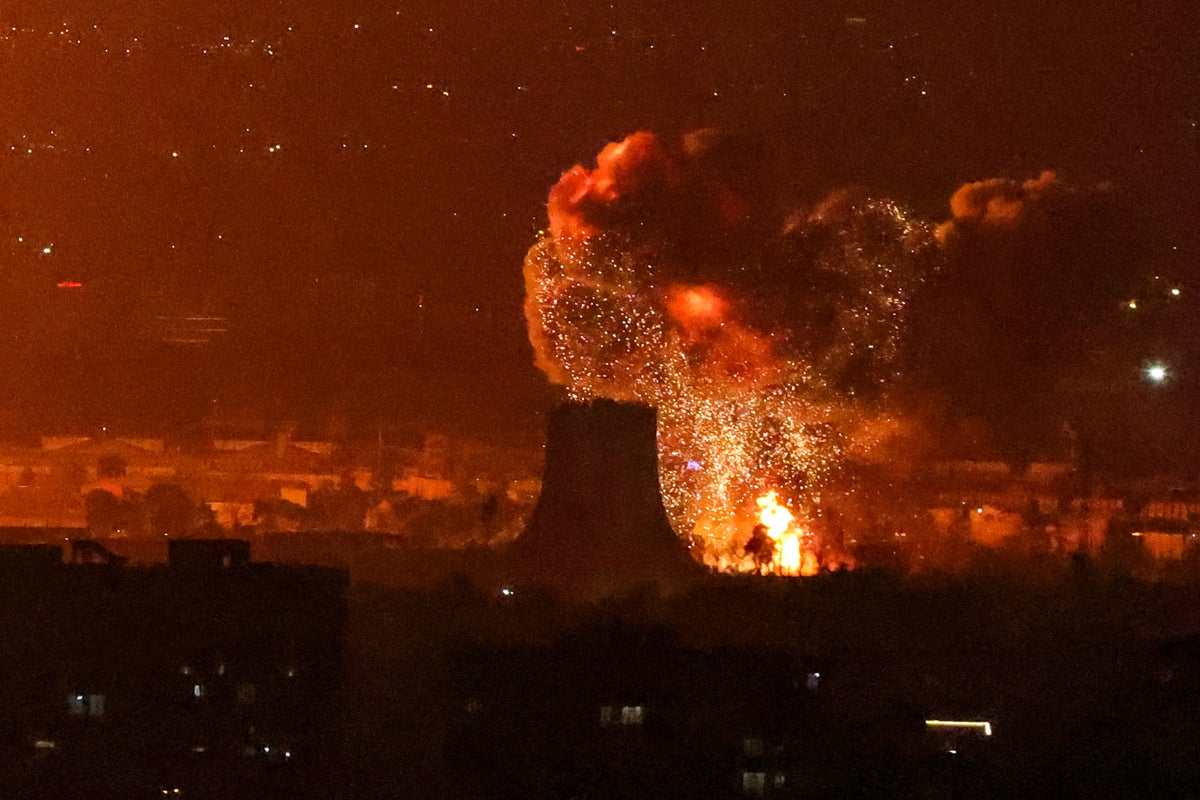
- Algorithmic Preference for Sensation: Recommendation engines prioritize high-arousal content. A hyper-realistic AI-generated image of a burning city will consistently outperform a nuanced geopolitical analysis in terms of reach.
3. Gamified Attention Architecture
Social media platforms use variable reward schedules to keep users engaged. During active conflict, these platforms transform into "Warfeeds." The user experience—complete with "likes," "shares," and "leaderboards" of influential accounts—mimics the mechanics of a multiplayer online game.
The Mechanism of Decentralized Escalation
Vague descriptions of "online chaos" miss the underlying logic of how digital behavior influences physical reality. This process can be defined through the Feedback Loop of Distributed Agency.
In a traditional 20th-century model, states held a monopoly on the narrative. Today, the narrative is a distributed system. When a meme regarding an Iranian missile launch goes viral, it creates a "reputation cost" for the involved governments. If a population is primed by viral, gamified content to expect a massive response, the political cost of de-escalation rises significantly. This reduces the "diplomatic maneuver space" for leaders.
The Cost of Information Friction
Historically, information had high friction. It took time for news to travel, for photos to be developed, and for analysts to verify claims. This friction acted as a cooling mechanism.
In the current era, Information Friction is zero.
- Event occurs: A drone strike is launched.
- Instant Capture: Multiple smartphones record the event.
- Instant Liquidity: The footage is uploaded, monetized via ad-revenue sharing, and indexed by prediction markets within seconds.
- Instant Reaction: Global audiences react, creating a wave of political pressure before the smoke has even cleared.
The Role of Memetic Warfare in State Strategy
States have adapted to this "game show" environment by adopting the tactics of digital influencers. Military accounts now use humor, memes, and direct engagement with "stan" culture to build soft power. This is not a degradation of statecraft; it is a rational adaptation to the current attention economy.
- Memetic Deterrence: By appearing "online" and aggressive in digital spaces, a state signals its readiness to engage in the hybrid domain.
- Audience Segmentation: Different "slop" is produced for different audiences. Nationalist memes are funneled to domestic bases to maintain morale, while hyper-violent or synthetic imagery is pushed to the adversary’s population to induce fear (SOWING).
The Erosion of the "Civilian" Category
The "Game Show" framing implies a passive audience. However, the smartphone era has turned the audience into active participants. Through OSINT (Open Source Intelligence) and armchair analysis, civilians now perform tasks that were once the sole province of intelligence agencies.
While OSINT can be a tool for truth, it is often hijacked by the gamified nature of the platforms. The drive to be "first" to identify a missile type or a launch location often overrides the drive to be "accurate." This creates a "Fog of War" that is not caused by a lack of information, but by an unmanageable surplus of low-quality data.
Quantitative Metrics for Digital Conflict Analysis
To analyze this shift rigorously, we must look at the following variables:
- Velocity of Narrative Saturation: The time it takes for a single event to reach 100 million impressions.
- Synthetic Density: The ratio of AI-generated or manipulated content to authentic footage in a specific geofenced tag.
- Market-Kinetic Correlation: The statistical relationship between movement in prediction markets and the actual timing of military maneuvers.
Operational Constraints and the Failure of Moderation
Content moderation systems, largely built on LLMs and keyword filtering, are incapable of handling the volume and nuance of conflict-related "slop."
- The Context Gap: AI moderators cannot distinguish between a journalist posting a video for documentation and a bad actor posting it for glorification.
- Adversarial Adaptation: Users quickly adopt coded language or "leetspeak" to bypass filters, rendering static moderation lists obsolete.
This failure ensures that the "Game Show" environment remains the default state. The platforms prioritize uptime and engagement over accuracy, as their business models are predicated on the very liquidity that fuels the chaos.
The Strategic Pivot for Information Stability
The transition of war into a digital spectacle is an irreversible structural change. For analysts and policymakers, the objective is no longer to "stop the spread" of misinformation—an impossible task—but to build systems that are resilient to its effects.
The most effective strategy involves the implementation of Cryptographic Provenance. If every smartphone and military camera utilized a hardware-level digital signature for captured media (using standards like C2PA), the "Liar's Dividend" would be significantly reduced. We would still have a "Game Show," but the players would be forced to use verified pieces.
The second pillar of a modern strategy is the De-risking of Prediction Markets. Regulating the intersection of kinetic events and speculative betting is necessary to prevent "incentivized escalation," where actors provoke small-scale violence to liquidate a large market position.
The third and final move is the Institutionalization of OSINT. Governments must move from viewing open-source analysts as a nuisance to integrating them as a verification layer. This requires creating "Verified Information Corridors" where raw data is cross-referenced in real-time by a network of trusted, non-state actors.
This is the only path to reintroducing friction into a system that is currently overheating on its own liquidity. If we cannot stop the gamification of war, we must at least change the rules of the game to prioritize the survival of the truth.