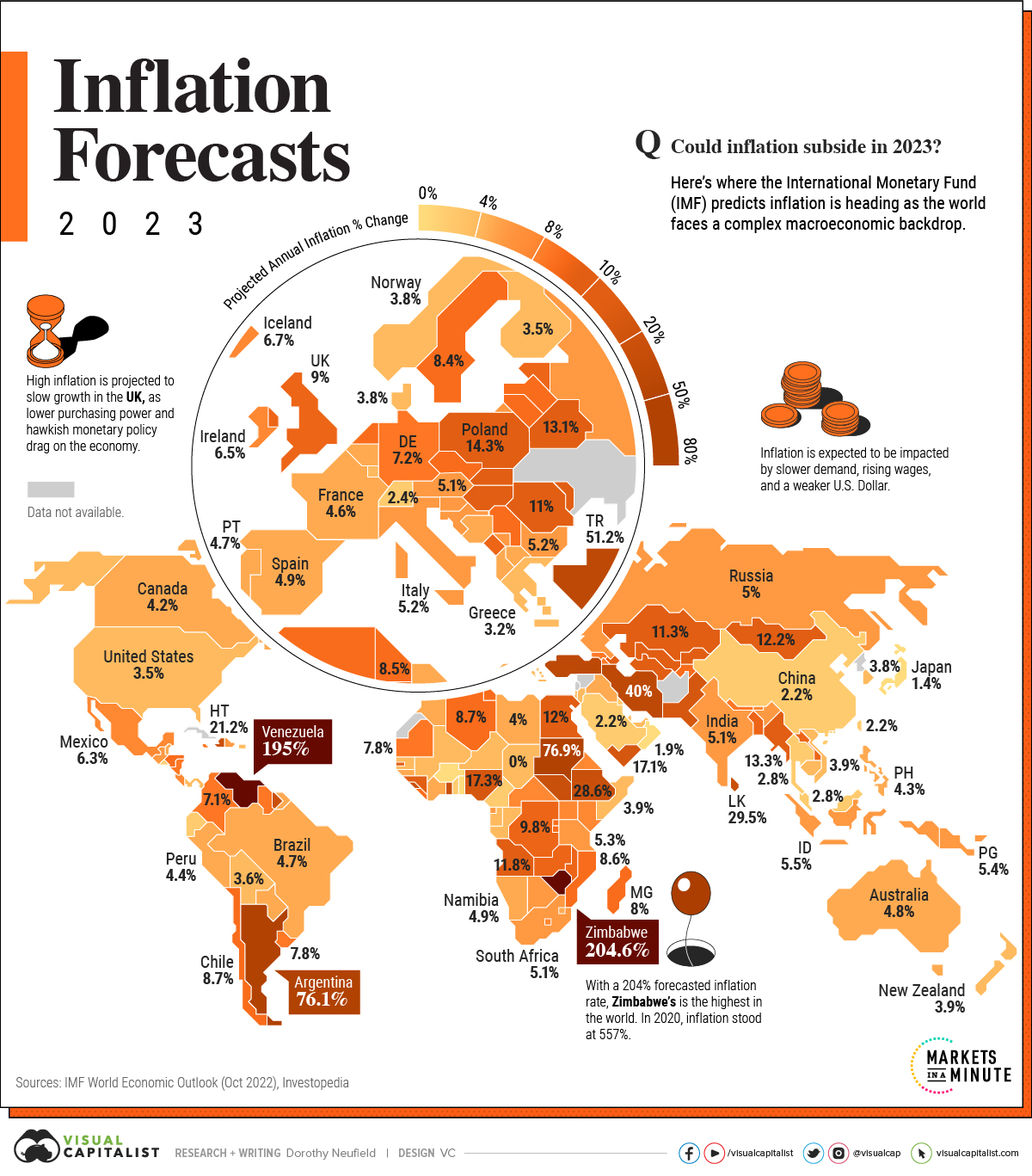
Stop blaming the drones in the Middle East for the price of a gallon in Karachi or Cairo.
The standard narrative—the one being fed to you by every desk-bound analyst from London to New York—is that the "Iran war" or regional instability is an exogenous shock. They want you to believe that the Global South is a helpless passenger on a runaway bus driven by geopolitical volatility. It is a convenient lie. It allows local politicians to shrug their shoulders at bread riots and tells international observers that the problem is "out there" rather than "in here."
Geopolitical tension is a constant, not a variable. Crude oil prices are set on global exchanges, but the retail price at the pump in a developing nation is an expression of that nation's balance sheet, its currency strength, and its addiction to IMF lifelines. If a country’s economy collapses because Brent crude moves $10, that country was already a walking ghost.
The Myth of Geopolitical Victimhood
The "Iran war" narrative suggests a direct, linear cause-and-effect: Tension rises, supply fears spike, prices go up, and the Global South suffers. This is lazy math.
I have watched emerging market treasuries for two decades. The most resilient ones don't flinch at $90 oil. The ones that "suffer" are those that have spent decades hollowed out by cronyism and a refusal to modernize their energy infrastructure.
When Pakistan or Egypt sees a fuel price hike, they aren't paying for the risk of a closed Strait of Hormuz. They are paying for:
- Currency Devaluation: Their money is worth less every day because of fiscal mismanagement.
- Subsidy Addiction: They’ve spent years "protecting" citizens with artificial prices, leaving them with no fiscal buffer when reality finally hits.
- Refining Failure: They export raw crude and import refined products because they haven't built a functioning refinery since the Cold War.
Calling this an "Iran war" problem is like blaming the rain for a house collapsing when you built the foundation out of wet cardboard.
The Subsidy Trap: A Slow-Motion Suicide
Every time a politician in a developing nation "freezes" fuel prices to "protect the poor," they are actually stealing from the future to buy three months of social peace.
Subsidies are the ultimate regressive tax. They disproportionately benefit the middle and upper classes—the people who actually own cars and air conditioners—while draining the national treasury of funds that should have gone to education or health. When the global price ticks up, the gap between the subsidized price and the market price becomes a black hole. Eventually, the IMF shows up, demands the removal of subsidies as a condition for a bailout, and the "shock" to the population is ten times worse than if prices had been allowed to float naturally.
The Math of Failure
Consider a simple model for a state-run energy importer. Let $P_g$ be the global price of oil and $P_r$ be the domestic retail price.
$$P_r = (P_g \times E) + T + S$$
Where $E$ is the exchange rate, $T$ is the cost of transport and refining, and $S$ is the subsidy or tax.
In a "stable" Global South economy, $E$ is usually crashing. If your currency drops 20% against the dollar, your fuel price goes up 20% even if the "Iran war" never happened. The war is just the excuse. It’s the "Get Out of Jail Free" card for central bankers who printed too much money.
Why the "Global South" is an Incorrect Label
Lumping Pakistan, Egypt, and Brazil into one "Global South" bucket is an insult to economic reality.
Look at Guyana. Look at India. They aren't reacting to Middle Eastern tensions with panic; they are reacting with strategy. India has spent the last two years aggressively diversifying its energy mix and buying discounted Russian oil while the rest of the world looked the other way. They turned a global crisis into a competitive advantage.
Meanwhile, the "victims" in the competitor's narrative are those who failed to hedge, failed to diversify, and failed to build.
If you are an investor, you don't look at the war; you look at the Refining Margin. If a country can't refine its own fuel, it is at the mercy of the market. If it can, it controls its own destiny. The war in Iran is a noise filter. The signal is the internal decay of the sovereign state.
Stop Asking "When Will Prices Go Down?"
This is the wrong question. It’s the question of a person waiting for the weather to change.
The right question is: "Why is our economy so fragile that a three-week skirmish in the Levant breaks our national budget?"
People also ask if renewable energy is the "fix" for this volatility. Brutally honestly? No. At least not for the next twenty years. Shifting to solar and wind requires massive upfront capital—dollars that these struggling nations don't have. You can't build a green grid on a defaulted credit line.
The Unconventional Advice
If I were advising a finance minister in one of these "suffering" nations, I would tell them to do three things that would get them fired within a week:
- Kill the Subsidy Today: Not tomorrow. Not in "phases." Kill it now. Use the immediate savings to provide direct, digital cash transfers to the bottom 10% of the population. Stop subsidizing the gas tanks of the wealthy.
- Legalize Private Energy Imports: Break the state monopoly. If a private company can find cheaper oil and bring it in, let them. Competition is the only thing that beats volatility.
- Stop Blaming the Dollar: Fix your own currency. You can't have "fuel security" when your central bank is a printing press for a dying paper.
The Harsh Reality of Energy Security
True energy security isn't about peace in the Middle East. It’s about Economic Sovereignty.
Western analysts love the "Global South victim" trope because it fits a specific worldview of the "helpless developing world." It’s patronizing. These nations are not helpless; they are mismanaged.
When the price of fuel rises in Egypt, don't look at a map of the Persian Gulf. Look at the balance sheet of the Central Bank of Egypt. Look at the military's involvement in the economy. Look at the lack of private investment in the energy sector.
The "Iran war" is a convenient ghost story told by leaders who are afraid of their own voters. It's time to stop believing in ghosts.
If your national survival depends on the whims of a regional power five thousand miles away, you don't have a country; you have a hostage situation. And you're the one who provided the rope.
Fix your house. Stop watching the desert.


