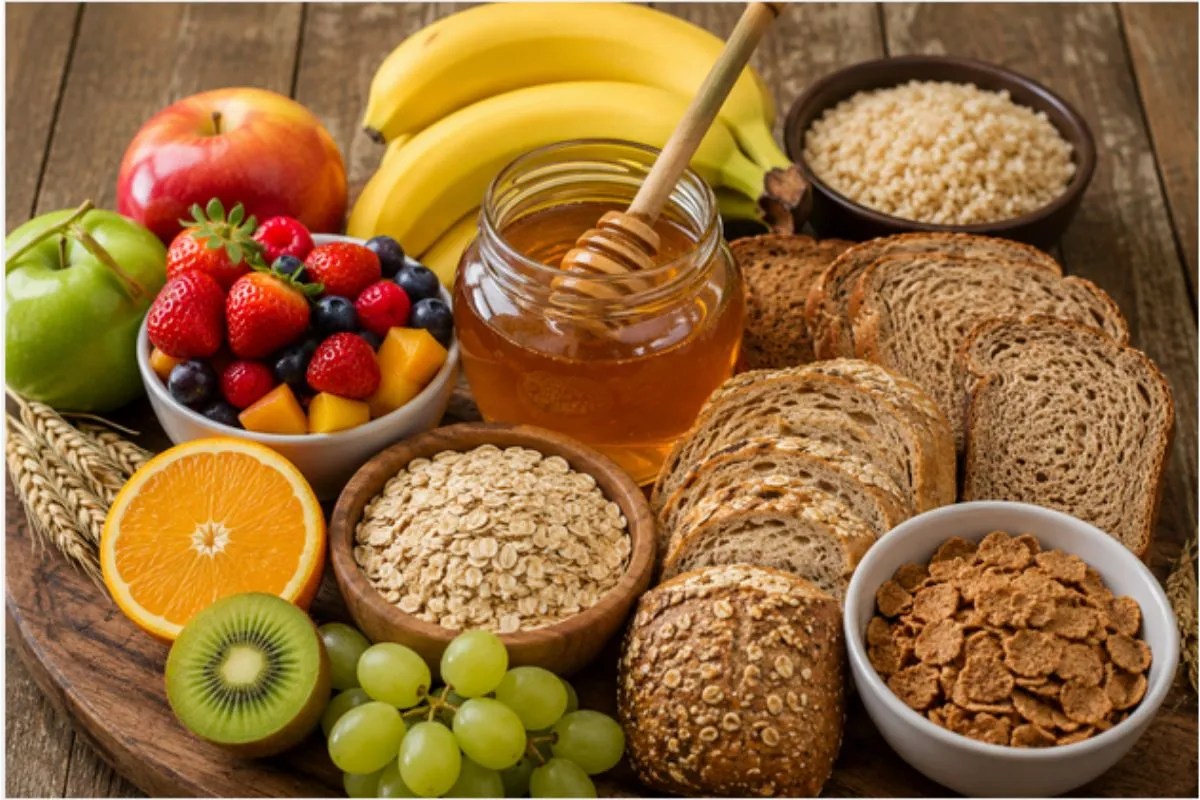
For years, the pop-science ecosystem has peddled a comfortable, sugar-coated fairy tale. The narrative goes that our ancestors stumbled into the tropical canopy, gorged on wild figs, raided beehives, and metabolized enough fructose to power a sudden cognitive explosion. Proponents of this lazy consensus point to modern research and shout about fruit and honey as the magical macronutrient keys that unlocked the human brain.
It is a seductive myth. It appeals to our modern sweet tooth and sanitizes our evolutionary history into a paleo-friendly wellness retreat.
The problem is that it completely reverses biological reality.
Sugar did not build the human mind. Meat, marrow, and the grueling metabolic cost of hunting did. If a diet heavy on wild fruit and raw honey were the secret to high intelligence, chimpanzees and baboons would be writing manifestos and launching rockets. They eat exponentially more wild fruit than any modern human ever will, yet they remain stuck in the trees.
The Fructose Trap
Let us examine the core premise of the fruit-and-honey hypothesis. The claim is that increased carbohydrate availability, specifically glucose and fructose, fueled the high energy demands of a growing encephalized brain.
Here is what the cheerleaders of this theory conveniently omit: human brains run on glucose, yes, but our metabolic machinery processes fructose in an entirely different, highly restrictive way. Fructose is primarily metabolized in the liver, where it drives lipogenesis—fat storage. It is an evolutionary survival mechanism designed to pack on adipose tissue for lean winters or scarcity, not an efficient, steady stream of fuel for a high-powered neocortex.
When you consume raw honey or wild fruit, your body is processing a seasonal survival trigger, not a daily cognitive supplement.
Ask yourself a basic physiological question: why would an organism evolve a massive, energy-hogging brain that requires a constant influx of energy substrates that actively promote insulin resistance and fat accumulation when consumed in excess? They wouldn't. The metabolic demands of a large brain required a dense, nutrient-rich, fat-and-protein-heavy package that did not require industrial-scale fermentation or constant foraging for low-calorie pulp.
The Real Engine of Encephalization
If fruit and honey were the drivers, our cranial capacity should have scaled with forest density. It did not.
The inflection point in human evolution did not happen when our ancestors found a beehive. It happened when they dropped out of the canopy, abandoned the safety of the trees, and took up scavenging and persistence hunting on the open savanna.
I have spent decades watching nutrition trends cycle through academia and wellness circles, and the most persistent error is projecting modern dietary preferences onto ancestral survival pressures. Anthropologists who look at early hominid dental wear and isotopic signatures find a different story entirely. The expansion of the hominid brain coincides directly with increased access to animal tissue, specifically high-fat brains and bone marrow from large game left behind by apex predators.
Let us look at the nutritional density math. Wild fruits during the Pleistocene were nothing like the engineered, sugar-pumped bananas and apples sitting in your local supermarket. They were woody, fibrous, seedy, and sparse. Gathering enough calories from wild fruit to sustain a resting metabolic rate, let alone a growing brain, would have required a caloric expenditure that exceeded the return on investment.
Meat and marrow changed the equation. They delivered dense calories, preformed arachidonic acid, and docosahexaenoic acid (DHA), which are non-negotiable structural components of neural tissue. You cannot build a complex central nervous system out of fructose and wild berries. You need cholesterol, omega-3 fatty acids, and B-vitamins that simply do not exist in the botanical world in bioavailable quantities.
Dismantling the Forager Fantasy
People love to romanticize the hunter-gatherer lifestyle as a utopian Eden of honey-dipped berries. Ethnographic data on surviving hunter-gatherer groups, such as the Hadza, reveals a harsher reality. When honey is available, they consume it aggressively, but it is seasonal, rare, and treats an acute energetic deficit rather than acting as a foundational dietary staple.
More importantly, Hadza men risk life and limb climbing massive baobab trees and fighting stinging insects not because honey is a brain-food superfood, but because it is the most concentrated source of quick energy available in an otherwise brutal environment where starvation is a constant reality.
Treating an emergency survival calorie as the architect of human intelligence is a category error of the highest order.
If you want to optimize your cognitive performance today by mimicking our ancestors, stop raiding the organic honey jar and chasing fruitarian fads. Your biology is not optimized for a constant stream of fructose. It is optimized to solve problems, endure scarcity, and extract maximum nutrition from high-density sources.
The human brain is a monument to scarcity management, not a sugar addiction. Stop rewarding your sweet tooth with evolutionary excuses.