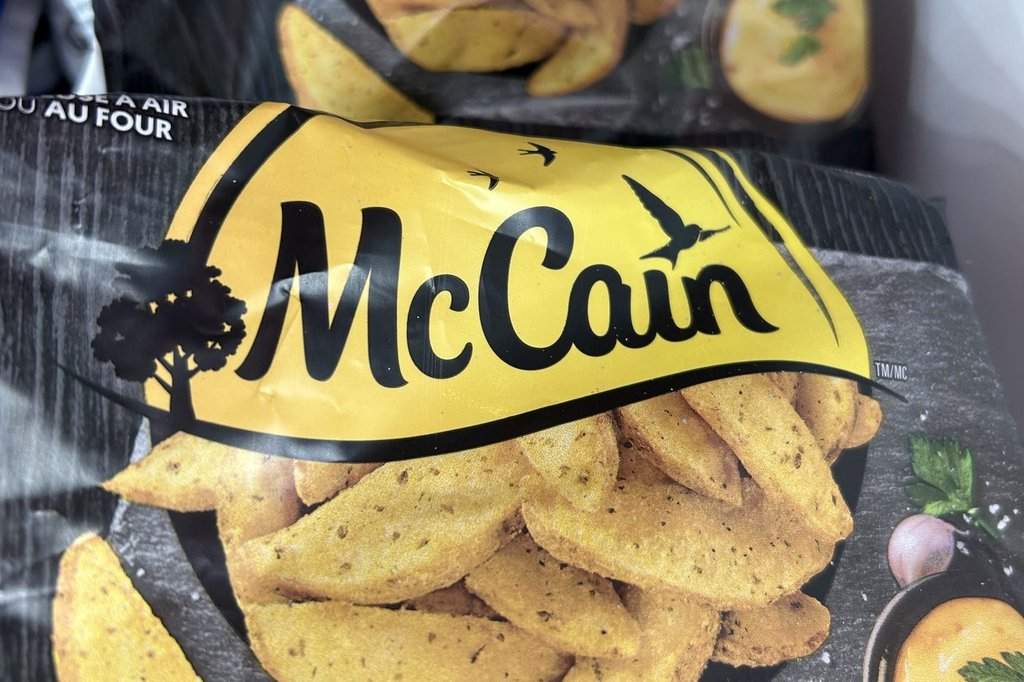
In In re Frozen Potato Products Antitrust Litigation in the U.S. District Court for the Northern District of Illinois, Judge Jeffrey I. Cummings largely denied motions to dismiss federal antitrust claims on September 17, 2026. That ruling allows commercial, retail, and consumer plaintiffs to move forward against four dominant processors—New Brunswick-based McCain Foods and Cavendish Farms alongside U.S.-based Lamb Weston and J.R. Simplot—as well as analytics provider Circana, over alleged price coordination and data sharing in frozen potato products.
Surface coverage of this case usually treats it as a simple story of big food companies raising fry prices and getting sued. That framing misses the real mechanics of oligopolistic pricing, where reciprocal data exchange and high switching costs can sustain elevated margins even without an explicit backroom pact. To evaluate the commercial stakes, buyers and strategists need a structured breakdown of four elements: the market structure that enables coordination, the dual legal theories under Section 1 of the Sherman Act, the pricing and margin divergence alleged by plaintiffs, and the practical procurement levers available to foodservice and retail buyers.
Market Structure and the Oligopoly Bottleneck
Antitrust analysis starts with market architecture before examining individual pricing letters. In the frozen potato category, plaintiffs allege that four producers—McCain Foods, Cavendish Farms, Lamb Weston, and J.R. Simplot—control roughly 97% to 98% of the market. Note that this market-share figure is a plaintiff allegation that remains to be tested in litigation, rather than an established judicial finding. Still, even a four-firm concentration near that range creates classic oligopolistic tension between independent rivalry and mutual accommodation.
Three structural forces shape how suppliers behave in this category:
- Capital and agricultural barriers to entry: Building a modern frozen processing plant requires heavy capital expenditure, long construction timelines, and multi-year contracting with growers in specialized agricultural basins such as the Pacific Northwest and Atlantic Canada. A new entrant cannot scale overnight to undercut established volume.
- Inelastic core foodservice demand: French fries, tater tots, and specialty potato cuts anchor menu economics for quick-service and full-service restaurants. Operators rarely replace standard fries with wholly different menu staples on a whim because preparation workflows, equipment lines, and customer expectations are tightly linked to the item.
- Asymmetric buyer fragmentation: Many independent restaurants, regional chains, and smaller distributors lack the volume leverage of global quick-service accounts. When supply tightens or multiple vendors announce increases at once, smaller buyers face higher friction when shopping alternatives.
The cause-and-effect chain here is straightforward. High entry barriers limit the threat of disruptive new supply, while menu stickiness mutes immediate volume losses when prices rise. That combination does not prove unlawful collusion by itself—economists have long recognized that oligopolists can sometimes set high prices independently through conscious parallelism—but it creates fertile ground for coordinated conduct if rivals reduce uncertainty about one another's moves.
Two Legal Theories Under Section 1 of the Sherman Act
A common mistake in reading antitrust headlines is assuming plaintiffs must prove a smoking-gun agreement on a specific price tag to survive dismissal. Judge Cummings's September 17, 2026 order underscores that the litigation advances two distinct theories under Section 1 of the Sherman Act.
Under the first theory, plaintiffs allege a traditional price-fixing conspiracy in which processors coordinated price increases and used shared data to monitor compliance. Plaintiffs point to sequences of price-increase letters sent around overlapping windows beginning in 2021—including parallel announcements in early 2021, mid-2021, and early 2022—alongside allegations that executives had visibility into rivals' capacity, costs, or output.
Under the second theory, plaintiffs argue that the reciprocal information exchange itself—centered on the PotatoTrack data service—unreasonably restrained competition even without proving a separate agreement to charge identical prices. In competitive markets, a supplier considering a price hike faces uncertainty: will rivals hold prices steady and steal volume, or will customers push back and switch? Plaintiffs contend that submitting weekly sales metrics (such as dollar values, pounds, units, and product types) and receiving comparative reports lowered that uncertainty and helped processors police whether competitors were undercutting prevailing pricing patterns.
Defendants counter that the information shared through PotatoTrack was anonymous, aggregated, historical, and industry-level, and that parallel pricing can stem from shared macroeconomic pressures rather than unlawful coordination. Plaintiffs respond that when data can be sliced by product category and geographic region among a tiny handful of dominant sellers, aggregated figures can still reveal commercially sensitive pricing signals. At the motion-to-dismiss stage, the court found the allegations plausible enough to proceed on the federal claims while trimming certain state-law claims. That ruling tests pleading plausibility, not final liability—a crucial distinction for anyone tracking the docket.
Pricing Trajectories, Cost Divergence, and Contract Friction
To understand why the dispute gained traction, separate the alleged empirical trajectory from the operational mechanism connecting costs, contracts, and realized prices.
Plaintiffs allege that frozen potato prices rose 62% between January 2022 and December 2024, while processors' input costs fell 33% between October 2023 and mid-2025. They also allege that processors pushed through near-simultaneous per-pound increases in 2021 and 2022, and that McCain Foods disrupted customer agreements in 2022 by moving prices toward a 30% margin target irrespective of remaining contract terms. Defendants dispute liability and characterize their conduct and data tools lawfully.
Even without taking plaintiffs' figures as proven facts, consider the economic mechanism behind a cost-price divergence:
- Asymmetric pass-through: In many industrial and food supply chains, suppliers adjust prices upward quickly when raw materials, freight, or labor spike, but allow price relief to lag—or resist downward resets—when input costs cool.
- Contractual reset mechanics: Fixed-price supply contracts normally buffer buyers against mid-cycle price shocks. If a supplier forces early repricing or ties renewals to margin floors rather than transparent cost indices, buyers lose their insulation unless they hold strong contractual remedies.
- Cross-border supply chain exposure: Because major producers operate plants and grow crops across both Canada and the United States, cross-border freight, currency shifts, and trade policy affect landed costs across North America. A buyer that treats "Canadian" and "U.S." frozen potato supply as isolated silos can misread where pricing pressure actually originates.
This distinction between a proven cartel and a disputed market anomaly matters for risk modeling. Discovery will test internal communications, data granularity, and cost accounting. Until a court rules on the merits, treating the allegations as settled fact overstates legal certainty, while dismissing them as routine inflation ignores why federal antitrust claims survived dismissal.
Practical Playbook for Foodservice and Retail Buyers
Procurement leaders, multi-unit operators, and retail category managers cannot rely on antitrust litigation to fix near-term food costs; class actions move slowly and carry no guarantee of recovery. Instead, buyers can tighten commercial discipline through a concrete five-step review:
- Audit price-increase timing against cost drivers. Compare every supplier price-increase notice from the past three years against your own landed-cost records, freight rates, and public agricultural or commodity benchmarks. Flag increases that arrived in tight clusters across vendors or coincided with falling raw-material costs.
- Tighten contract definitions and off-cycle pricing rules. Review supply agreements for unilateral repricing clauses, margin-floor language, or vague force-majeure triggers. Where leverage permits, tie periodic adjustments to defined indices or transparent cost documentation rather than open-ended vendor notices.
- Segment SKUs by substitutability. Separate high-volume commodity fries and tots from specialty cuts. For standardized items, test bid competition across multiple qualified distributors and processors at renewal rather than rolling over incumbent terms automatically.
- Preserve purchase records and invoices. Direct and indirect buyers evaluating potential participation in class actions or independent claims need clean historical records of order dates, product specifications, unit volumes, and invoiced prices.
- Account for strategy limits. Dual-sourcing and aggressive rebidding work best for larger or multi-site buyers with credible volume to shift. Small independent operators with tight working capital and single-location storage face real constraints when switching suppliers, so combining distributor consolidation with SKU rationalization often yields faster relief than trying to play major processors off one another directly.
Strategic Recommendation for Category Leaders
Treat the September 2026 ruling as a contract-governance wake-up call, not a shortcut to lower fry prices. Over the next 12 to 24 months as discovery unfolds, buyers with upcoming renewals should renegotiate pricing formulas, lock in clear notice and cost-justification standards before peak contracting cycles, and centralize invoice archiving so their organization is protected regardless of how the litigation resolves.