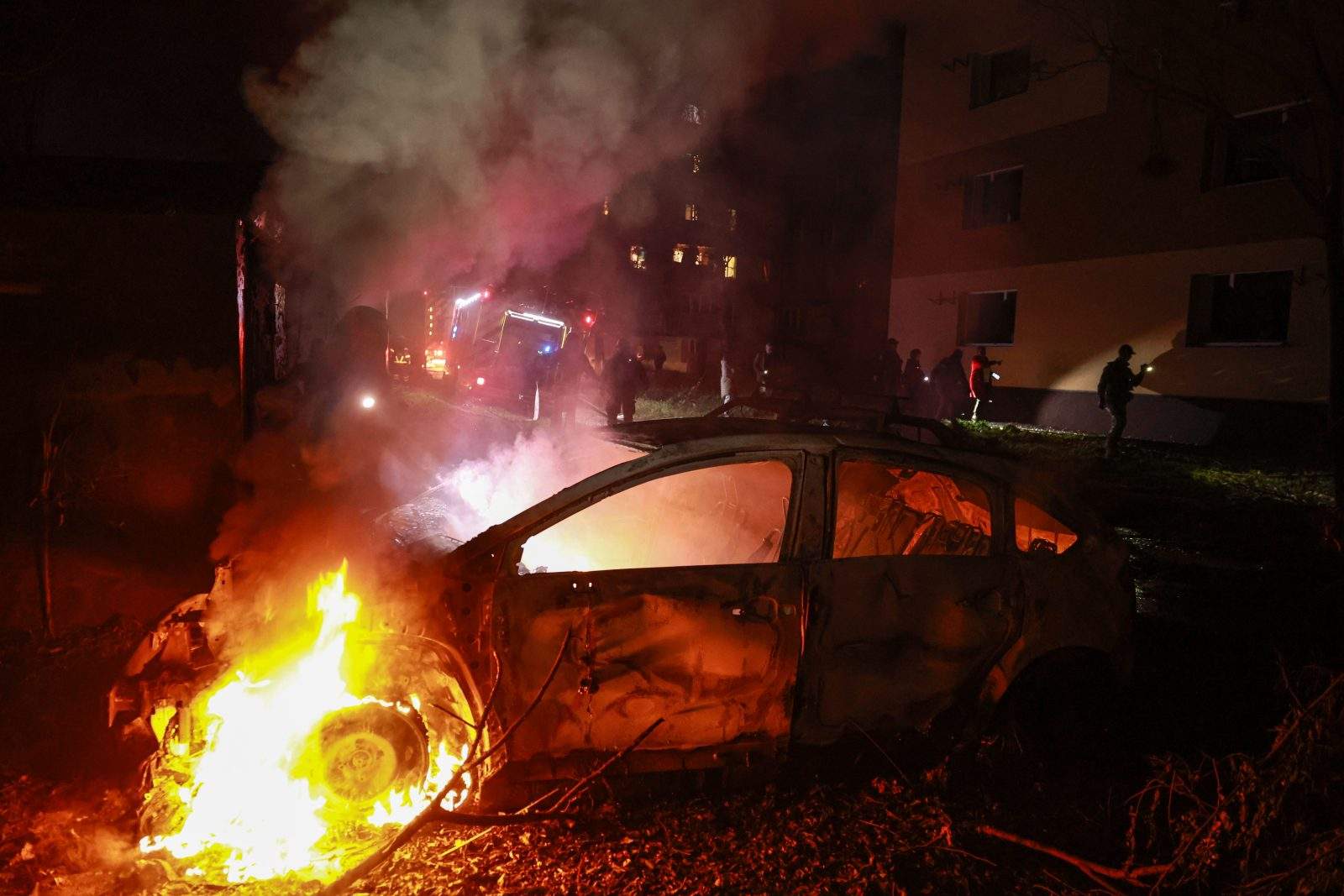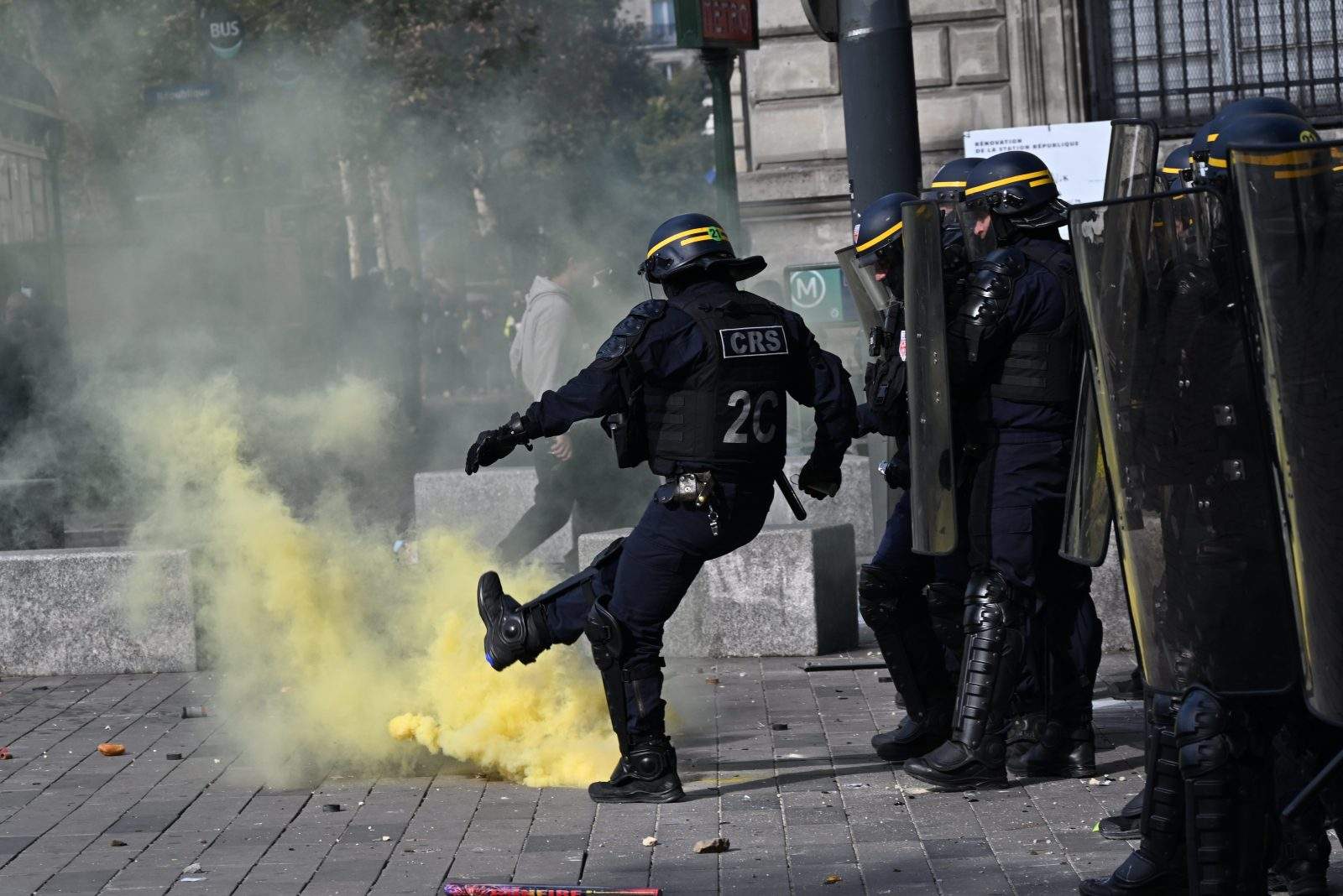
Scuffles break out. Smoke rises. Cameras zoom in on students and workers trading shoves with riot police across French boulevards.
Standard reporting treats this like a sudden eruption of pure democratic rage. It is not. It is a ritual.
Watch enough of these French street demonstrations and a pattern emerges that conventional coverage keeps missing. A headline about scuffles as protesters rally across France alongside students gives readers motion without meaning. It frames every clash as a clash between righteous street energy and stubborn state power. That framing is lazy. It mistakes noise for leverage.
I have spent years tracking how political coalitions, labor unions, and public institutions bargain under stress in Western democracies. I have watched governments cave to street pressure on minor optics while quietly passing structural changes through parliamentary mechanics or fiscal adjustments. Street mobilization in France is rarely the decisive blow outsiders think it is. Often, it acts as a pressure valve that lets exhausted leaders wait out the storm without changing the underlying math.
The Myth of the Street Veto
Conventional commentary loves the romance of the French street. One march, one blockade, one viral clash with security forces, and suddenly the narrative declares the government on the ropes.
That story flatters everyone involved except the person trying to understand power. It flatters activists who want to believe every thrown object or blocked intersection shakes the foundations of the state. It flatters broadcasters who need dramatic footage to fill airtime. And it flatters politicians who can point to rowdy streets as proof that reform is impossible, sparing themselves the hard work of building durable legislative consent.
Define the mechanics clearly. Contention is visible disruption in public space. Durable policy change requires institutional leverage: budget authority, coalition votes, administrative compliance, or sustained electoral punishment at the ballot box. Confusing the two is the central error in how French protest waves are read from abroad.
Sociologist Charles Tilly mapped out how repertoires of contention evolve over time, showing how groups reuse familiar public scripts—marches, occupations, strikes, confrontations—to signal grievances and test boundaries. Sidney Tarrow built on that foundation to explain cycles of contention, where overlapping grievances temporarily amplify visibility without automatically converting street presence into lasting institutional reform. Visibility is not veto power. A crowd can shut down traffic for an afternoon and still lose the budget fight next month.
Why Students and Workers Collide on the Pavement
When students join broader rallies in France, commentators immediately talk about a generational and class alliance sweeping the country. Look closer. Student mobilization and organized labor operate on different clocks with different incentives.
Students often have fewer immediate financial penalties for skipping class or occupying a campus, and their grievances frequently center on tuition, admissions rules, living costs, or broad ideological causes. Organized unions and older workers face wage pressures, pension rules, workplace restructuring, and real income losses from missed paydays. When their paths cross at a rally, the overlap looks massive on camera. Underneath, their priorities can pull in different directions once negotiations begin.
Scuffles erupt at the edges of these gatherings for reasons that have very little to do with master strategy. Crowd density rises. Temps flare. Small splinter groups test police lines while peaceful marchers try to hold space or disperse. Treating every shove or tear-gas cloud as proof of a unified revolutionary tide misreads the crowd dynamics on the ground.
The Questions People Keep Asking Wrong
Whenever clashes hit the wire, the same predictable questions follow. Most of them start from a flawed premise.
"Are these protests about to force the government to back down?"
Usually the wrong question. Governments back down selectively.
A leader might freeze a specific headline clause to cool tempers while keeping the core fiscal trajectory intact. Or a minister might hold firm on the central policy while offering concessions on enforcement timelines, exemptions, or compensation packages. Asking whether the government will "back down" treats politics like an all-or-nothing duel. Real politics looks more like a messy ledger.
"Why do scuffles keep breaking out if most protesters are peaceful?"
Because peaceful crowds and confrontational fringes share the same physical geography.
In large demonstrations, collective action is never a single mind moving as one body. Some participants show up to march and chant. Others come looking for friction with police. Once police lines tighten or kettling begins, ordinary marchers can get pushed right up against the confrontation line whether they wanted a fight or not. Blaming the whole crowd flattens real differences inside the movement, while pretending the fringe does not exist ignores how escalation actually happens.
"Do student-backed rallies actually change long-term policy?"
Rarely on their own. Often indirectly.
Streets rarely write laws. Parliaments, ministries, courts, and budget constraints do. Where street pressure matters is in raising the political cost of ignoring an issue or signaling to opposition lawmakers that a topic can be weaponized in future elections. Yet street energy fades. Budgets remain. Demographic math—especially in an aging society with heavy public spending commitments—does not care how loud a chant is on a Thursday afternoon.
What the Real Bottleneck Looks Like
Imagine a scenario where a finance ministry faces a structural deficit and rising debt-service costs. Every major spending category—pensions, public sector pay, healthcare, education, defense—has a constituency willing to march when its slice is squeezed. If the government concedes every time streets fill up, the fiscal arithmetic collapses. If the government ignores every warning sign, political legitimacy erodes and governing becomes brittle.
That is the trap French executives repeatedly walk into. Street protest becomes a recurring tax on governing, yet it often fails to produce a coherent alternative majority capable of passing a cleaner budget.
I have seen organizations and governments alike burn through massive political capital chasing short-term calm rather than fixing broken decision structures. When leaders treat public anger purely as a public-relations crisis or a law-and-order problem, they miss the deeper signal: people feel shut out of decisions that hit their wallets and futures before the bill even arrives.
The Blind Spot in My Own Argument
Pushing back against protest romance carries its own trap. Downplaying street action can slide into cold cynicism—the smug assumption that nothing outside backrooms and balance sheets matters.
That goes too far. History shows moments when sustained public disruption did break political paralysis, shift elite consensus, or force issues onto the table that polite memos had buried for years. Ignoring the human weight behind public frustration makes your analysis sharper on paper and blinder in practice. Streets do not replace institutions, but pretending streets never alter institutional calculations is just another lazy shortcut.
How to Read the Next Clash Without Getting Fooled
Next time scuffles break out as protesters rally across France alongside students, skip the knee-jerk hype. Run a colder checklist instead.
- Separate the headline from the lever. Ask what specific law, decree, budget line, or administrative rule is actually at stake. If nobody can name the mechanism being contested, the coverage is selling spectacle.
- Track the endurance, not the spike. One loud day with dramatic photos means less than whether turnout and strike participation hold up over weeks or jump across key sectors.
- Watch the bargaining table, not just the barricade. Look at what union leaders, student groups, and ministers say behind closed doors—and what quietly disappears from or stays inside the legislative text.
- Check the fiscal and electoral math. Ask who pays for any concession and which coalition actually has the votes to pass an alternative.
Street clashes show raw friction. They do not automatically show who holds the pen when the smoke clears.