Read any standard wire report on French street unrest and you will get the same cardboard cutout. Rallies turn violent. Shops get looted. Police fire tear gas. Politicians condemn the disorder. Everyone nods, checks a box, and moves on until the next Saturday.
That reading is lazy. It is also analytically useless.
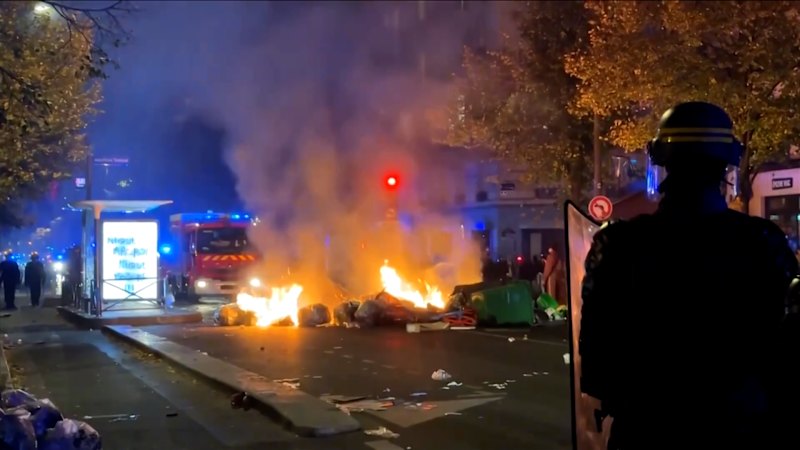
When crowds clash with police across major French cities and storefronts get smashed, mainstream coverage treats the entire episode as a sudden failure of civilization. Order breaks. Mob rule takes over. The state pushes back. Neat. Simple. Wrong.
Anyone who has spent years studying urban contentious politics, municipal governance, and state-society bargaining in Western Europe knows better than to mistake noise for anarchy. Street violence in France rarely comes out of nowhere. It usually arrives after months or years of bureaucratic dead ends, stalled consultations, and political stonewalling. Calling it mere lawlessness lets both officials and commentators off the hook too easily.
The Myth of "Senseless" Street Violence
The lazy consensus assumes that once a protest turns violent or destructive, its political meaning evaporates. If someone throws a paving stone or breaks a shop window, the story supposedly shifts from grievance to criminality.
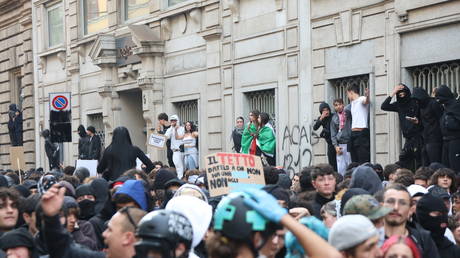
That binary is a trap. Real-world protests do not live inside clean moral boxes. A single Saturday march in Paris, Lyon, or Marseille can hold disciplined union stewards, first-time demonstrators, hardened street fighters, opportunistic looters, and overstretched riot units all inside the same few city blocks. Flattening all of that into one caricature of "rioters versus police" erases how pressure actually moves through the French system.
To be clear on definitions, contentious politics refers to episodic, public, collective claims-making where governments are the targets or third parties. Within that broader bucket, repertoires of contention—a concept developed by sociologists Charles Tilly and Sidney Tarrow—describe the established routines people use to press demands. In France, disruptive street action has long functioned as an extra-parliamentary bargaining tool when formal channels feel rigged or unresponsive.
That does not make property destruction harmless. It does not justify looting a neighborhood shopkeeper's livelihood. It does mean that treating broken glass as proof of zero political logic blinds observers to the incentives driving the confrontation.
Consider a thought experiment. Imagine a scenario where a government pushes through an unpopular policy using executive tools that bypass extended parliamentary debate, while union leaders warn for weeks that rank-and-file frustration is boiling over. If officials ignore warnings until smoke rises over central boulevards, did violence invent the crisis, or did it force stalled actors back to the table? That question makes polite pundits squirm, yet it sits right at the heart of recurring French unrest.
Why People Ask the Wrong Questions About Urban Riots
When headlines light up with clashes and looting, search engines fill up with predictable questions. People type queries like Why do French protests always turn violent? or How can France stop looting and riots?
Both questions start from shaky premises.
"Why do French protests always turn violent?"
First, they do not always turn violent. Plenty of French demonstrations stay peaceful from start to finish, even when tens of thousands of people march. Media selection bias distorts perception because calm marches rarely dominate evening broadcasts the way burning barricades and water cannons do.
Second, when clashes do break out, they often follow predictable flashpoints rather than random bloodlust:
- Policing doctrine and containment: French crowd control relies heavily on assertive containment, dispersal tactics, and less-lethal munitions. When tense crowds are boxed in or pushed hard at chokepoints, friction spikes fast.
- Fractured protest leadership: When institutional unions lose grip or moderate organizers step back, uncoordinated groups fill the vacuum.
- Symbolic targets: Banks, luxury storefronts, and state buildings frequently absorb anger directed at economic inequality or policy decisions, while opportunists exploit the chaos to steal goods.
"How can France stop looting and riots?"
Asking how to simply stop them treats symptoms as if they were standalone bugs in the software. Heavy arrests and curfews can clear a square on a Sunday night. They rarely resolve the underlying political stalemate on Monday morning.
I have watched organizations and institutions burn massive resources trying to suppress visible friction while ignoring the bottlenecks causing it. In corporate turnarounds, pouring money into security guards while refusing to fix a broken supply chain or an abusive compensation model just shifts where the explosion happens. Municipal and national politics work the same way. If citizens feel shut out of decisions that hit their paychecks, housing, pensions, or neighborhood safety, pure coercion only buys time.
The Mechanics Beneath the Smoke
Political scientist Donatella della Porta has written extensively on protest policing and how state strategies shape escalation on the streets. When authorities treat every street confrontation purely as a public-order problem, they often miss the political signal embedded inside the disorder. Conversely, when activists and commentators romanticize destruction as "inevitable resistance," they ignore the real damage inflicted on working people and small businesses.
Look at what happens during a major flare-up in a French city:
| Dimension | Lazy Media Narrative | Sharper Structural View |
|---|---|---|
| Root cause | Sudden lawlessness and anti-social impulses | Accumulated policy friction plus volatile street dynamics |
| Role of looting | Proof that the entire protest lacks legitimacy | Criminal opportunism layered onto political or social unrest |
| Police response | Neutral restoration of order | High-stakes tactical choice that can either cool or inflame tension |
| Political outcome | Condemnation followed by return to normal | Temporary containment that may either force concessions or harden lines |
Notice what separates political grievance from opportunistic theft. Looting a boutique or electronics store is theft, full stop. Pretending theft is a form of high-minded protest insults anyone trying to pay rent or run a small business. Yet pretending every clash is just a pack of thieves is equally dishonest.
What Actually Works When Streets Boil Over
If you want fewer violent clashes and less looting in major cities, wishful thinking and performative outrage will not get you there. Practical change requires unglamorous adjustments on multiple fronts at once.
- Separate crowd control from criminal opportunism: Police tactics should focus tightly on protecting people and preventing large-scale property destruction while avoiding blanket escalation against peaceful marchers. Clearer separation reduces the number of bystanders pulled into clashes.
- Fix the upstream pressure valves: Governments that wait for street fires before opening real negotiations train the public to believe that quiet civic engagement gets ignored. Earlier, credible dialogue lowers the incentive to escalate.
- Protect vulnerable neighborhoods and small merchants: Rapid, targeted protection for commercial strips and local transit stops limits collateral damage so anger does not wreck communities that had nothing to do with the policy dispute.
- Report with precision instead of melodrama: Journalists and analysts need to distinguish between organized political demonstrators, aggressive agitators, and opportunistic looters rather than painting every square mile with the same brush.
The Catch With Taking This Stance
Every contrarian view carries a price, and pretending otherwise destroys credibility.
If you argue that street clashes often signal deep political friction, critics will accuse you of excusing violence or downplaying the terror felt by shopkeepers, residents, and injured officers. That is a real risk. Words matter during volatile events, and framing unrest too sympathetically can embolden people looking for a fight.
On the other hand, if you condemn all disorder wholesale and demand maximum crackdown, you risk cheering measures that deepen alienation, swell grievances, and set the stage for an even nastier round next season.
Neither path is cost-free. Governing messy societies rarely offers clean wins without trade-offs.
Next time clashes erupt in Paris, Lyon, or Marseille, skip the instant moralizing. Watch who is holding the line, who is cashing in on the chaos, and which political decision finally gets forced onto the agenda when the tear gas clears.