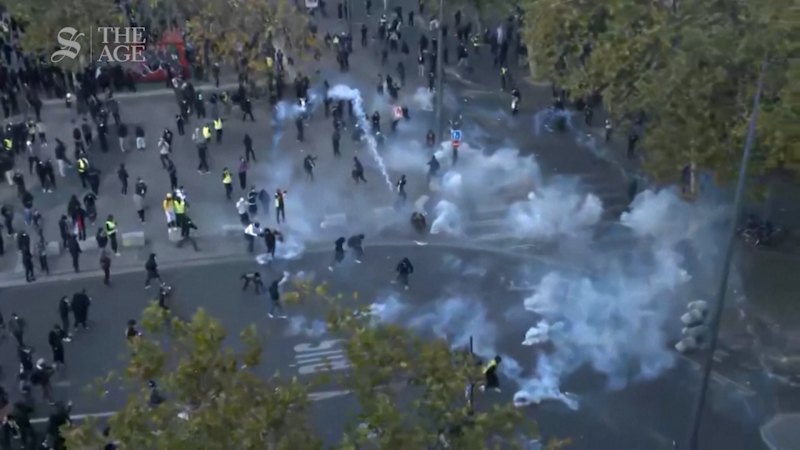
Tear gas hangs over Paris again. Not over a single pension bill or one isolated campus dispute, but across a sweeping wave of French unrest that began in mid-September 2026 and still hasn't burned itself out.
Anyone looking at France right now sees two stories colliding at once. By day, hundreds of thousands of students, teachers, hospital workers, and union members march against high living costs, squeezed wages, and crumbling public services. By nightfall—or whenever black-bloc agitators and opportunistic looters attach themselves to the rear of a march—streets turn into flashpoints of barricades, fires, tear gas, and mass arrests.
If you want to understand why these clashes keep recurring, stop treating France's protests as a single monolithic riot. They aren't. They're a volatile mashup of legitimate social grievances, frayed public institutions, social media rumors, and street-level confrontation tactics that overwhelm both crowd control and political compromise.
How France Unrest Escalated From Schools to Nationwide Clashes
The current cycle didn't start in a vacuum. After September 2026 back-to-school blockades over understaffed classrooms, missing resources, and poor school conditions—initially visible in overseas territories like French Guiana and Mayotte before surging across metropolitan lycées—discontent rapidly broadened. Fishermen, farmers, transport and energy workers, and public-sector unions jumped into the fray as frustration over inflation, fuel prices, and stagnant pay collided with budget strain.
October 17 became the breaking point. What started as massive marches—estimated at 550,000 people by Interior Minister Laurent Nuñez and up to 800,000 by organizers across more than 100 rallies—spiraled into widespread vandalism, fires, and looting across major cities including Paris, Lyon, Marseille, Lille, and Bordeaux. Authorities reported hundreds of damaged or looted storefronts, dozens of buildings hit by fire damage—including historic municipal buildings in Limoges and Lyon—and over a thousand combined injuries among security forces, firefighters, and civilians.
Even when subsequent marches in late October and November were largely peaceful during daylight hours, pockets of violence kept flaring. On November 5 and again on November 17, public-sector strikes and cost-of-living rallies brought tens or hundreds of thousands into the streets while riot police deployed in heavy numbers, firing tear gas and detaining demonstrators where clashes erupted.
Three Forces Fueling the Street Confrontations
Watch closely when a peaceful march turns ugly. Usually three dynamics feed each other at the exact same time:
- Merged grievances: High schoolers worried about unfilled teaching posts, nurses stretched thin by hospital cuts, and workers squeezed by bills all end up on the same boulevards. That gives protests huge numbers, yet makes any single government concession feel incomplete to someone else in the crowd.
- Tactical instigators and looting: Officials, including Interior Minister Laurent Nuñez, have pointed to black-bloc activists and organized or opportunistic groups exploiting crowds to throw projectiles, build barricades, light fires, and ransack shops once police lines stretch thin.
- Viral rumors and instant outrage: False claims or unverified clips spread rapidly online—such as rumors during the unrest about university arson or fabricated reports of deaths—turning tense standoffs into immediate panic or retaliation.
Why Policing and Government Responses Keep Backfiring
French crowd control is tough. Anyone who has watched Compagnies Républicaines de Sécurité (CRS) or gendarmerie units work a boulevard knows they use heavy deterrence—tear gas, water cannons, stun grenades, and mass containment—when they believe public order is breaking down.
Yet heavy tactics carry a steep political price. Critics, opposition figures, and demonstrators argue that aggressive dispersal, preemptive bans, and fast-tracked court prosecutions sweep up peaceful marchers, minors, and bystanders alongside violent actors. When young people or everyday residents feel treated like suspects just for showing up, trust in authorities drops even further.
At the same time, policing faces real operational limits. After October 17, questions emerged in public debate and parliamentary scrutiny over how forces were distributed across neighborhoods and how quickly rioters adapted their movements. By mid-November, justice officials reported roughly 15,000 total detentions across the cost-of-living and school protest tracks since the autumn surge, showing just how massive the enforcement footprint has become.
Politically, President Emmanuel Macron's government and Prime Minister Sébastien Lecornu have tried a mix of firm law-and-order messaging and targeted concessions—such as bringing forward a planned minimum-wage boost and floating education or salary talks. Honestly, those moves rarely satisfy everyone. Unions argue across-the-board public pay and service funding are still missing, while hardliners demand stricter crackdowns.
A core tension sits right at the heart of French unrest: every crackdown that deters street damage risks radicalizing protesters who feel unheard, while every policy concession that arrives late looks like weakness forced by fire.
What Most Coverage Misses About French Unrest
Surface-level headlines love dramatic labels—"the republic in crisis" or "streets in ruins"—because conflict sells clicks. Look a little closer and three nuances stand out that flat summaries miss.
First, most participants aren't rioting. Across the autumn mobilizations, huge stretches of marches in Paris and regional cities passed peacefully, complete with families, union banners, and even satirical costumes. Lumping 100,000 peaceful marchers in with a few hundred masked rioters distorts what's actually happening on the ground.
Second, the unrest isn't purely a French quirk. Parallel demonstrations, school or youth anger, and clashes over living costs and public services have echoed across parts of Europe, including Germany, Belgium, and Italy. France just has a stronger tradition of street mobilization and a sharper spotlight on its clashes.
Third, numbers and narratives are fiercely contested. Crowd estimates routinely split wide between government figures and union counts—for example, 146,000 versus over 500,000 on November 17. Even the exact toll of injuries and property damage shifts across briefings and investigations, so treating any single preliminary figure as gospel is a mistake.
Practical Ways to Follow or Plan Around French Protests
If you're tracking the political fallout as a reader or researcher—or you're traveling to or living in France right now—a few practical habits save a lot of headaches:
- Check official prefecture and transit advisories before moving. In cities like Paris, Lyon, and Marseille, police prefectures regularly announce protest perimeters, route restrictions, and Métro or bus closures on major mobilization days. For ongoing coverage, outlets like Reuters, Le Monde, and The Guardian provide clearer context than viral clips.
- Don't trust unverified social media posts during clashes. Rumors about fires, closures, or fatalities spike fast during evening standoffs. Wait for confirmation from local authorities or established newsrooms before sharing or changing plans.
- Separate peaceful rallies from evening flashpoints. Daytime union or student marches often follow set routes, whereas trouble more commonly flares later in the day or around blocked intersections and commercial districts. Give wide berth to crowds once tear gas or heavy riot deployments begin.
- Watch the bargaining table, not just the street. Strikes over wages, public services, and education hinge on negotiations between ministers, unions, and student groups. Real breakthroughs—or fresh walkouts—usually show up right after those talks stall or succeed.