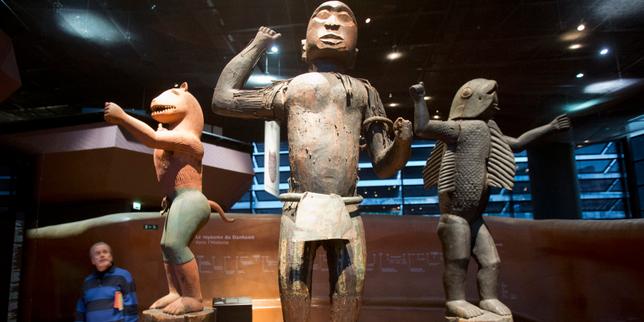
France just stopped playing gatekeeper with history. For decades, the legal hurdles for returning cultural treasures stolen during the colonial era were essentially impossible to clear. That changed when the French Parliament finally adopted a framework law specifically designed to facilitate the restitution of cultural property. It's a massive shift. This isn't just about old statues in dusty cabinets. It's about how a modern nation-state reckons with a violent past that it previously tried to legislate away.
The core problem was always "inalienability." Since the 16th century, French law has dictated that objects in public collections belong to the state forever. You couldn't just give them back, even if everyone agreed they were stolen. To return anything, the government had to pass a specific, individual law for every single item. It was slow. It was bureaucratic. It was frankly insulting to the nations asking for their heritage back. Now, the new law creates a streamlined process to bypass that headache.
The end of the case by case nightmare
Before this law, if Benin or Senegal wanted a specific artifact, the French National Assembly had to debate that specific object. Imagine the paperwork. Imagine the years of diplomatic stalling. The new framework changes the game by setting clear criteria for what qualifies for "restitution" and allowing the government to act without a full legislative battle every time.
To get an object back, a country must prove it was taken through force, fraud, or coercion during the colonial period. That sounds simple, but the devil's in the archives. We’re talking about items taken between the start of French expansion and the independence of these nations. It covers the vast majority of the "spoils of war" currently sitting in the Musée du Quai Branly-Jacques Chirac.
I’ve seen how these debates play out in museum halls. Critics often claim that African or Asian museums aren't "ready" to house these items. It’s a tired, paternalistic argument that ignores the reality of modern curation in cities like Cotonou or Dakar. This law effectively tells those critics to sit down. It recognizes that legal ownership matters more than a former colonizer's opinion on your climate control systems.
Why the 2017 Ouagadougou speech took six years to become law
President Emmanuel Macron made a bold promise in Burkina Faso back in 2017. He said he wanted "temporary or definitive restitutions" of African heritage within five years. He missed that deadline. Why? Because the French Senate was terrified of "emptying the museums."
There was a genuine fear among the old guard that this would set a precedent for every museum in the West. If the British Museum followed suit, the place would be half-empty. The French Senate fought to keep a tight grip on the process, insisting on a scientific committee to oversee every claim. They didn't want a "repentance" law; they wanted a technical one.
The compromise we see now is a win for pragmatism over ideology. The law establishes a "National Commission" made up of experts, researchers, and museum curators. Their job is to evaluate the history of an object’s acquisition. If the evidence shows it was looted, the commission advises the Prime Minister. It’s still a government-led process, but it’s no longer a hostage to parliamentary scheduling.
The specific criteria for getting heritage back
You can't just walk into the Louvre and point at a vase. The law is very specific about who can ask and what they can ask for.
- State-to-state only: Only sovereign states can make these claims. Individual families or tribes still face a much harder path through the civil courts.
- The "Looted" standard: The object must have been acquired through "conditions of dispossession" that are incompatible with today’s international ethics.
- Colonial timeframe: The window is strictly defined by the period of French colonial administration.
This focus on the colonial era is intentional. It separates these claims from the ongoing efforts to return art stolen by the Nazis during World War II. France actually passed a separate law for Nazi-looted art recently. By keeping them separate, the government avoids a "one size fits all" approach that would likely collapse under its own weight.
What this means for the global art market
The ripples of this law are already hitting the private sector. If the state admits it shouldn't own these pieces, why should a private gallery in the Marais? Dealers are getting nervous. Provenance research—the history of who owned what and when—is suddenly the most important job in the art world.
If you're a collector, you can't ignore this. The market value of colonial-era artifacts with murky origins is tanking. Nobody wants to buy a "hot" bronze that might end up on a restitution list in three years. We're seeing a shift toward "ethical collecting" where the paperwork is just as valuable as the sculpture itself.
Stop making the same mistakes with provenance
Most people think "provenance" is just a fancy list of previous owners. It's not. It’s an investigation. If you're involved in the art world or even just a curious observer, you need to understand that a gap in an object's history between 1885 and 1960 is a massive red flag.
Museums used to hide behind the "we bought it in good faith" excuse. That doesn't work anymore. The burden of proof has shifted. It’s no longer on the victim to prove the theft; it’s on the holder to prove the acquisition was legitimate. This is the part the competitor articles usually gloss over because it's uncomfortable for established institutions.
Your next steps for tracking this shift
Don't expect every museum in Paris to be empty by Christmas. This is a slow, deliberate unfolding of history. If you want to see how this actually works in practice, keep an eye on the following:
- The first committee reports: Watch for the first official recommendations from the newly formed National Commission. Their early decisions will set the tone for the next decade.
- Digital inventories: Many French museums are now rushing to digitize their colonial-era archives. Check the online databases of the Musée du Quai Branly to see how they're re-labeling items.
- The "Human Remains" debate: This new law focuses on cultural property. A separate legal framework is still being hammered out for the return of human remains (like those held in the Musée de l'Homme), which carries even higher emotional and ethical stakes.
France finally stopped making excuses. The law is a tool, but its success depends on the political will to use it. If you're following international news, this is the benchmark. Every other former colonial power—Belgium, Germany, the UK—is watching to see if the French experiment actually works or if it triggers a diplomatic domino effect they can't control. The era of "finders keepers" in international law is officially dead.


