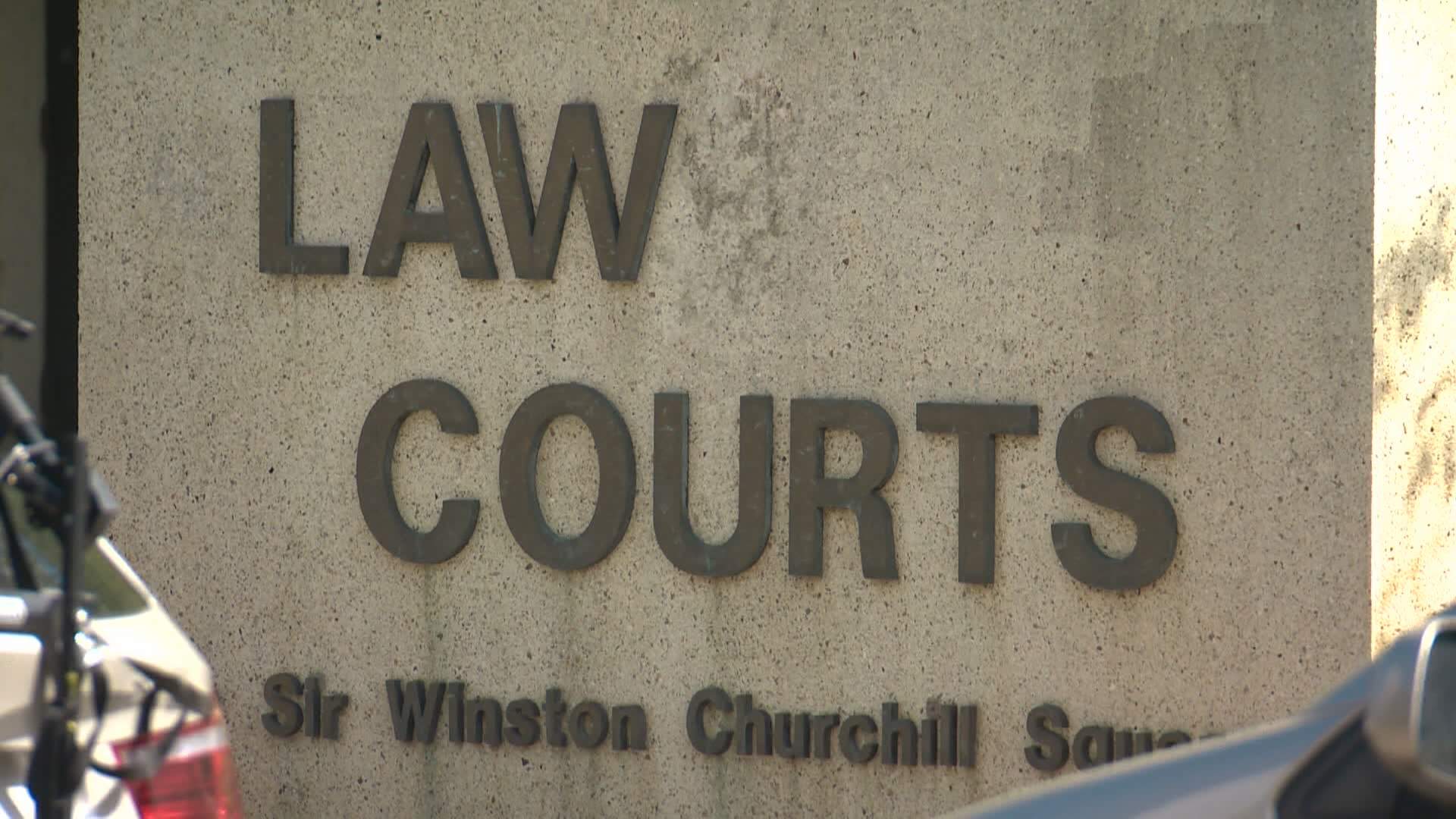
Justice is often pictured as a heavy, bronze scale—static and unyielding. But in the quiet courtrooms of Alberta, justice looks less like metal and more like a thread. It is a thin, vibrating line of narrative that connects a defendant’s past to their future. When that thread snaps, the whole machinery of the law grinds to a halt, leaving everyone—the accused, the grieving, and the public—suspended in a state of agonizing uncertainty.
Consider the case of Bradley Donald Brown.
In 2021, a jury found Brown guilty of second-degree murder in the death of his common-law partner, Saguenay Boman. The facts presented then were cold. Sharp. Final. The Crown painted a picture of a life ended by violence, and the legal system responded with a sentence of life imprisonment without the possibility of parole for ten years. For many, that was the end of the story. The book was shut. The cell door followed suit.
But the law has a peculiar way of looking backward. It possesses a conscience called the Court of Appeal. Recently, that court decided that the story told to the jury was fundamentally incomplete. They didn't just find a minor error; they found a hole in the heart of the trial. Now, the conviction has been quashed. A new trial has been ordered.
We are back at the beginning.
The Ghost in the Jury Room
To understand why a man once convicted is now entitled to a fresh start, we have to look at what the jury didn't hear—or rather, what they weren't told how to use.
During the original trial, the defense raised a powerful, human argument: provocation. In the eyes of the law, provocation isn't an excuse for killing, but it is a recognition of human frailty. It is the "sudden nature" of an event that causes a person to lose self-control before they have time for their "passion to cool." If a jury believes a defendant was provoked, a murder charge can be downgraded to manslaughter. The difference isn't just a linguistic nuance. It is the difference between a lifetime behind bars and a sentence that acknowledges a momentary, albeit tragic, break in the human psyche.
In Brown’s case, the trial judge initially decided that the air of reality wasn't strong enough to even let the jury consider provocation. He kept that door locked.
The appellate court disagreed. They looked at the evidence—the volatile history, the immediate circumstances of the confrontation—and realized that by keeping that option off the table, the judge had essentially steered the jury toward a binary choice that may not have reflected the messy, bloody reality of the night Saguenay Boman died.
The Fallibility of "Beyond a Reasonable Doubt"
We like to believe that "beyond a reasonable doubt" is a high wall. We want to believe that once twelve people agree, the truth is settled. But truth in a courtroom is a construction built from the bricks of admissible evidence. If you remove even one brick—like the legal definition of provocation—the entire structure becomes unstable.
The Court of Appeal’s decision highlights a terrifying truth about our legal system: it is a human system. It is prone to the same biases and errors as the people who inhabit it. When a judge makes a "legal error," it sounds clinical. It sounds like a paperwork mistake. It isn't.
It is a failure to provide the defendant with the full spectrum of their rights. It is a failure to ensure that the jury has every tool necessary to measure the gravity of a man's soul. In the Brown case, the appellate judges noted that there was enough evidence to suggest a "sudden" loss of control. By failing to instruct the jury on how to weigh that possibility, the original trial became a tilted playing field.
The Invisible Stakes of a Retrial
For the family of Saguenay Boman, this isn't a victory for the law. It is a reopening of a wound that had only just begun to scar over.
Imagine the psychological toll of preparing for a second trial. The witnesses must return. The photos of the crime scene must be displayed again. The testimonies must be recounted, polished, and challenged. This is the hidden cost of the "perfect" legal system. To ensure that one man receives a fair trial, an entire community of survivors must relive their darkest moments.
Pain.
It is a short word, but in the context of an Alberta courtroom, it stretches across years. It fills the hallways.
We often talk about the rights of the accused as if they exist in a vacuum. We forget that every time a conviction is overturned, the weight of the "not guilty until proven otherwise" mantra falls heavily on the shoulders of the victims' loved ones. They are told that the closure they thought they had was an illusion. They are told that the "final" word was merely a draft.
The Threshold of Provocation
What does it actually mean to lose control?
In a hypothetical sense, imagine two people in a room. Tension has been building for years. There is debt, there is anger, there is the exhaustion of a relationship that has turned into a battlefield. Then, a single sentence is uttered. A single gesture is made. In that micro-second, the "ordinary person" vanishes, replaced by a surge of adrenaline and ancient, lizard-brain impulse.
The law struggles with this. How do we measure the "ordinary person" in an extraordinary circumstance?
The Alberta Court of Appeal determined that it wasn't the judge's job to decide if Brown was provoked—that was the jury’s job. By taking that decision away from them, the judge overstepped. He acted as the thirteenth juror.
This reversal serves as a stark reminder that the judge's role is not to seek a specific outcome, but to safeguard the process. When the process is compromised, the outcome is irrelevant. It must be discarded, no matter how much it hurts to do so.
The Long Walk Back to the Stand
Bradley Brown now sits in a unique and haunting position. He has been a "convicted murderer," and now he is once again a "man accused." He has lived the reality of a life sentence and now faces the possibility of a different shadow.
But the case also asks us to look at how we treat domestic violence and the "common-law" tragedies that occur behind closed doors. Why did it come to this? What were the systemic failures that preceded the violence? The court focuses on the moment of the crime, but the narrative of the people involved began years before the police arrived.
The legal system is excellent at dissecting the what and the how. It is notoriously bad at the why.
As this new trial looms, the evidence will be the same. The DNA will be the same. The witnesses will likely say the same words they said years ago. But the framework will be different. This time, the jury will be allowed to look at the "suddenness" of the act. They will be allowed to ask if a human being, pushed to a certain brink, might break in a way that is tragic but not inherently "murderous" in the first-degree sense of the word.
The Unending Echo
There is no "win" in a case like this.
If Brown is convicted of murder again, years of time and millions of dollars will have been spent to reach the same conclusion, prolonging the agony of the Boman family. If he is convicted of the lesser charge of manslaughter, some will see it as justice finally being balanced, while others will see it as a horrific discount on a human life.
The law doesn't care about our need for a happy ending. It cares about the rules of the game. It cares that the thread of the narrative remains unbroken from the moment of the arrest to the final tap of the gavel.
In Alberta, that thread is being re-spun.
We are left watching a man stand in the center of a storm he helped create, waiting to see if the second time around, the scales will find a different equilibrium. It is a cold, clinical process that deals in the most heated of human emotions.
The courtroom will be quiet. The lawyers will speak in measured tones. The judge will give careful instructions. And underneath it all, the ghost of a woman remains, waiting for a finality that the law seems perpetually unable to provide.
The trial starts again. The clock resets. The truth remains somewhere in the middle, buried under the weight of a million legal words, waiting for twelve strangers to try, once more, to find it.